Pressure Points for Sore Throat: Quick Natural Relief
When your throat feels raw, scratchy, or painful to swallow, you usually want relief now – not a long lecture. In my clinic, I’ve used acupressure for sore throat as a simple, needle-free way to calm discomfort while the body does its healing work. The right points can feel like turning down the “volume knob” on irritation, especially when your sore throat is tied to a cold, post-nasal drip, dry indoor air, or voice strain. Below I’ll show you the exact points I reach for first, how to press them safely, and what to expect.
Quick Answer: How to Use Acupressure for Sore Throat Relief
Acupressure for sore throat may help by easing pain signals, relaxing throat and neck tension, and supporting your body’s natural anti-inflammatory response. For most people, the fastest at-home routine looks like this:
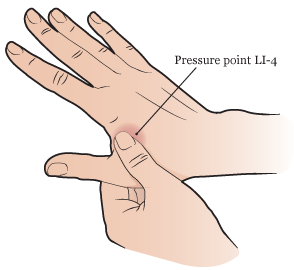
- Press one hand point for pain relief: LI-4 Hegu for 60-90 seconds per side.
- Add a “heat-clearing” point: LU-10 Yuji for 45-60 seconds per side.
- Use a throat-adjacent point gently: CV-22 Tiantu for 20-30 seconds with light pressure only.
- Finish with neck base release: GB-20 Fengchi for 60 seconds per side.
Repeat 2-3 times daily, drink warm fluids afterward, and stop if any point feels sharp, dizzying, or “wrong.”
Pressure Point Reference (Start Here)
These are the core throat acupressure points I use most often for soreness, swallowing discomfort, and the “inflamed” feeling that comes with colds or dryness.
| Point | Name | Location (quick find) | Key benefit |
|---|---|---|---|
| LI-4 Hegu | Joining Valley | Webbing between thumb and index finger | May reduce pain and support immune response |
| LU-10 Yuji | Fish Border | Fleshy mound at base of thumb (palm side) | Clears “heat” patterns in TCM, helps dry/scratchy throat |
| LU-11 Shaoshang | Lesser Shang | Corner of thumbnail (radial side) | Traditionally used for acute throat discomfort |
| CV-22 Tiantu | Heavenly Chimney | Hollow at the top of the breastbone | Helps throat tightness, swallowing discomfort (use gently) |
| LI-11 Quchi | Pool at the Crook | Outer end of elbow crease | Supports feverish, inflamed “heat” presentations |
| GB-20 Fengchi | Wind Pool | Hollows under skull, beside neck muscles | Helps neck tension, headache, “coming down with something” |
| BL-10 Tianzhu | Heavenly Pillar | 1 finger-width from spine at skull base | Releases neck tension that can amplify throat discomfort |
| SI-17 Tianrong | Heavenly Appearance | Behind jaw angle, below ear | Helps jaw-throat tension patterns |
If you ever struggle to find these points or judge pressure, the free Pressure Points Guide App walks you through each step.
How to Apply These Points (Step-by-Step)
Pressure Points Guide App
No Amazon listing found for ‘Pressure Points Guide App by HealthTech’. The product appears to be an iOS app available on the Apple App Store, not sold on Amazon.com.[1]
If you only do one thing from this article, make it this: press fewer points, more carefully. The throat is sensitive, and good technique matters.
-
Set yourself up (30 seconds).
Sit upright with your feet on the floor. Unclench your jaw and let your tongue rest on the roof of your mouth. -
Warm your hands (15 seconds).
Rub palms together until they feel slightly warm. Warm hands usually make pressure feel more soothing. -
Choose 3-5 points max.
My “starter set” is LI-4 Hegu, LU-10 Yuji, CV-22 Tiantu, and GB-20 Fengchi. -
Use the right pressure level.
Aim for a comfortable, dull ache – about a 5-6/10 intensity. Sharp pain is a “no.” -
Press and breathe (60-90 seconds per point).
Apply steady pressure or slow circles. Inhale through the nose for 4 counts, exhale for 6. Longer exhales tend to relax throat guarding. -
Use throat points lightly and briefly.
On CV-22 Tiantu, use light pressure only for 20-30 seconds. Think “support,” not “dig.” -
Repeat 2-3 times daily.
For acute soreness, you can do a short session every 4-6 hours. -
Finish with warm sips.
Warm water or tea after acupressure often feels noticeably better than cold drinks.
What you should feel: warmth, a spreading sensation, mild tenderness, or a gentle “release” in the neck and jaw. What you shouldn’t feel: dizziness, nausea, sharp pain, or worsening tightness.
Acupressure for Sore Throat: The 4 Patterns I See Most (And How I Choose Points)
Traditional Medicinals Throat Coat Herbal Tea, 16 Tea Bags
This herbal tea is known for soothing sore throats, making it a natural remedy that complements the acupressure techniques discussed in the article.
Zicam Cold Remedy RapidMelts, 25 Count
These rapid melts are designed to reduce the duration of cold symptoms, including sore throat, aligning with the article’s theme of natural relief.
Not every sore throat is the same. This matters because point selection changes based on what’s driving your symptoms.
In Traditional Chinese Medicine, sore throat often shows up as a mix of Wind-Heat, Heat in the Lung channel, Phlegm-Heat, or Yin deficiency dryness. In modern terms, that might look like viral inflammation, post-nasal drip, reflux irritation, or dry mucous membranes.
Here’s how I think about it in practice:
1) “Hot, swollen, angry throat” (Wind-Heat style)
This is the classic cold-or-flu sore throat: redness, heat, maybe fever, thirst, and body aches.
Points I prioritize:
- LI-11 Quchi to cool and settle “heat”
- LI-4 Hegu for pain modulation
- GB-20 Fengchi if there’s headache, neck stiffness, or that “coming down with something” feeling
Quick mini-routine (3 minutes):
- LI-11 Quchi 60 seconds each arm
- LI-4 Hegu 60 seconds each hand
2) “Dry, scratchy, worse at night” (Yin dryness style)
Common in heated rooms, after flying, mouth breathing, or lots of talking.
Points I prioritize:
- LU-10 Yuji for Lung channel heat and dryness
- LU-11 Shaoshang for acute irritation at the throat end of the channel
- Gentle CV-22 Tiantu for “tight/swallowy” discomfort
3) “Mucus drip, cough, throat clearing” (phlegm pattern)
This is the sore throat that comes from constant drainage and irritation.
Points I prioritize:
- LU-5 Chize for cough and Lung congestion patterns
- GB-20 Fengchi for sinus and head tension
- BL-10 Tianzhu when the upper neck is tight (a very common contributor)
4) “Tight throat + jaw/neck tension” (muscle guarding pattern)
I see this a lot with stress, reflux irritation, or after a day of talking.
Points I prioritize:
- SI-17 Tianrong for jaw-throat tension
- BL-10 Tianzhu to soften the neck base
- CV-22 Tiantu lightly, if swallowing feels “stuck”
A note on evidence: research on acupressure is strongest for pain, nausea, and some symptom relief patterns, and less direct for “sore throat specifically.” The broader mechanisms proposed include neuromodulation and local circulation changes. For an overview of what’s known (and what isn’t), I often point readers to the NIH National Center for Complementary and Integrative Health on acupuncture and related modalities, since acupressure uses the same point map without needles.
The Best Throat Acupressure Points (With Exact How-To)
Honey Gardens Raw Honey, 16 Ounce
Raw honey is often used as a natural remedy for soothing sore throats, making it a relevant product for readers seeking relief.
If you’re wondering which points matter most, these are my repeat players. I’m also including several neck-throat points from our site’s library so you can go deeper if your symptoms match.
Hand points for fast pain relief: LI-4 + LU-10
For many people, the quickest “ahh” moment comes from the hand.
1) LI-4 Hegu
Why it matters: It’s one of the most used points for head and face discomfort, including throat pain patterns.
How to do it:
- Pinch the webbing between thumb and index finger.
- Find the tender spot that feels like a small mound.
- Press with your opposite thumb for 60-90 seconds.
- Repeat on the other hand.
What to expect: a dull ache that can “radiate” into the hand. Many clients tell me it feels intense but satisfying.
2) LU-10 Yuji
Why it matters: In TCM, the Lung channel “opens to the throat,” and LU-10 Yuji is a classic point for heat and dryness affecting the throat.
How to do it:
- Turn your palm up.
- Locate the fleshy mound at the base of the thumb.
- Press with your opposite thumb in slow circles 45-60 seconds.
- Repeat on the other hand.
Quick combo: Alternate LI-4 Hegu and LU-10 Yuji twice. Total time: about 4 minutes.
Thumb nail corner for “acute flare” feelings: LU-11
LU-11 Shaoshang
Why it matters: This is a Jing-Well point, traditionally used for acute, “sudden” channel symptoms.
How to do it:
- Use your thumbnail to press the outer corner of the thumbnail on the other hand.
- Hold 20-30 seconds, release, repeat 2-3 rounds.
- Switch sides.
What to expect: sharper tenderness than most points. Keep pressure moderate.
Throat hollow point (gentle only): CV-22
CV-22 Tiantu
Why it matters: This point sits right where many people feel tightness when swallowing.
How to do it safely:
- Place your middle finger in the hollow at the top of your breastbone.
- Apply very light pressure upward (not straight down).
- Hold 20-30 seconds while breathing slowly.
If you feel lightheaded, stop immediately. This is not a “deeper is better” point.
Elbow crease for heat and inflammation patterns: LI-11 + LU-5
LI-11 Quchi
Why it matters: Often chosen for feverish, inflamed presentations.
How to do it:
- Bend your elbow.
- Find the outer end of the crease.
- Press 60 seconds each side with firm, steady pressure.
LU-5 Chize
Why it matters: Useful when sore throat comes with cough, chest stuffiness, or thick mucus.
How to do it:
- Bend elbow slightly, palm up.
- Find the crease on the thumb side of the tendon.
- Press 45-60 seconds each side.
Neck base points to release tension: GB-20 + BL-10
GB-20 Fengchi and BL-10 Tianzhu
Why they matter: When the upper neck clamps down, the throat often feels worse. Releasing this area can reduce the “tight collar” sensation.
How to do it:
- Interlace fingers and cradle the back of your head.
- Use thumbs to press into the hollows under the skull (GB-20 Fengchi).
- Then move thumbs slightly inward, one finger-width from the spine (BL-10 Tianzhu).
- Hold each area 45-60 seconds while exhaling slowly.
Add-On Throat Points From Our Library (When You Need More Targeted Help)
If your soreness is centered higher in the neck, or you feel swollen glands, these local points can be helpful – with a big caveat: be gentle and avoid pressing directly on the carotid pulse.
These are also great options if you’ve already tried hand points and want something more “throat-specific.”
For side-of-neck throat discomfort: LI-17 and LI-18
Heavenly Tripod (LI-17) Pressure Point
Why it matters: Often used for throat issues and neck swelling patterns in TCM.
How I use it:
- Turn your head slightly away from the side you’re working on.
- Use 1-2 fingertips to press into the muscle beside the throat, not the windpipe.
- Hold 20-40 seconds, light-to-moderate pressure.
Support the Prominence (LI-18) Pressure Point
Why it matters: Traditionally used for throat and neck concerns.
Technique tips:
- Stay on the muscular area of the neck.
- Avoid sliding pressure over the pulse.
- Keep it brief: 20-30 seconds per side.
For “stuck” feeling or sharp throat discomfort: LU-6
Maximum Opening (LU-6) Pressure Point
Why it matters: This Xi-Cleft point is often used for acute Lung channel issues, including throat and cough patterns.
How I use it:
- Find it on the inner forearm, thumb side, about 7 finger-widths above the wrist crease.
- Press firmly for 45-60 seconds.
- Repeat on the other arm.
For throat + ear/side neck tension: SI-16
Heavenly Window (SI-16) Pressure Point
Why it matters: Many people hold tension here when they’re sick, stressed, or clenching their jaw.
How to use:
- Locate the point on the side of the neck, near the jaw angle.
- Press gently upward and inward (not straight down).
- Hold 20-40 seconds each side.
Here’s a simple “expanded” sequence if your symptoms are stubborn:
- LI-4 Hegu (60 seconds each hand)
- LU-10 Yuji (60 seconds each hand)
- Maximum Opening (LU-6) Pressure Point (60 seconds each arm)
- Heavenly Tripod (LI-17) Pressure Point (30 seconds each side, gentle)
Modern lens: While point-specific sore throat trials are limited, acupressure has been studied for symptom relief in other contexts. For example, a research overview you can browse via PubMed’s acupressure literature discusses proposed mechanisms like pain gating and autonomic regulation. I treat sore throat acupressure as supportive care – useful, low-cost, and often comforting – but not a stand-alone cure.
What to Combine With Acupressure (So Your Throat Calms Faster)
Acupressure works best when you remove the “fuel” irritating the throat. This is the part many people skip – and it’s why they feel temporary relief that doesn’t last.
Here are the combinations I recommend most often in practice:
1) Warmth + moisture (especially for dry, scratchy throats)
Try:
- Warm tea, broth, or plain warm water
- Steam inhalation (hot shower counts)
- A humidifier at night
Pair with:
- LU-10 Yuji and CV-22 Tiantu (gentle)
2) Reduce throat friction
If your throat hurts, it’s easy to keep testing it by swallowing hard or clearing it.
Instead:
- Swallow softly, sip fluids regularly
- Try a saline gargle if it feels good for you
- Rest your voice for a few hours
Pair with:
3) Address post-nasal drip
Drainage can keep the throat inflamed.
Try:
- Gentle nasal rinsing (if you already do it safely)
- Sleeping slightly elevated
- Warm compress over the sinuses
Pair with:
4) Track red flags
Acupressure is best for mild to moderate symptoms. If something feels severe, don’t “push through.”
If you want a broader overview of safe use and expectations, the World Health Organization acupuncture point location standards are a helpful reference for how points are defined anatomically (acupressure uses the same map).
Safety & When to See a Professional
Acupressure is usually gentle and low-risk, but sore throats can sometimes signal something that needs medical care.
Use these precautions:
- Pregnancy: Avoid strong stimulation of LI-4 Hegu unless your clinician says it’s appropriate.
- Neck points: Use light pressure on CV-22 Tiantu, Heavenly Tripod (LI-17) Pressure Point, Support the Prominence (LI-18) Pressure Point, and Heavenly Window (SI-16) Pressure Point. Avoid pressing on the carotid pulse.
- Bleeding disorders or blood thinners: Use lighter pressure and skip bruising-prone techniques.
- Skin infection, open wounds, or severe tenderness: Don’t press directly on the area.
Seek urgent care if you have:
- Trouble breathing, drooling, or inability to swallow fluids
- Severe one-sided throat pain with swelling
- High fever that doesn’t respond to basic care
- Symptoms lasting longer than 7-10 days, or worsening quickly
For more guidance, read our acupressure safety guide and browse the acupressure category. As always, listen to your body and stop if discomfort arises.
Conclusion
Acupressure won’t “erase” an infection overnight, but in my experience it can make sore throat days feel more manageable – especially when you match points to your symptom pattern and use steady, comfortable pressure. If you want a simple starting routine, begin with LI-4 Hegu for pain relief, add LU-10 Yuji for dry or heat-type irritation, and finish with neck release at GB-20 Fengchi. If swallowing feels tight, a very gentle touch on CV-22 Tiantu can be surprisingly calming.
Which point will you try first? If you’d like extra guidance locating points, the Pressure Points Guide App can walk you through step-by-step. And if your throat discomfort tends to come with neck tension or stress, explore our related guides in the acupressure category for supportive routines you can use year-round.
FAQs
Does acupressure for sore throat really work?
Acupressure for sore throat may help reduce discomfort for some people, especially when symptoms are mild to moderate. In practice, I most often see benefit as reduced pain, less throat “tightness,” and a calmer nervous system response. Start with LI-4 Hegu for 60-90 seconds per side, then add LU-10 Yuji if the throat feels hot or dry. If symptoms are severe or worsening, use acupressure only as support and check in with a clinician.
What is the best pressure point for a sore throat?
If I had to pick one, LI-4 Hegu is the most versatile starting point for throat pain patterns. It’s easy to find, works well with steady pressure, and pairs nicely with throat-focused points. For dryness or “heat,” combine it with LU-10 Yuji. For a tight swallowing sensation, add very gentle CV-22 Tiantu for 20-30 seconds.
How long does acupressure take to relieve throat pain?
Many people feel some shift within 2-10 minutes, but results vary. In my sessions, the fastest changes usually happen when we use 3-4 points and coordinate slow breathing. Try LI-4 Hegu and GB-20 Fengchi first, then reassess. If you only get short-lived relief, repeat 2-3 times daily and address triggers like dry air, post-nasal drip, or voice strain.
Can I use throat points like CV-22 if swallowing hurts?
Yes, but use very light pressure and short holds. CV-22 Tiantu can be soothing for tightness at the base of the throat, but it’s a sensitive area. I recommend 20-30 seconds of gentle upward support, not deep pressing. If you feel dizzy, nauseated, or more restricted, stop and switch to hand points like LU-10 Yuji instead.
Is it safe to do acupressure when I have a cold or fever?
Usually yes, as long as you keep pressure comfortable and rest when your body asks for it. For feverish, inflamed presentations, I often use LI-11 Quchi and LI-4 Hegu with slow breathing. Avoid aggressive work on neck points if you’re very weak or lightheaded. If fever is high, persistent, or paired with severe symptoms, contact your healthcare provider.
Can acupressure help a sore throat from post-nasal drip?
It may help by easing neck tension and supporting cough and drainage patterns, but you’ll still want to address the drip itself. Pair hydration and gentle sinus care with points like BL-10 Tianzhu at the skull base and LU-5 Chize at the inner elbow crease. If the throat irritation is intense, add LI-4 Hegu for pain relief support.
As an Amazon Associate, I earn from qualifying purchases. Product recommendations are based on real reviews and independent research.
Free Mobile App
Find Pressure Points on the Go
Interactive 3D body map with 100+ acupressure points, step-by-step guides, and personalized routines.
Download Free App →
![The Healing Power of Acupressure Therapy [Expert Guide]](https://acupressureguide.com/wp-content/uploads/2023/02/image-19-jpeg.webp)