
Acupressure to Quit Smoking: Pressure Points That Reduce Cravings (2026)
If you are trying to quit smoking, you already know the hardest part is not the decision â it is the cravings. That constant pull that makes every stressful moment, every coffee break, every social situation feel like a test of willpower you are barely passing. Nicotine patches help some people, gum helps others, but a lot of smokers find that the physical interventions only get them part of the way there. The craving is not just chemical. It is nervous system deep.
That is where acupressure comes in. I have been working with acupressure since 2017, and while most of my focus has been on stress, pain, and sleep, one of the most interesting applications I have explored is its use in addiction recovery â specifically nicotine addiction. The research on acupressure for smoking cessation is more substantial than most people realize, and the practical results I have seen from people who incorporate it into their quit plan are real.
This guide covers the specific acupressure points that research and traditional Chinese medicine identify as most effective for reducing nicotine cravings, how to use them in a daily quit-smoking protocol, and what the science actually says about whether this works.
How Acupressure Helps With Nicotine Cravings
To understand why acupressure works for smoking cessation, you need to understand what nicotine does to your nervous system. Nicotine activates the sympathetic nervous system and triggers a dopamine release in the brain’s reward pathway. When you quit, your brain is suddenly missing that dopamine hit, and your nervous system rebounds into a state of agitation, irritability, and craving. That is the withdrawal.
Acupressure works on multiple mechanisms that directly counteract this process. First, it activates the parasympathetic nervous system â the “rest and digest” system that calms the fight-or-flight response that intensifies during withdrawal. Second, research shows that stimulating specific acupuncture and acupressure points triggers the release of endorphins, your body’s natural feel-good chemicals that partially compensate for the missing dopamine hit. Third, certain points specifically target anxiety and restlessness, which are the emotional drivers behind most relapse.
A 2013 meta-analysis published in the American Journal of Chinese Medicine reviewed multiple controlled trials of acupressure and acupuncture for smoking cessation and found that these approaches significantly reduced cigarette consumption and craving intensity compared to sham treatments. The effects were most pronounced when acupressure was used as part of a comprehensive quit plan rather than as a standalone intervention.
The Best Acupressure Points for Quitting Smoking
These are the points that both research and traditional Chinese medicine identify as most relevant for nicotine addiction and craving reduction. You do not need any special tools â just your fingertips.
Tim Mee (Quit Smoking Point)
This point is located on the inside of the wrist, one finger width above the wrist crease, on the thumb side. Tim Mee is specifically indicated for smoking cessation in traditional Chinese medicine â it is literally called the “quit smoking point.” It is not part of the standard meridian system but rather an extra point identified specifically for this purpose.
Practitioners report that stimulating Tim Mee changes the taste of cigarettes, making them less appealing. It also helps reduce the oral fixation component of the addiction. Press firmly with your thumb for 60 to 90 seconds on each wrist, two to three times daily. Many people find it helpful to press this point whenever a craving hits â the act of pressing gives your hands something to do, and the point itself helps take the edge off the craving.
Lung 7 (Lieque)
Located on the inside of the forearm, about two finger widths above the wrist crease, in the depression between the radius bone and the tendon. Lung 7 is the command point of the lung meridian and is one of the most important points in traditional Chinese medicine for any respiratory condition, including the lung damage and irritation associated with smoking.
Beyond the respiratory connection, Lung 7 helps regulate the emotional grief and sadness that the lung meridian governs in Chinese medicine. Many smokers describe quitting as a genuine grief process â you are losing a companion that has been with you through stress, boredom, celebration, and solitude. Lung 7 addresses that emotional component directly. Press with your thumb for 60 seconds on each arm, twice daily.
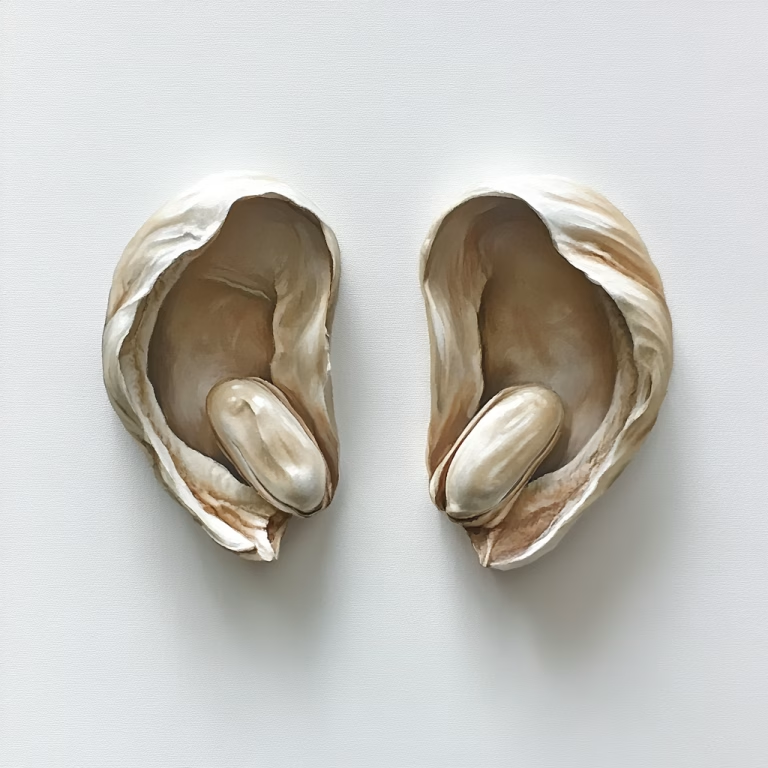
Ear Shen Men (Auricular Spirit Gate)
Located in the upper third of the ear, in the triangular fossa â the small depression above the antihelix. Ear Shen Men is arguably the single most researched acupressure point for addiction treatment. The NADA (National Acupuncture Detoxification Association) protocol, used in addiction treatment centers worldwide, includes this point as one of its five ear points.
Ear Shen Men has a powerful calming effect on the nervous system. It reduces anxiety, agitation, and the restlessness that drives people to light up. A 2010 study in Preventive Medicine found that smokers who received auricular acupressure on Shen Men and related ear points reported significantly reduced craving intensity and smoked fewer cigarettes per day compared to the control group.
For self-treatment, use a fingertip or the eraser end of a pencil to apply firm pressure to this point for 60 seconds on each ear. You can also use ear seeds â small metal or vaccaria seeds on adhesive tape â placed on this point for continuous stimulation throughout the day. Ear seeds are inexpensive, widely available, and allow you to press the point whenever a craving strikes.
Large Intestine 4 (Hegu)
Located in the fleshy web between the thumb and index finger. Large Intestine 4 is one of the most versatile acupressure points in the entire system. For smoking cessation, it serves two specific functions: it is a powerful pain and tension reliever that addresses the headaches and physical discomfort of withdrawal, and it has a direct calming effect on the nervous system that reduces irritability.
LI 4 is also the master point for the face and mouth â the areas most associated with the physical habit of smoking. Stimulating this point helps reduce the oral craving component. Press firmly into the web of the hand, angling slightly toward the index finger bone, for 60 seconds on each hand. This is one point you can press discreetly in any setting â at your desk, in a meeting, on your commute.
Heart 7 (Shen Men)
Located on the inside of the wrist crease, on the outer (pinky) side, in the depression next to the tendon. Heart 7 is the “Spirit Gate” â the primary calming point for the heart meridian, which governs emotional balance and mental clarity in Chinese medicine.
For smokers trying to quit, Heart 7 addresses the anxiety and emotional volatility that make the first two weeks so brutal. It calms the mind, reduces palpitations and racing thoughts, and helps with the insomnia that often accompanies nicotine withdrawal. Press gently for 60 seconds on each wrist. This point pairs exceptionally well with Ear Shen Men for acute anxiety during a craving episode.
Kidney 3 (Taixi)
Located on the inside of the ankle, in the depression between the ankle bone and the Achilles tendon. Kidney 3 is the source point of the kidney meridian, which in Chinese medicine governs willpower and constitutional energy. Quitting smoking is fundamentally an act of willpower, and Kidney 3 supports the deep energy reserves that sustain that effort over weeks and months.
This point also helps with the fatigue and exhaustion that many people experience during the first weeks of quitting. When your body is adjusting to functioning without nicotine, energy levels often crash. Kidney 3 helps restore that baseline energy. Press for 60 seconds on each ankle, once or twice daily.
Liver 3 (Tai Chong)
Located on the top of the foot, between the first and second toes, about two finger widths from the web. Liver 3 is the master point for releasing frustration, irritability, and emotional stagnation â three of the most common withdrawal symptoms that drive relapse.
If you have ever quit smoking and found yourself snapping at people, feeling irrationally angry, or experiencing a short fuse that was not there before, that is liver qi stagnation in Chinese medicine terms. Liver 3 moves that stuck energy and releases the emotional pressure. Press firmly for 60 seconds on each foot. This point is especially important during the first two weeks of quitting, when irritability peaks.
The Ear Acupressure Protocol for Smoking Cessation
Ear acupressure deserves its own section because the evidence for auricular (ear) stimulation in addiction treatment is particularly strong. The ear contains a microsystem â a complete map of the body on the surface of the ear â and the points in this microsystem have direct neurological connections to the brain regions involved in addiction.
The NADA protocol uses five ear points: Shen Men, Sympathetic, Kidney, Liver, and Lung. While acupuncture clinics use needles for this protocol, you can achieve meaningful results with acupressure or ear seeds at home.
Shen Men calms the nervous system and reduces anxiety. The Sympathetic point regulates the autonomic nervous system and reduces the fight-or-flight response. The Kidney point supports willpower and reduces fatigue. The Liver point releases irritability and emotional stagnation. The Lung point directly supports respiratory health and addresses the grief associated with letting go of the smoking habit.
You can stimulate each of these points by pressing firmly with a fingertip or a blunt tool like a ballpoint pen cap for 30 to 60 seconds each. Work through all five points on both ears once in the morning and once in the evening. For continuous support, apply ear seeds to all five points and press them whenever cravings hit throughout the day.
Building Your Daily Quit-Smoking Acupressure Routine
The most effective approach combines body points and ear points in a structured daily routine. Here is a protocol that takes about 10 to 15 minutes.
Start your morning with Tim Mee on both wrists (60 seconds each), Lung 7 on both arms (60 seconds each), and Heart 7 on both wrists (60 seconds each). This addresses the physical craving, respiratory healing, and emotional stability to set up your day. Follow with a quick round of all five NADA ear points on both ears.
In the evening, focus on Liver 3 on both feet (60 seconds each) to release the accumulated frustration of the day, Kidney 3 on both ankles (60 seconds each) to restore depleted willpower, and Large Intestine 4 on both hands (60 seconds each) to address any headaches or residual tension. Close with another round of ear points.
Between sessions, use Tim Mee and Large Intestine 4 as your emergency craving points. When a craving hits, press Tim Mee on one wrist for 60 seconds while breathing deeply, then switch to the other wrist. If the craving persists, add LI 4. Most cravings last three to five minutes â an acupressure sequence gets you through that window.
Give this routine at least four to six weeks. The first two weeks are the hardest, and acupressure makes them more manageable, not effortless. By week three or four, most people report that cravings have become significantly less frequent and less intense.
What the Research Actually Says
The evidence for acupressure and acupuncture in smoking cessation is encouraging, though not without caveats. Multiple randomized controlled trials have shown that these approaches reduce craving intensity, decrease daily cigarette consumption, and improve quit rates when compared to sham treatments.
A 2014 Cochrane review of acupuncture and related interventions for smoking cessation found that while the evidence quality was mixed, there was consistent evidence of short-term craving reduction. The review noted that acupuncture and acupressure appeared to be as effective as nicotine replacement therapy for short-term quit rates, though long-term data was limited.
A more targeted 2019 study published in Tobacco Induced Diseases found that smokers using ear acupressure seeds reported significantly reduced cravings and withdrawal symptoms compared to placebo groups. The effect was strongest when ear seeds were used as part of a comprehensive quit plan that included behavioral support.
The honest assessment is this: acupressure is not a magic bullet that will make quitting painless. What it does do â and what the research supports â is reduce the intensity of cravings and withdrawal symptoms enough to make the quit attempt more sustainable. It is a tool that improves your odds, especially when combined with other approaches.
Combining Acupressure With Other Quit Methods
Acupressure works best as part of a larger strategy, not as a replacement for everything else. Here is how it fits with other approaches.
Nicotine replacement therapy (patches, gum, lozenges) addresses the chemical dependency. Acupressure addresses the nervous system dysregulation and emotional components that NRT does not fully cover. Using both together covers more of the addiction’s territory than either alone.
Behavioral therapy or counseling addresses the psychological patterns â the triggers, the habits, the identity questions. Acupressure gives you a physical tool to use in the moments between sessions when cravings are strongest.
Exercise is one of the most underrated quit-smoking tools. Physical activity triggers endorphin release, reduces stress, and gives your body something positive to do instead of craving. A daily acupressure session followed by a 30-minute walk is a powerful combination for managing withdrawal.
Stress management is critical because stress is the number one trigger for relapse. This is where your overall nervous system health matters. Daily practices that keep your parasympathetic nervous system active â deep breathing, meditation, or lying on your Pranamat for 20 minutes â create a calmer baseline that makes cravings easier to ride out. I have been using my Pranamat daily since 2017, and the parasympathetic activation it provides is exactly the kind of nervous system support that makes a quit attempt more sustainable.
Common Mistakes When Using Acupressure to Quit Smoking
The biggest mistake is treating acupressure as a passive treatment rather than an active practice. You cannot press a point once and expect the craving to vanish forever. It is a daily discipline, just like any other component of your quit plan.
Not being consistent is the second biggest issue. A ten-minute routine twice daily for six weeks produces real results. A random press whenever you remember does not. Treat your acupressure sessions with the same seriousness you would treat medication.
Pressing too hard is a common beginner error. Acupressure should be firm but not painful. If you are white-knuckling the pressure point, you are adding tension rather than releasing it. The pressure should produce a deep, satisfying ache â not sharp pain.
Starting too late is another mistake. Ideally, begin your acupressure routine one to two weeks before your quit date. This builds the parasympathetic baseline and familiarizes your body with the calming response before you actually need it.
Expecting acupressure to work alone is unrealistic. The research consistently shows the best outcomes when acupressure is part of a comprehensive plan. Use it alongside nicotine replacement, behavioral support, exercise, and stress management.
When to Seek Professional Help
If you have tried quitting multiple times without success, consider seeing a licensed acupuncturist who specializes in addiction treatment. Professional acupuncture can stimulate points more precisely and access deeper tissue layers than finger pressure alone.
The NADA protocol is offered in many addiction treatment centers, community clinics, and acupuncture practices. Some insurance plans cover acupuncture for smoking cessation â it is worth checking with your provider.
For severe nicotine dependence, prescription medications like varenicline (Chantix) or bupropion (Wellbutrin) can be combined with acupressure. These medications work on different brain pathways than acupressure targets, so the combination can be particularly effective. Always consult your healthcare provider before starting or combining treatments.
The Bottom Line
Quitting smoking is one of the hardest things you will ever do, and anyone who tells you otherwise has never been addicted to nicotine. Acupressure does not make it easy â but it makes it more manageable. The specific points â Tim Mee, Lung 7, Ear Shen Men, Large Intestine 4, Heart 7, Kidney 3, and Liver 3 â target the exact mechanisms that make quitting so difficult: cravings, anxiety, irritability, fatigue, and emotional volatility.
A consistent daily routine, combined with ear seeds for continuous support and emergency craving management, gives your nervous system the help it needs to get through the hardest weeks. The research supports it, traditional Chinese medicine has used it for decades, and the practical reality is that anything that reduces cravings even moderately increases your chances of success significantly.
Your body wants to heal. Your lungs start repairing themselves within hours of your last cigarette. Acupressure is one more way to support that process â not by eliminating the difficulty, but by giving you a tool to meet it with.
Frequently Asked Questions
Can acupressure really help you quit smoking?
Yes. Research shows that acupressure reduces craving intensity and withdrawal symptoms in people trying to quit smoking. It works by activating the parasympathetic nervous system, triggering endorphin release, and calming the anxiety and irritability that drive relapse. It is most effective when used as part of a comprehensive quit plan that includes behavioral support and possibly nicotine replacement therapy.
What is the best pressure point for nicotine cravings?
Tim Mee, located on the inside of the wrist one finger width above the crease on the thumb side, is specifically indicated for smoking cessation. It reduces cravings and changes the taste perception of cigarettes. For acute cravings, combining Tim Mee with Ear Shen Men provides the strongest immediate relief.
How often should I do acupressure when quitting smoking?
Twice daily â a morning session and an evening session of about 10 to 15 minutes each. Between sessions, press Tim Mee and Large Intestine 4 whenever cravings hit. Consistency matters more than duration. A regular daily routine for four to six weeks produces the best results.
Do ear seeds work for quitting smoking?
Ear seeds are one of the most practical acupressure tools for smoking cessation because they provide continuous stimulation throughout the day. Applied to the five NADA protocol points â Shen Men, Sympathetic, Kidney, Liver, and Lung â they allow you to press the points whenever a craving strikes. Multiple studies show that ear seed acupressure significantly reduces cravings and withdrawal symptoms.
How long does it take for acupressure to help with smoking cravings?
Most people notice some reduction in craving intensity within the first week of consistent daily practice. The effects build over time â by weeks three to four, cravings are typically less frequent and less intense. The first two weeks are the hardest regardless of what methods you use, but acupressure makes them more manageable.
Can I use acupressure with nicotine patches or gum?
Yes. Acupressure and nicotine replacement therapy work on different aspects of the addiction. NRT addresses the chemical dependency, while acupressure addresses the nervous system dysregulation, emotional volatility, and stress response. Using both together covers more of the addiction than either alone, and there are no contraindications to combining them.
Is acupuncture or acupressure better for quitting smoking?
Acupuncture (with needles) can provide deeper and more precise stimulation, which some research suggests produces stronger effects. However, acupressure has the advantage of being self-administered at home multiple times daily, including during acute cravings. The practical benefits of having acupressure available whenever you need it often outweigh the stronger per-session effect of acupuncture. Many practitioners recommend professional acupuncture sessions combined with daily self-acupressure at home.
Related Reading
- Pressure Points for Anxiety
- Pressure Points for Stress
- Acupressure Mat Benefits
- Pressure Points for Sleep
- Acupressure for Stress Relief
Author

Free Mobile App
Find Pressure Points on the Go
Interactive 3D body map with 100+ acupressure points, step-by-step guides, and personalized routines.
Download Free App →