Ear Seeds for ADHD: Do Auricular Acupressure Points Actually Help With Focus? (2026)
If you have ADHD, you know the frustration of trying everything to get your brain to cooperate â medications that work but come with side effects, supplements that promise the world but deliver nothing, and a constant search for anything that might give you an edge without making you feel like a different person. So when ear seeds started showing up in ADHD circles as a natural focus tool, you probably had the same reaction I did: skepticism mixed with genuine curiosity.
I have been working with acupressure since 2017, and auricular therapy â stimulating specific points on the ear â is one of the approaches I find most interesting for neurological conditions like ADHD. It is not a replacement for medication or professional treatment. But the science behind why certain ear points influence brain function is more solid than most people expect, and the practical results I have seen from people incorporating ear seeds into their ADHD management are worth exploring seriously.
This guide covers how ear seeds work for ADHD, the specific auricular points that target attention, focus, and emotional regulation, what the research actually says, how to use them effectively, and what realistic results look like.
How Ear Seeds Work for ADHD
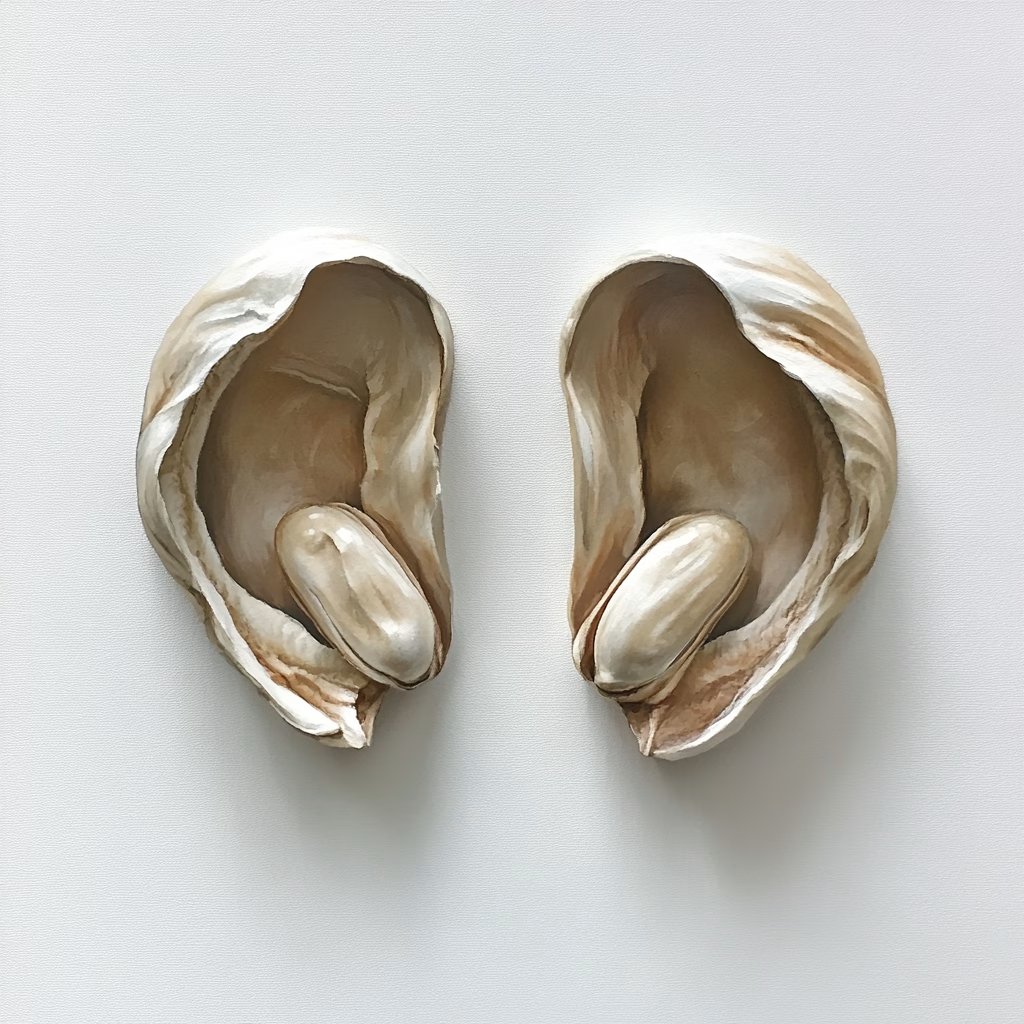
Ear seeds are small seeds or metal beads placed on specific acupressure points on the external ear. They stay in place with adhesive tape and provide continuous, low-level stimulation to those points throughout the day. When you press on them â or even when they are just resting against the skin â they activate nerve pathways that connect the ear to the brain.
The external ear is one of the most neurologically dense areas of the body. It contains branches of multiple cranial nerves, including the vagus nerve, the trigeminal nerve, and the auricular branch of the glossopharyngeal nerve. These nerves connect directly to brain regions involved in attention, emotional regulation, and executive function â the exact areas that are dysregulated in ADHD.
This is not folk medicine guessing. The vagus nerve alone connects to the locus coeruleus, which is the brain’s primary source of norepinephrine â the same neurotransmitter that ADHD medications like atomoxetine target. Stimulating auricular points that activate the vagus nerve can increase norepinephrine activity in the prefrontal cortex, which is the brain region responsible for attention, planning, and impulse control.
In traditional Chinese medicine, ADHD is understood as a pattern of heart fire, kidney deficiency, or liver qi stagnation disturbing the shen â the spirit or mind. The ear contains microsystem points that correspond to every organ and brain region, making it a powerful access point for addressing these underlying patterns. The auricular points for ADHD target both the Western neurological mechanisms and the Eastern energetic patterns simultaneously.
The Best Ear Points for ADHD
Shen Men (Spirit Gate)
Shen Men is the most important ear point for virtually any neurological or emotional condition, and ADHD is no exception. Located in the triangular fossa of the ear â the upper part of the ear where two ridges form a triangle â Shen Men calms the mind, reduces anxiety, and creates a foundation of nervous system balance that makes all other points more effective.
For ADHD specifically, Shen Men addresses the restlessness and emotional reactivity that often accompany attention difficulties. Many people with ADHD experience a nervous system that is either understimulated and seeking input or overstimulated and overwhelmed. Shen Men helps regulate this oscillation, creating a more stable baseline from which focus becomes easier.
This point also reduces the anxiety that frequently coexists with ADHD. When your nervous system is calmer, your prefrontal cortex functions better, which directly improves attention and executive function. Press the ear seed at this point several times throughout the day, holding for 10 to 15 seconds each time.
Point Zero (Autonomic Point)
Located in the center of the ear where the helix begins to rise, Point Zero is the master regulatory point of auricular therapy. It brings the entire body toward homeostasis â physiological balance â and resets the autonomic nervous system.
For ADHD, Point Zero is essential because it addresses the autonomic dysregulation that underlies many ADHD symptoms. Research has shown that people with ADHD often have altered autonomic nervous system function, with reduced parasympathetic activity and heightened sympathetic tone. This imbalance contributes to difficulty sustaining attention, impulsivity, and emotional volatility.
Point Zero helps restore the balance between sympathetic and parasympathetic nervous system activity, creating the physiological conditions that support sustained focus. Combined with Shen Men, it forms the foundation of any auricular protocol for ADHD.
Brain Point (Subcortex)
Located on the inner surface of the antitragus â the small rounded prominence opposite the ear canal opening. The brain point directly influences cerebral function and is specifically indicated for conditions involving cognitive difficulties, memory problems, and attention deficits.
This point stimulates neural activity in the cortex and has been shown in research to produce measurable changes in EEG patterns â the electrical activity of the brain. For ADHD, it targets the prefrontal cortex hypoactivity that is one of the hallmark neurological features of the condition. When the prefrontal cortex is underactive, you struggle with attention, working memory, and impulse control. The brain point helps increase prefrontal activity.
Press this seed 5 to 8 times throughout the day, holding gentle pressure for 10 seconds each time. Many people report that pressing this point during moments when they need to concentrate â before a meeting, during study sessions, or when starting a focused task â provides a noticeable boost in clarity.
Kidney Point
Located in the upper part of the concha â the large bowl-shaped depression of the ear. The kidney point strengthens kidney energy, which in Chinese medicine governs the brain and marrow. Kidney deficiency is one of the most common underlying patterns in ADHD, particularly in adults who experience brain fog, fatigue alongside their attention difficulties, and a sense of mental depletion.
The kidney point supports the constitutional energy that feeds brain function. When kidney energy is strong, the mind is clear, memory is sharp, and concentration comes more naturally. When kidney energy is depleted, the mind wanders, focus is difficult, and mental fatigue sets in quickly.
This point is especially important for adults with ADHD who also experience low energy, lower back weakness, or a sense of being mentally burnt out. It addresses the root constitutional pattern rather than just the surface symptoms.
Liver Point
Located in the lower portion of the concha, near the kidney point. The liver point moves stagnant liver qi and clears liver fire â two patterns that frequently contribute to ADHD symptoms, particularly irritability, frustration, emotional outbursts, and the kind of restless agitation that makes sitting still feel impossible.
In Chinese medicine, the liver is responsible for the smooth flow of qi throughout the body. When liver qi stagnates, it generates heat that rises and disturbs the mind. This manifests as irritability, difficulty transitioning between tasks, hyperfocus on the wrong things, and emotional volatility â symptoms that many people with ADHD recognize immediately.
The liver point is particularly important for ADHD that is accompanied by significant emotional dysregulation, anger or frustration that seems disproportionate, or the kind of mental tension that prevents relaxation.
Heart Point
Located in the deepest part of the concha, below the ear canal opening. The heart point calms the shen â the spirit or mind â and addresses the heart fire pattern that contributes to racing thoughts, difficulty quieting the mind, insomnia, and the kind of mental hyperactivity where thoughts jump from topic to topic without pause.
For ADHD, the heart point is especially relevant for the hyperactive and combined subtypes where mental restlessness is a dominant feature. It also helps with the sleep difficulties that are extremely common in ADHD, since calming heart fire naturally promotes better sleep quality â and better sleep directly improves attention and executive function the following day.
Prefrontal Cortex Point (Forehead Point)
Located on the earlobe, in the area corresponding to the forehead and frontal brain. This point directly targets the prefrontal cortex â the brain region most implicated in ADHD. It supports executive function, working memory, planning ability, and impulse control.
This is one of the most specifically targeted points for ADHD because it addresses the exact neurological deficit that defines the condition. The prefrontal cortex is consistently shown to be underactive in ADHD, and stimulating this auricular point sends afferent signals through the cranial nerves that influence prefrontal activity.
Combine this point with the brain point for maximum effect on cognitive function and attention.
How to Use Ear Seeds for ADHD
Ear seeds work best when applied to multiple points simultaneously and worn continuously for 3 to 5 days before replacing them. Unlike finger acupressure where you press points for a minute or two, ear seeds provide ongoing stimulation that accumulates over time.
Start with 4 to 5 points per ear. The core ADHD protocol I recommend includes Shen Men, Point Zero, Brain Point, and Kidney Point on both ears, with Liver Point or Heart Point added based on your specific symptom pattern. If emotional dysregulation is your biggest challenge, add Liver Point. If racing thoughts and mental hyperactivity dominate, add Heart Point.
Apply the seeds to clean, dry ear skin. Use the small adhesive patches that come with ear seed kits to secure each seed over the correct point. Press each seed firmly when first applied to activate the point, then press each seed 3 to 5 times throughout the day for 10 to 15 seconds each press.
The most effective pressing schedule for ADHD aligns with your daily focus demands. Press all your ear seeds when you wake up to activate them for the day. Press them again before any task that requires sustained focus â before work, before studying, before meetings. Press them when you notice your attention wandering or when ADHD symptoms spike. And press them before bed to activate the calming points for better sleep.
Replace ear seeds every 3 to 5 days. If a seed falls off earlier, replace it. If the skin under any seed becomes irritated, remove it, let the area rest for a day, and reapply to a slightly adjacent spot.
What the Research Says
The research on auricular acupressure for ADHD is still emerging, but the existing evidence is encouraging, particularly when combined with the robust research on auricular stimulation for related conditions like anxiety, insomnia, and autonomic nervous system regulation.
A study published in The Journal of Alternative and Complementary Medicine found that auricular acupressure significantly improved attention and reduced hyperactivity in children with ADHD compared to sham acupressure. The improvement was measured using standardized ADHD rating scales and was maintained throughout the treatment period.
Research on transcutaneous auricular vagus nerve stimulation â which works through the same vagal pathways that ear seeds activate â has shown improvements in attention, cognitive control, and prefrontal cortex function. A study in Brain Stimulation demonstrated that auricular vagus nerve stimulation enhanced performance on attention tasks and increased activity in the locus coeruleus-norepinephrine system, the exact neural pathway targeted by ADHD medications.
Studies on auricular acupressure for anxiety and insomnia â both of which frequently coexist with ADHD and worsen its symptoms â consistently show significant improvements. A meta-analysis in Complementary Therapies in Medicine found that auricular acupressure was effective for reducing anxiety, with effects comparable to some pharmacological interventions.
The research consistently shows that auricular stimulation works best when applied consistently over weeks, when multiple points are used simultaneously, and when combined with other management strategies. These findings align with what I see in practice â ear seeds are most effective as part of a comprehensive approach, not as a standalone solution.
Combining Ear Seeds With Other Approaches
Ear seeds work best for ADHD when integrated into a broader management strategy.
If you are taking ADHD medication, ear seeds can complement your medication by supporting the neurological pathways your medication targets. Many people find that ear seeds help smooth out the transitions when medication wears off, reduce medication-related anxiety, and support focus during periods when they are not medicated. Always discuss complementary approaches with your prescribing doctor.
Regular acupressure mat sessions provide broader nervous system regulation that supports the targeted work of ear seeds. Lying on your Pranamat for 15 to 20 minutes daily activates the parasympathetic nervous system, reduces cortisol, and creates a foundation of nervous system balance that makes ADHD symptoms more manageable. I have been using my Pranamat daily since 2017, and the cumulative effect on nervous system regulation is significant â something that directly benefits anyone managing ADHD.
Exercise is one of the most evidence-supported non-pharmaceutical interventions for ADHD. It increases dopamine and norepinephrine naturally, improves executive function, and reduces hyperactivity. Combining regular exercise with ear seeds creates a powerful synergy â exercise provides the neurochemical boost while ear seeds provide continuous neurological support throughout the day.
Sleep hygiene is critical because poor sleep dramatically worsens ADHD symptoms. The Shen Men and Heart ear points directly support better sleep, but combining them with consistent sleep schedules, reduced screen time before bed, and relaxation practices like lying on your Pranamat before bed creates a comprehensive sleep improvement strategy.
Mindfulness and meditation train the attention networks that are weakened in ADHD. Pressing ear seeds during meditation sessions provides dual stimulation â the meditation trains attention from the top down while the ear seeds support the neurological hardware from the bottom up.
Common Mistakes to Avoid
Using only one or two points limits your results. ADHD involves multiple neurological systems â attention, emotional regulation, executive function, autonomic balance â and addressing them requires multiple points working together. Use at least 4 to 5 points per ear for meaningful results.
Not pressing the seeds enough throughout the day reduces their effectiveness. Ear seeds provide passive stimulation just by being in place, but active pressing significantly amplifies their effect. Press each seed at least 3 to 5 times per day, and especially during moments when you need focus.
Expecting immediate dramatic results leads to disappointment. Ear seeds build cumulative effects over weeks. Most people notice subtle improvements in focus and emotional regulation within the first week, with more significant changes after 3 to 4 weeks of consistent use. The effects become more stable and noticeable with continued practice.
Placing seeds on incorrect points wastes your effort. The ear is small and the points are close together. If you are not confident in point location, consider having an acupuncturist or trained practitioner apply your first set of seeds and mark the points for future self-application.
Ignoring skin irritation can cause problems. If skin under a seed becomes red, itchy, or sore, remove the seed immediately. The point can be restimulated after the skin heals. Sensitive ears may need seeds replaced more frequently or may benefit from hypoallergenic adhesive patches.
When to See a Professional
If you suspect you have ADHD but have not been formally diagnosed, seek evaluation from a qualified professional before self-treating. ADHD shares symptoms with several other conditions including anxiety, depression, sleep disorders, and thyroid dysfunction. Accurate diagnosis ensures you are addressing the right condition.
If your ADHD symptoms are significantly impacting your work, relationships, or quality of life, professional treatment should be your primary approach. Ear seeds are a complement to professional care, not a substitute for it.
Licensed acupuncturists who specialize in auricular therapy can provide more precise point selection based on your specific ADHD presentation and underlying pattern. They can also incorporate needle acupuncture for deeper stimulation and customize protocols as your symptoms evolve.
The Bottom Line
Ear seeds offer a practical, non-invasive way to support ADHD management through continuous stimulation of auricular acupressure points that directly influence the neurological pathways involved in attention, focus, and emotional regulation.
The key points â Shen Men, Point Zero, Brain Point, Kidney Point, Liver Point, Heart Point, and the Prefrontal Cortex Point â target ADHD through multiple mechanisms: vagus nerve activation that increases norepinephrine in the prefrontal cortex, autonomic nervous system regulation, calming of heart fire and liver qi stagnation, and direct stimulation of cortical activity.
A consistent protocol using 4 to 5 points per ear, replaced every 3 to 5 days, pressed multiple times daily, and combined with other evidence-supported approaches like exercise, sleep hygiene, and nervous system regulation creates a comprehensive support system that works alongside â not instead of â professional ADHD treatment. Ear seeds will not cure ADHD, but they can meaningfully reduce symptom intensity and improve your ability to focus, regulate emotions, and manage daily demands.
Frequently Asked Questions
Can ear seeds cure ADHD?
No. ADHD is a neurodevelopmental condition that cannot be cured by any intervention, including ear seeds. What ear seeds can do is support the neurological pathways involved in attention and emotional regulation, potentially reducing symptom intensity and improving focus. They work best as part of a comprehensive management approach that may include medication, behavioral strategies, exercise, and professional support.
How long do ear seeds take to work for ADHD?
Most people notice subtle improvements in focus and emotional regulation within the first 5 to 7 days of consistent use. More significant effects typically develop after 3 to 4 weeks of regular application. The key is consistency â wearing seeds continuously, replacing them every 3 to 5 days, and pressing them multiple times daily. Effects are cumulative, meaning they build and stabilize over time.
Are ear seeds safe to use with ADHD medication?
Ear seeds are generally safe to use alongside ADHD medication, as they work through different physiological mechanisms. However, you should always inform your prescribing doctor about any complementary approaches you are using. Some practitioners find that patients can sometimes adjust medication dosages after establishing a consistent ear seed practice, but any medication changes should only be made under medical supervision.
Which ADHD subtype responds best to ear seeds?
All three ADHD subtypes â predominantly inattentive, predominantly hyperactive-impulsive, and combined â can benefit from ear seeds, but the point selection should be tailored to the dominant symptoms. Inattentive type benefits most from Brain Point, Prefrontal Cortex Point, and Kidney Point. Hyperactive-impulsive type responds well to Shen Men, Heart Point, and Liver Point. Combined type benefits from using all points together.
Can children with ADHD use ear seeds?
Ear seeds can be used with children, but several considerations apply. Children may find them uncomfortable or distracting, especially younger children who may pull at them. The points should be applied by a trained practitioner, and parents should monitor for skin irritation. Some practitioners prefer to use ear seeds with children aged 7 and older who can understand the purpose and cooperate with the process. Always consult with your child’s healthcare provider before starting any complementary treatment.
Do ear seeds work better than finger acupressure for ADHD?
Ear seeds and finger acupressure work through different mechanisms and are most effective when combined. The advantage of ear seeds is continuous stimulation â they work passively throughout the day and can be actively pressed when needed. Finger acupressure on body points like Liver 3, Kidney 3, and Pericardium 6 provides deeper stimulation of the constitutional patterns underlying ADHD. Using both approaches together addresses ADHD from multiple angles.
Related Reading
- Pressure Points for Anxiety
- Pressure Points for Stress
- Pressure Points for Sleep
- Acupressure Mat Benefits
- Acupressure for Stress Relief
Author

Free Mobile App
Find Pressure Points on the Go
Interactive 3D body map with 100+ acupressure points, step-by-step guides, and personalized routines.
Download Free App →