
Acupressure for Endometriosis: Pressure Points That Help With Pain and Inflammation (2026)
If you are living with endometriosis, you already know that managing the pain is a full-time job on top of everything else you are dealing with. The cramping, the deep pelvic ache, the lower back pain that radiates down your legs, the bloating that makes you feel like your abdomen is made of concrete â it is relentless, and it often does not respond well to standard over-the-counter painkillers.
I have been working with acupressure since 2017, and while my primary focus has always been on general pain management and stress relief, endometriosis is one of the conditions where I have seen acupressure make a genuinely meaningful difference for people. The reason is straightforward: endometriosis pain is not just about the tissue itself. It is about inflammation, muscle tension, nervous system dysregulation, and hormonal imbalance â all of which acupressure directly targets.
This guide covers the specific acupressure points that traditional Chinese medicine and modern research identify as most effective for endometriosis pain, how to use them in a daily protocol, what the science says, and how to build a comprehensive pain management approach that goes beyond just taking another pill.
How Acupressure Helps With Endometriosis Pain
Endometriosis causes tissue similar to the uterine lining to grow outside the uterus â on the ovaries, fallopian tubes, pelvic lining, and sometimes even further. This tissue responds to hormonal changes just like the endometrium, but with nowhere to go. The result is inflammation, adhesions, and pain that can be debilitating.
Acupressure works on endometriosis pain through several mechanisms. First, it activates the parasympathetic nervous system, which reduces the overall pain signal intensity by calming the nervous system out of its hypervigilant state. When you are in chronic pain, your nervous system ramps up its sensitivity â a process called central sensitization. Acupressure helps dial that sensitivity back down.
Second, stimulating specific acupressure points triggers endorphin release. These natural painkillers do not just mask pain temporarily â they change the neurochemical environment in a way that reduces pain perception over time with consistent practice.
Third, certain points specifically improve blood circulation in the pelvic region. In Chinese medicine theory, endometriosis is primarily understood as a condition of blood stasis â stagnant blood that causes pain and masses. Points that move blood and break stagnation directly address this underlying pattern.
Fourth, acupressure reduces the inflammatory response. A 2019 systematic review published in Evidence-Based Complementary and Alternative Medicine found that acupuncture and acupressure modulated inflammatory markers in patients with chronic pelvic pain conditions, including endometriosis.
The Best Acupressure Points for Endometriosis
These points target endometriosis pain through different mechanisms â some address the pelvic pain directly, others reduce inflammation, and some regulate the hormonal and nervous system patterns that drive the condition. Use all of them as part of a complete protocol for the best results.
Spleen 6 (Sanyinjiao)
Located on the inside of the leg, about four finger widths above the ankle bone, just behind the tibia. Spleen 6 is the single most important acupressure point for gynecological conditions. It is the meeting point of three yin meridians â the spleen, liver, and kidney â which makes it incredibly powerful for any condition involving the uterus, ovaries, or pelvic region.
For endometriosis specifically, Spleen 6 regulates menstruation, reduces pelvic congestion, and alleviates the cramping that can make the days before and during your period unbearable. A 2020 randomized controlled trial published in Complementary Therapies in Medicine found that acupressure on Spleen 6 significantly reduced menstrual pain intensity and duration compared to a control group.
Press firmly with your thumb for 60 to 90 seconds on each leg, two to three times daily. Many women find this point deeply tender â that sensitivity often indicates how much stagnation is present. The tenderness typically decreases with regular stimulation over several weeks.
Important note: Spleen 6 should be avoided during pregnancy as it can stimulate uterine contractions.
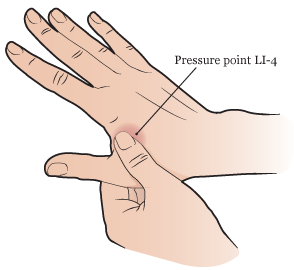
Large Intestine 4 (Hegu)
Located in the fleshy web between the thumb and index finger. Large Intestine 4 is the master pain point in traditional Chinese medicine â it is used for pain anywhere in the body, but it has a particular affinity for pain in the lower abdomen and pelvic region.
For endometriosis, LI 4 serves as both a powerful general analgesic and a point that moves qi and blood throughout the body, helping to break the stagnation patterns that contribute to endometriosis pain. It also has a strong calming effect on the nervous system, which is important because chronic pain creates a stress-pain cycle that amplifies symptoms over time.
Press firmly into the web of each hand, angling toward the index finger bone, for 60 seconds on each side. This point pairs especially well with Spleen 6 â pressing both simultaneously (one on your hand, one on your leg) creates a synergistic effect that is greater than either point alone.
Important note: Like Spleen 6, avoid LI 4 during pregnancy.
Liver 3 (Tai Chong)
Located on the top of the foot, between the first and second toes, about two finger widths from the web. Liver 3 is the master point for releasing stagnation â and in Chinese medicine, endometriosis is fundamentally a stagnation condition.
The liver meridian governs the smooth flow of qi and blood throughout the body, and when liver qi stagnates, you get pain, irritability, breast tenderness, and the characteristic symptoms of premenstrual syndrome that are often amplified in women with endometriosis. Liver 3 moves that stuck energy and releases the emotional and physical pressure.
This point is particularly effective for the sharp, stabbing pains that many women with endometriosis experience, as opposed to the dull aching. It also helps with the bloating and abdominal distension that often accompanies flares. Press firmly for 60 seconds on each foot, twice daily. If this point is very tender, that is a strong indication that liver qi stagnation is contributing significantly to your symptoms.
Conception Vessel 6 (Qihai)
Located on the midline of the lower abdomen, about one and a half finger widths below the navel. Conception Vessel 6 â also known as the “Sea of Qi” â is one of the most powerful points for tonifying the body’s overall energy and specifically for strengthening the lower abdominal region.
For endometriosis, CV 6 warms and nourishes the lower abdomen, improving circulation in the pelvic region and helping to resolve the blood stasis that drives the condition. Many women with endometriosis describe a cold, heavy sensation in their lower abdomen â CV 6 directly counteracts this.
Apply gentle but steady pressure with two or three fingers for 60 to 90 seconds. You can also warm this point by placing your palms over it and holding for several minutes â the warmth from your hands adds to the therapeutic effect. This point responds particularly well to consistent daily stimulation.
Conception Vessel 4 (Guanyuan)
Located on the midline of the lower abdomen, about four finger widths below the navel. Conception Vessel 4 is the “Gate of Origin” and is one of the primary points for strengthening the reproductive system in Chinese medicine.
CV 4 nourishes the uterus directly and helps regulate the menstrual cycle. For women with endometriosis, this point addresses the heavy bleeding, clotting, and irregular cycles that often accompany the condition. It also strengthens the kidney energy that governs reproductive health, making it an important long-term support point rather than just an acute pain reliever.
Press gently with three fingers for 60 to 90 seconds. This point benefits enormously from warmth â applying a warm compress or hot water bottle over it after acupressure amplifies the effect significantly.
Kidney 3 (Taixi)
Located on the inside of the ankle, in the depression between the ankle bone and the Achilles tendon. Kidney 3 is the source point of the kidney meridian, which in Chinese medicine governs reproductive health, hormonal balance, and the body’s foundational energy reserves.
For endometriosis, Kidney 3 supports the deep constitutional energy that chronic pain depletes. Living with endometriosis is exhausting â the pain itself, the sleep disruption, the emotional toll, the energy spent managing symptoms. Kidney 3 helps restore those depleted reserves. It also helps regulate hormonal function, which is particularly important since endometriosis is an estrogen-dependent condition.
Press firmly for 60 seconds on each ankle, once or twice daily. This point is especially important for women who experience fatigue, lower back pain, or cold extremities alongside their endometriosis symptoms.
Stomach 36 (Zusanli)
Located on the front of the leg, about four finger widths below the kneecap and one finger width to the outside of the shin bone. Stomach 36 is one of the most important points in all of traditional Chinese medicine â it is known as the point that treats a hundred diseases.
For endometriosis, Stomach 36 serves multiple roles. It strengthens digestion, which is important because many women with endometriosis experience gastrointestinal symptoms including bloating, nausea, and irregular bowel movements. It boosts overall energy and immune function. And it has a documented anti-inflammatory effect â research shows that stimulating Stomach 36 reduces inflammatory cytokines, which is directly relevant to a condition driven by chronic inflammation.
Press firmly for 60 seconds on each leg. This is an excellent point to include in your daily routine even on days when endometriosis symptoms are not active, because it builds the body’s resilience over time.
Building Your Daily Endometriosis Acupressure Routine
The most effective approach combines targeted pelvic points with general pain, energy, and inflammation-reducing points in a structured daily protocol. Here is a routine that takes about 15 to 20 minutes.
Start your morning with Spleen 6 on both legs (60 seconds each) and Large Intestine 4 on both hands (60 seconds each). These two points together form the strongest combination for gynecological pain in traditional Chinese medicine. Follow with Liver 3 on both feet (60 seconds each) to address stagnation and emotional tension.
Next, work on the abdominal points. Lie down on your back with a pillow under your knees. Apply gentle pressure to Conception Vessel 6 for 90 seconds, then move down to Conception Vessel 4 for 90 seconds. Consider placing a warm compress over your lower abdomen afterward for additional relief.
In the evening, repeat Spleen 6, Large Intestine 4, and Liver 3. Add Kidney 3 on both ankles (60 seconds each) to restore energy depleted during the day, and Stomach 36 on both legs (60 seconds each) for anti-inflammatory and digestive support.
During flares or particularly painful days, increase the frequency of Spleen 6 and LI 4 to three or four times daily. These are your emergency pain points. You can press them during work meetings, while sitting in the car, or while lying in bed â they work in any position.
What the Research Says
The evidence for acupressure and acupuncture in managing endometriosis pain is growing, though it remains an area where more research is needed. Several important studies support the approach.
A 2017 Cochrane review of acupuncture for endometriosis-related pain found that acupuncture was more effective than sham acupuncture for reducing pelvic pain and dysmenorrhea. The review called for larger, higher-quality studies but noted the consistency of positive results across trials.
A 2020 randomized controlled trial in Complementary Therapies in Clinical Practice demonstrated that women who received acupressure for eight weeks reported significant reductions in pain intensity and improvements in quality of life compared to those receiving standard care alone.
Research published in the Journal of Obstetrics and Gynaecology Research has shown that acupuncture and acupressure reduce prostaglandin levels â the inflammatory compounds directly responsible for uterine cramping and pain in endometriosis.
The honest assessment is that acupressure will not cure endometriosis. It does not eliminate the misplaced tissue or reverse adhesions. What it does â and what the research supports â is significantly reduce pain intensity, decrease reliance on pain medication, improve quality of life, and help regulate the nervous system and inflammatory responses that amplify endometriosis symptoms.
Combining Acupressure With Other Approaches
Acupressure works best as part of a comprehensive endometriosis management strategy, not as a standalone treatment.
Medical management â whether hormonal therapies, pain medications, or surgical options â addresses the condition from the biomedical perspective. Acupressure complements this by addressing the pain signaling, inflammation, and nervous system components that medication alone does not fully cover. Always discuss your complete treatment plan with your healthcare provider.
Heat therapy is one of the most effective complementary approaches for endometriosis pain, and it pairs perfectly with acupressure. Applying warmth to the lower abdomen before or during an acupressure session increases blood flow to the pelvic region and enhances the effect of the abdominal points. A hot water bottle, heating pad, or lying on your Pranamat with a warm towel underneath creates an ideal environment for pelvic pain relief.
Stress management is critical because stress directly amplifies endometriosis symptoms through cortisol-mediated inflammation and nervous system activation. Daily practices that activate the parasympathetic nervous system â deep breathing, meditation, or lying on your Pranamat for 20 minutes â create a calmer baseline that makes pain episodes less intense and less frequent. I have been using my Pranamat daily since 2017, and the nervous system regulation it provides is exactly the kind of support that makes chronic pain conditions more manageable.
Anti-inflammatory nutrition supports the same pathways that acupressure targets. Reducing processed foods, sugar, and alcohol while increasing omega-3 fatty acids, turmeric, and leafy greens creates an internal environment that is less conducive to inflammation.
Exercise â even gentle exercise like walking, swimming, or yoga â reduces inflammation, releases endorphins, and improves circulation. On days when endometriosis pain is manageable, movement is one of the best things you can do for your body.
Common Mistakes to Avoid
Pressing too hard on the abdominal points is the biggest concern for women with endometriosis. The lower abdomen can be extremely tender during flares, and aggressive pressure will increase pain rather than relieve it. Start with very gentle pressure on CV 6 and CV 4 â you can always increase the intensity as your body responds. The pressure should feel soothing, not sharp.
Inconsistency undermines the most effective protocols. Acupressure for endometriosis works best with daily practice over at least six to eight weeks. The effects are cumulative â the nervous system recalibration, the anti-inflammatory response, and the improved pelvic circulation all build over time. A random session during a flare is better than nothing, but a daily routine produces fundamentally different results.
Ignoring your menstrual cycle is a missed opportunity. Acupressure can be adapted to the phase of your cycle. In the week before your period, increase focus on Liver 3 and Spleen 6 to preemptively address the stagnation and cramping that will intensify. During your period, emphasize LI 4 and the abdominal points for direct pain relief. In the weeks between periods, focus on Kidney 3 and Stomach 36 to build foundational energy and reduce inflammation.
Treating acupressure as a replacement for medical care is dangerous with endometriosis. This is a progressive condition that can affect fertility and cause significant complications if not properly monitored. Acupressure is a powerful complementary tool, not an alternative to appropriate medical evaluation and treatment.
When to See a Professional
If your endometriosis pain is severe, if self-acupressure is not providing adequate relief, or if you are experiencing symptoms beyond pain â such as infertility concerns, bowel or bladder symptoms, or pain during intercourse â professional acupuncture can provide deeper and more targeted treatment than self-administered acupressure.
Licensed acupuncturists who specialize in gynecological conditions can design treatment protocols specific to your symptom pattern and use needles to access deeper tissue layers. Many also incorporate herbal medicine, dietary guidance, and lifestyle recommendations as part of a comprehensive treatment approach.
Some insurance plans now cover acupuncture for pain conditions â it is worth checking with your provider, especially if your endometriosis has been formally diagnosed.
For anyone newly diagnosed with endometriosis, work with your gynecologist to understand your specific staging and develop an appropriate treatment plan. Acupressure is an excellent addition to that plan, but it works best when you and your healthcare providers are on the same page about the full scope of your treatment.
The Bottom Line
Endometriosis pain is real, it is complex, and it deserves more tools than just another bottle of ibuprofen. Acupressure gives you a set of specific, evidence-supported techniques that you can use at home, at any time, to reduce pain intensity, manage inflammation, and support the nervous system regulation that chronic pain conditions disrupt.
The key points â Spleen 6, Large Intestine 4, Liver 3, Conception Vessel 6, Conception Vessel 4, Kidney 3, and Stomach 36 â target the exact mechanisms that drive endometriosis symptoms: blood stagnation, inflammation, pain signaling, hormonal imbalance, and nervous system sensitization.
A consistent daily practice of 15 to 20 minutes, adapted to your menstrual cycle and combined with medical management, heat therapy, stress reduction, and anti-inflammatory nutrition, creates a comprehensive approach that addresses endometriosis from every angle. It will not make the condition disappear, but it can make living with it significantly more manageable.
Frequently Asked Questions
Can acupressure help with endometriosis pain?
Yes. Research shows that acupressure reduces pain intensity and improves quality of life in women with endometriosis. It works by activating the parasympathetic nervous system, triggering endorphin release, improving pelvic circulation, and reducing inflammatory markers. It is most effective as part of a comprehensive treatment plan that includes appropriate medical care.
What is the best pressure point for endometriosis cramps?
Spleen 6, located on the inside of the leg four finger widths above the ankle bone, is the single most important acupressure point for gynecological pain including endometriosis cramps. For the strongest effect, combine it with Large Intestine 4 on the hand â these two points together form the most powerful combination for pelvic pain in traditional Chinese medicine.
How often should I do acupressure for endometriosis?
Twice daily â a morning and evening session of 15 to 20 minutes each â produces the best results. During flares or particularly painful days, increase the frequency of Spleen 6 and Large Intestine 4 to three or four times daily. Consistency matters more than intensity. A daily routine for six to eight weeks produces cumulative benefits that occasional sessions cannot match.
Can I use acupressure during my period?
Yes, and in fact this is when acupressure is often most helpful for endometriosis. During your period, focus on Large Intestine 4 for pain relief, Conception Vessel 6 for warmth and circulation in the lower abdomen, and Spleen 6 for cramp reduction. Adjust the pressure on abdominal points to your comfort level â be gentler if your abdomen is very tender.
Is acupressure safe with endometriosis medications?
Acupressure is generally safe to use alongside hormonal therapies, pain medications, and other medical treatments for endometriosis. There are no known contraindications between acupressure and standard endometriosis medications. However, always inform your healthcare provider about all the approaches you are using so they can provide the best guidance for your specific situation.
Does acupressure help with endometriosis bloating?
Yes. Liver 3 addresses the qi stagnation that contributes to abdominal bloating and distension. Stomach 36 supports healthy digestion and reduces the gastrointestinal symptoms that many women with endometriosis experience. The abdominal points CV 6 and CV 4 improve pelvic circulation, which can help reduce the heavy, congested sensation that accompanies bloating.
Can acupressure replace surgery for endometriosis?
No. Acupressure is a complementary pain management tool, not a treatment for the underlying tissue growth. It does not remove endometrial implants, dissolve adhesions, or replace surgical intervention when it is medically indicated. What it does is help manage pain, reduce inflammation, and improve quality of life alongside medical treatment. Always work with your gynecologist to determine the appropriate medical management for your condition.
Related Reading
- Pressure Points for Stomach Ache
- Pressure Points for Back Pain
- Pressure Points for Stress
- Acupressure Mat Benefits
- Back Pain Relief for Women Over 45
Author

Free Mobile App
Find Pressure Points on the Go
Interactive 3D body map with 100+ acupressure points, step-by-step guides, and personalized routines.
Download Free App →