
Large Intestine Shu (BL-25) Pressure Point: Benefits & Technique
BL-25 Dachangshu is a lower-back pressure point beside the spine, near the L4 level. For self-care, use gentle, broad pressure on both sides of the lower back for 30 to 90 seconds. Stop if pain shoots down the leg, or if numbness, weakness, tingling, fever, trauma, or loss of bladder or bowel control is present.
Quick answer
| Need | BL-25 guidance |
|---|---|
| Exact area | Lower back, beside the spine near L4 |
| Practical landmark | Level with the top of the hip bones |
| Pressure style | Gentle thumb, knuckle, palm heel, or soft massage ball |
| Time | 30 to 90 seconds per side |
| Traditional uses | Low-back tension, bowel discomfort patterns, sciatica-like tension |
| Avoid | Direct pressure on the spine, hard tools, severe pain, numbness, weakness, or pain after trauma |
Where is BL-25 located?
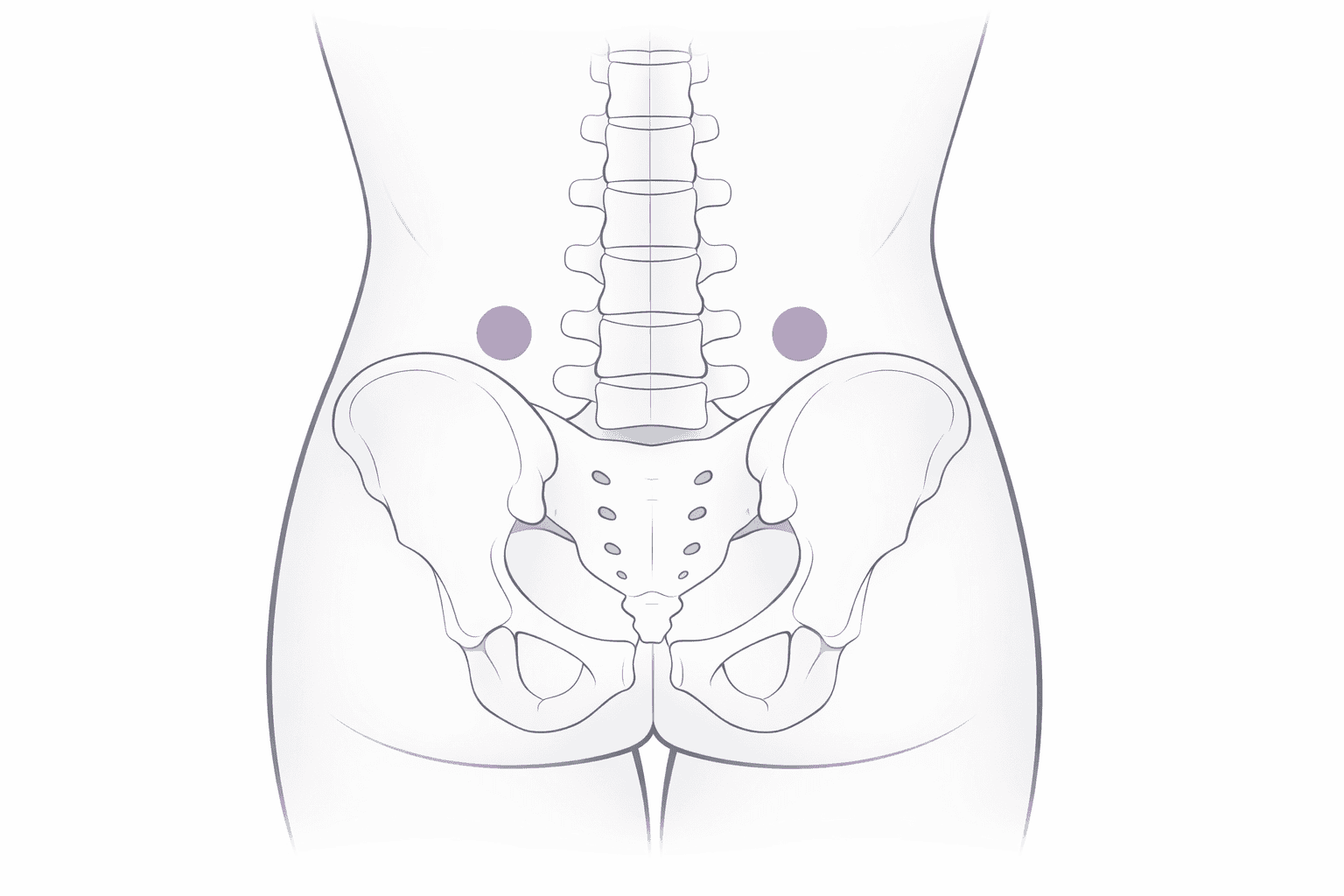
BL-25 is on the lower back, about 1.5 cun lateral to the lower border of the fourth lumbar vertebra. In practical terms, find the level of the top of the hip bones, then move slightly inward toward the spine to the L4 area. The point is beside the spine, not on the bony ridge.
Use both sides as a pair. The right and left BL-25 points sit at the same level, one on each side of the spine. The point may feel like a mildly tender spot in the thick lower-back muscle.
If you are unsure where L4 is, do not dig around aggressively. Use broad, gentle contact across the lower-back muscles instead of sharp pressure into one tiny spot.
How to use BL-25
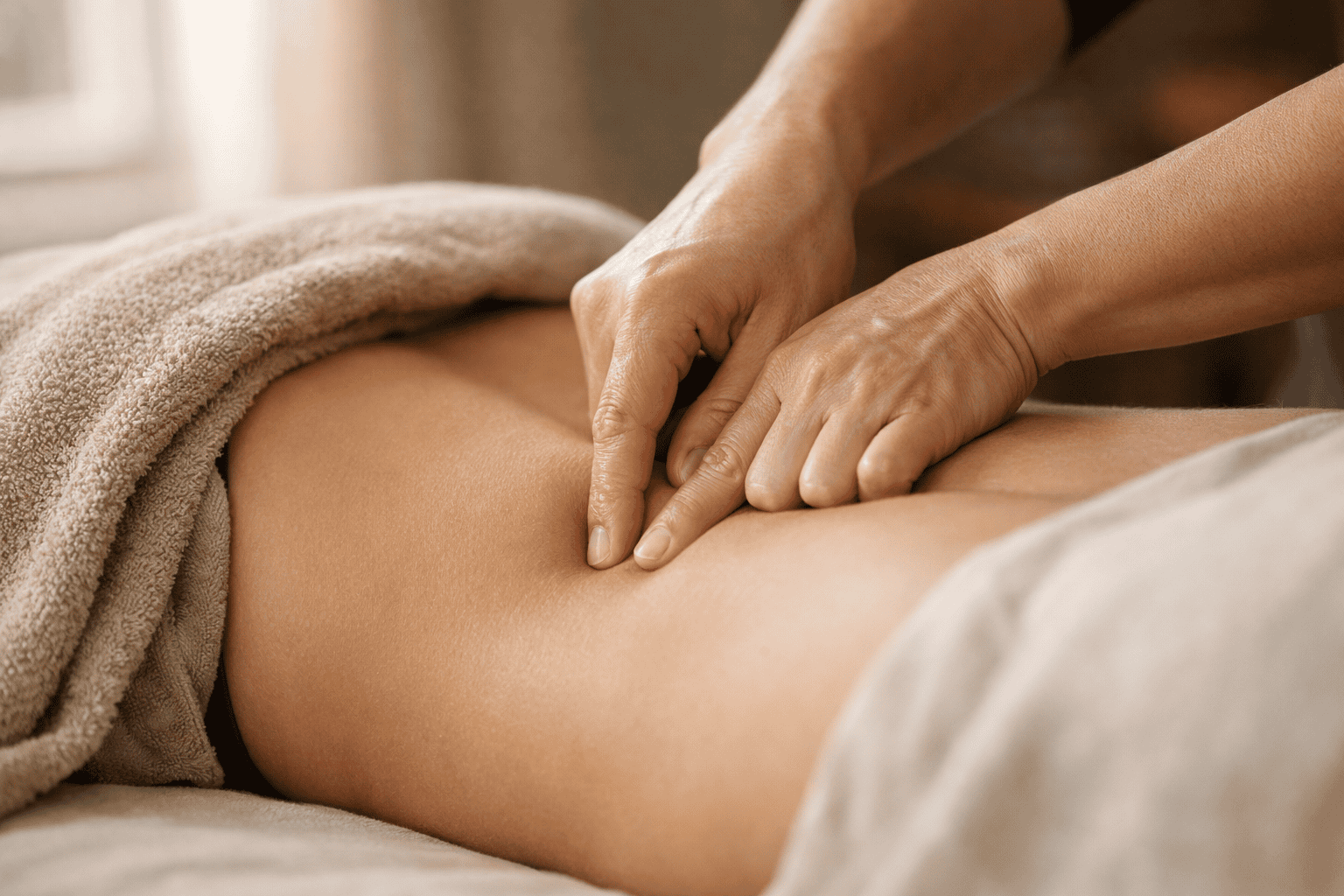
Use comfortable, steady pressure. Place your thumb, knuckle, palm heel, or a soft massage ball over the lower-back muscle beside the spine. Hold for 30 to 90 seconds while breathing slowly, release gradually, then repeat on the other side.
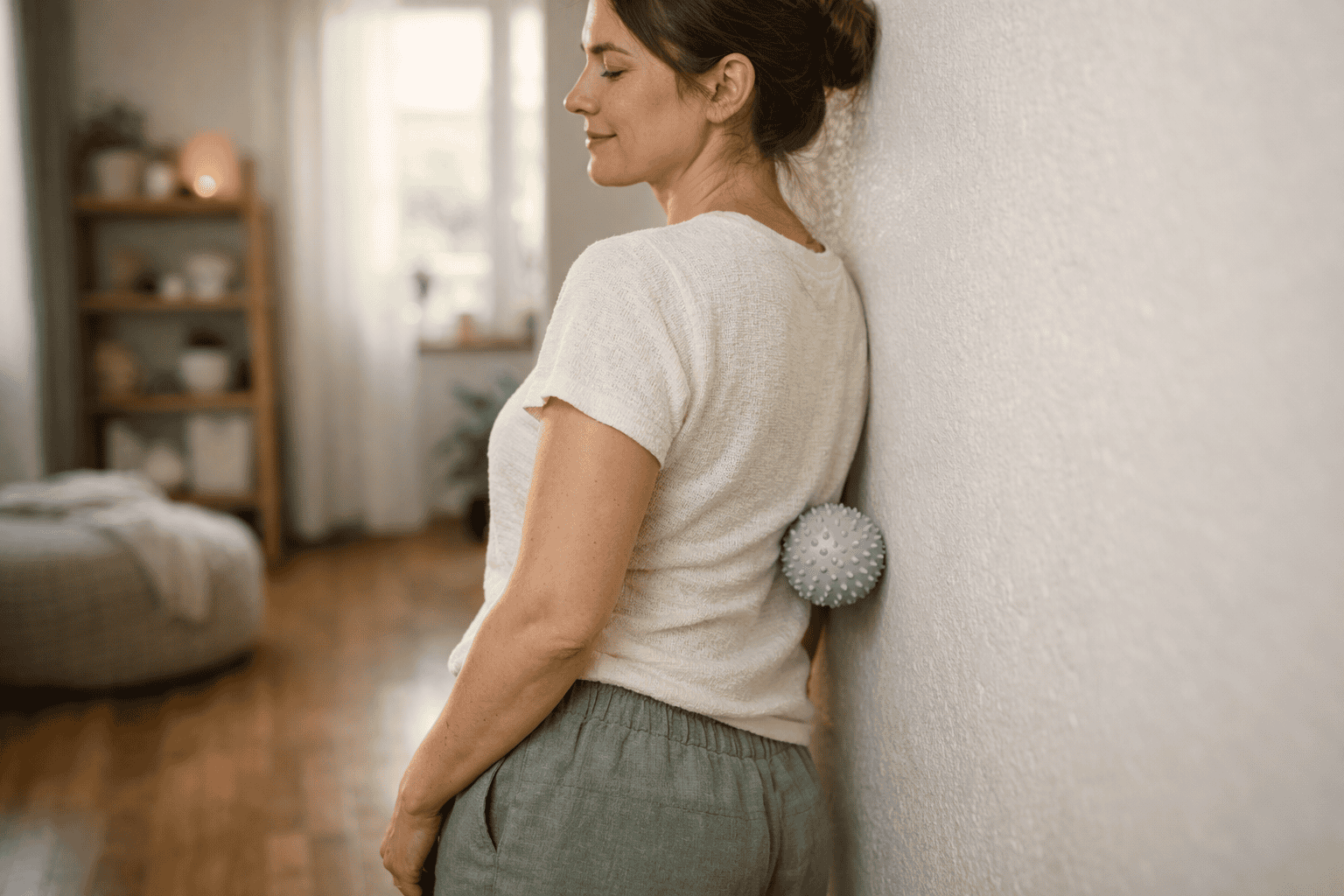
For self-acupressure, a soft massage ball against the wall is often easier than reaching behind your back. Stand with the ball between your lower back and the wall, then lean in lightly. The sensation should feel dull, broad, and tolerable.
Do not press directly on the spine. Do not use hard tools, sharp edges, or body weight that makes you brace or hold your breath. If pressure creates tingling, numbness, weakness, or pain that travels below the knee, stop and seek medical advice.
Actionable takeaway: BL-25 pressure should feel like controlled contact on muscle, not a pain tolerance test.
Pressure Points App
Learn how to locate and apply pressure points with guided sessions, illustrations, and step-by-step instructions. Free to download.
What is BL-25 used for?
BL-25 is traditionally used for lower-back stiffness and digestive patterns linked with the Large Intestine. That does not mean it can fix bowel disease, spinal problems, or nerve pain. It means practitioners often include it in broader routines when the lower back and abdomen feel connected.
For low-back discomfort, BL-25 is usually paired with nearby lumbar and sacral points. Evidence is stronger for acupuncture and acupressure as broader care categories than for BL-25 as a single isolated point. NCCIH notes that acupuncture has evidence for some back and neck pain conditions, and its low-back pain page describes low- to moderate-quality evidence for several mind and body approaches, including acupuncture, in chronic low-back pain care (NCCIH low-back pain overview).
For acupressure specifically, a 2021 systematic review and meta-analysis evaluated randomized trials of acupressure for low-back pain (PMID 33708260). A separate systematic review focused on chronic low-back pain (PMID 32379678). These reviews support cautious interest, but study quality and protocols vary.
For bowel discomfort, the evidence is less point-specific. One randomized trial studied perineal self-acupressure for constipation rather than BL-25 specifically (PMID 25403522). That can support cautious interest in acupressure for some bowel-related symptoms, but it does not prove that BL-25 alone changes constipation or diarrhea.
Safety and contraindications
Use BL-25 as supportive self-care, not as a diagnosis. Lower-back pain can come from muscle tension, joint irritation, disc problems, kidney issues, inflammatory disease, fracture, infection, or other causes. Acupressure cannot tell those apart.
Do not use BL-25 as home care for sudden severe back pain, back pain after a fall, fever with back pain, unexplained weight loss, loss of bladder or bowel control, saddle numbness, new leg weakness, or pain with chest or abdominal emergency symptoms. Those need medical evaluation.
Avoid pressing over bruises, rashes, open skin, recent surgery, or areas with reduced sensation. People with neuropathy, bleeding disorders, fragile skin, osteoporosis, or advanced spine disease should be especially cautious.
Pregnancy deserves extra care. Gentle touch on the lower back may feel comforting for some people, but strong point stimulation during pregnancy should be discussed with a qualified prenatal clinician or licensed practitioner.
Actionable takeaway: If pressure makes symptoms spread, intensify, or feel neurological, stop. BL-25 should not create sharp or radiating pain.
Related points
BL-25 sits in a larger lower-back and Bladder meridian map. Useful related pages include:
- BL-17 Geshu for an upper-back Back-Shu reference point.
- BL-14 Jueyinshu for another Bladder meridian back point.
- BL-13 Feishu for a higher thoracic Back-Shu point.
Frequently asked questions
Where is BL-25 located?
BL-25 is on the lower back, beside the spine at about the level of the fourth lumbar vertebra. A practical landmark is the level near the top of the hip bones. The point is lateral to the spine, not directly on the bony ridge.
What is BL-25 used for?
In traditional acupressure, BL-25 is commonly used for low-back discomfort, bowel patterns such as constipation or diarrhea, and sciatica-like tension. Evidence is stronger for broader acupressure or acupuncture programs than for BL-25 as a single isolated point.
Can I press BL-25 by myself?
Yes, but use gentle pressure. A soft massage ball against a wall is often easier than reaching behind your back. Keep the pressure broad and comfortable. Stop if pain shoots down the leg or if numbness, weakness, or tingling appears.
How long should I hold BL-25?
Most self-care routines use 30 to 90 seconds of steady, comfortable pressure per side. More pressure is not better. If the tissue feels irritated afterward, reduce the time or skip the point.
Is BL-25 safe for low-back pain?
It may be reasonable for mild muscle tension, but it is not appropriate for red-flag symptoms. Seek medical care for severe, sudden, traumatic, worsening, or neurological back pain. BL-25 should be supportive self-care only.
Bottom line
BL-25 Dachangshu is a lower-back pressure point traditionally associated with the Large Intestine and commonly used in routines for low-back and bowel-related discomfort. The safest approach is gentle, broad pressure beside the lumbar spine, paired with realistic expectations.
The evidence supports cautious interest in acupressure for some low-back pain contexts, but it does not prove that one point works for every person or every symptom. Use BL-25 as a practical self-care tool, and treat red-flag symptoms as medical issues.
This article is for educational purposes only and is not medical advice. Acupressure may be useful as supportive self-care, but it should not replace diagnosis or treatment from a qualified clinician. Seek urgent care for severe, sudden, or worsening symptoms.