
Pressure Points for Panic Attacks: Acupressure Techniques That Actually Calm Your Nervous System (2026)
Panic attacks hit without warning, and if you have experienced one, you know how terrifying they can be. Your heart races, your chest tightens, you cannot breathe properly, and your entire body screams that something is catastrophically wrong â even when logically you know it is not. If you are searching for pressure points that can help during a panic attack, you are looking for something you can do with your own hands, right now, without medication or a therapist appointment. That is exactly what acupressure offers.
I have been working with acupressure since 2017, and pressure points for panic attacks are one of the areas where I have seen the most immediate, tangible results. Unlike many acupressure applications where benefits build gradually over weeks, the autonomic nervous system effects of specific pressure points can be felt within minutes. This makes acupressure one of the most practical tools for panic attack management â you always have your hands with you, and the techniques work whether you are at home, at work, or stuck in a situation where a panic attack is building.
This guide covers the specific pressure points that directly calm the panic response, the science behind why they work, how to use them during an active panic attack, and how to build a daily prevention protocol that reduces panic attack frequency over time.
What Happens in Your Body During a Panic Attack
A panic attack is essentially your sympathetic nervous system firing at full intensity when there is no actual danger. Your amygdala â the brain’s threat detection center â triggers the fight-or-flight response, flooding your body with adrenaline and cortisol. Heart rate spikes, breathing becomes rapid and shallow, blood pressure rises, muscles tense, and digestion shuts down. Your body is preparing to fight or run from a threat that does not exist.
The key to understanding why acupressure works for panic attacks is that these pressure points directly influence the autonomic nervous system. Specifically, they activate the vagus nerve and stimulate parasympathetic nervous system activity â the opposite of the fight-or-flight response. When you press certain acupressure points, you are essentially sending a signal to your brain that says the danger is over and it is safe to stand down.
This is not a placebo effect. Research published in journals including Evidence-Based Complementary and Alternative Medicine has demonstrated that acupressure at specific points produces measurable changes in heart rate variability, cortisol levels, and autonomic nervous system markers. These are objective, physiological changes that correlate directly with reduced anxiety and panic symptoms.
In Chinese medicine terms, panic attacks represent a disruption of the heart and kidney connection, with qi rising chaotically to the chest and head. The points selected for this protocol specifically calm the spirit, anchor rising qi, and restore the smooth flow of energy through the chest and heart.
The Best Pressure Points for Panic Attacks
Pericardium 6 (Neiguan) â The Master Anti-Panic Point
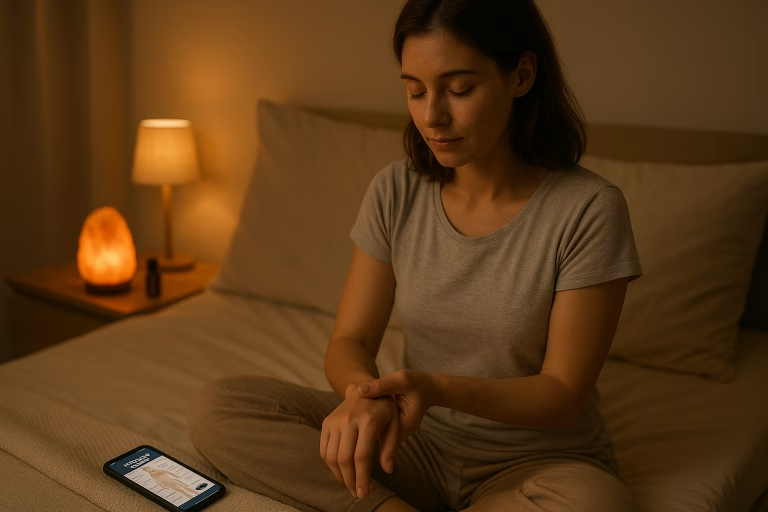
Located three finger-widths above the inner wrist crease, between the two tendons. This is the single most important pressure point for panic attacks and the one you should learn first.
Pericardium 6 has the most extensive clinical evidence of any acupressure point for anxiety and autonomic nervous system regulation. Multiple randomized controlled trials have demonstrated that stimulating this point reduces heart rate, decreases anxiety scores, improves heart rate variability, and calms nausea â all symptoms that occur during panic attacks. It works by directly activating the vagus nerve, which is the main pathway for switching your nervous system from sympathetic dominance to parasympathetic calm.
In Chinese medicine, the pericardium is the protector of the heart, and this point specifically calms the spirit and regulates the chest. For panic attacks where you feel chest tightness, heart palpitations, and a sense of dread, Pericardium 6 addresses the root pattern rather than just masking symptoms.
Press firmly between the tendons with your thumb for 1 to 2 minutes on each wrist. During an active panic attack, press harder than you normally would â the strong sensation gives your brain something concrete to focus on and accelerates the vagal response. Combine with slow exhale-focused breathing: inhale for 4 counts, hold for 2, exhale for 6 to 8 counts.
Heart 7 (Shenmen) â The Spirit Gate
Located on the inner wrist, at the crease on the pinky side, in the small depression just inside the wrist bone. The name “Spirit Gate” tells you everything about this point’s function â it opens and calms the spirit, which in Chinese medicine is housed in the heart.
Heart 7 is the primary point for calming the heart and settling anxiety. While Pericardium 6 works more on the autonomic nervous system broadly, Heart 7 specifically addresses the emotional and spiritual component of panic â the overwhelming sense of dread, the feeling that something terrible is about to happen, and the racing thoughts that spiral during an attack.
Research has shown that stimulating Heart 7 reduces anxiety scores in pre-operative patients, improves sleep quality in people with insomnia related to anxiety, and decreases cortisol levels. For panic attacks specifically, this point calms the racing mind and the sensation that your heart is going to beat out of your chest.
Press gently but firmly into the depression for 1 to 2 minutes on each wrist. This point responds well to gentle, sustained pressure rather than deep stimulation. During a panic attack, pressing both Heart 7 points simultaneously â one on each wrist â creates a bilateral calming effect that many people find particularly grounding.
Conception Vessel 17 (Shanzhong) â The Chest Release Point
Located at the center of the chest, on the breastbone, at the level of the nipples. This is the meeting point of all qi in the chest and is specifically indicated for any condition involving chest oppression, difficulty breathing, or emotional constriction.
During a panic attack, one of the most frightening symptoms is the chest tightness and difficulty breathing. Conception Vessel 17 directly opens and relaxes the chest, eases breathing, and calms the heart. Many people describe the sensation as a physical release â as if a band around their chest suddenly loosened.
This point also regulates the flow of qi in the chest, which in Chinese medicine terms resolves the qi stagnation and chaotic rising that drives panic symptoms. From a Western perspective, pressing on the sternum stimulates mechanoreceptors that send calming signals through the vagus nerve.
Press with two or three fingers on the center of the breastbone, applying moderate pressure. Combine this with intentionally slow, deep breaths. The combination of pressure and breathing creates a powerful chest-opening effect. During an active panic attack, this is often the point that provides the most immediate sense of relief from the “I cannot breathe” sensation.
Governor Vessel 20 (Baihui) â The Clarity Point
Located at the very top of the head, at the intersection of a line drawn from the tops of both ears and a line drawn from the nose straight back over the head. This is the highest point on the body and the meeting place of all yang meridians.
Governor Vessel 20 lifts clear yang to the head and calms the mind. During a panic attack, when thoughts are racing and you feel disconnected from reality, this point helps restore mental clarity and grounding. It addresses the dissociation and derealization that sometimes accompany severe panic attacks.
Research has shown that stimulating this point modulates brain activity, reducing the hyperactivation patterns associated with anxiety states. It also has documented effects on serotonin and norepinephrine pathways â the same neurotransmitter systems targeted by many anti-anxiety medications.
Press or tap this point with your fingertips for 1 to 2 minutes. Many people find that gentle, rapid tapping is more effective than sustained pressure during a panic attack, as the rhythmic tapping provides an additional grounding sensation and helps break the cycle of catastrophic thoughts.
Kidney 1 (Yongquan) â The Emergency Grounding Point
Located on the sole of the foot, in the depression that forms when you curl your toes, about one-third of the way down from the base of the toes. This is the lowest point on the body and the only acupressure point on the sole of the foot.
Kidney 1 is the most powerful grounding point in all of acupressure. Its Chinese name means “Gushing Spring,” and it literally draws energy downward from the head and chest to the feet. During a panic attack, energy rushes upward â heart pounding, head spinning, chest tightening. Kidney 1 reverses this pattern by pulling excess yang energy downward, which immediately reduces the sensation of losing control.
This is the emergency point you use when a panic attack is severe and the upper body points are not enough on their own. Pressing Kidney 1 creates a grounding effect that many people describe as feeling like their feet are suddenly connected to the earth again. It brings you back into your body when panic makes you feel like you are floating away.
Press deeply with your thumb or knuckle for 1 to 2 minutes on each foot. You can also step firmly on a golf ball or similar hard round object to stimulate this point. If you cannot reach your feet during a panic attack, pressing the equivalent area on your palms â the center of the palm when fingers are curled â produces a milder version of the same effect.
Large Intestine 4 (Hegu) â The Pain and Tension Release Point
Located in the web of flesh between the thumb and index finger, at the highest point of the muscle when the thumb and finger are brought together. This is the most commonly used acupressure point across all of Chinese medicine for a reason â it powerfully moves qi and blood throughout the entire body.
For panic attacks, Large Intestine 4 releases the full-body muscle tension that accompanies the fight-or-flight response. When your body is locked in panic mode, muscles throughout your body are contracted and bracing for danger. This point releases that tension systemically, which sends feedback to the brain that the danger has passed and the body can relax.
It also has documented analgesic and anti-inflammatory effects and improves circulation to the head and face, which helps with the lightheadedness and fuzzy feeling that often accompany panic attacks. Research shows it modulates cortisol levels and influences autonomic nervous system balance.
Press deeply into the muscle for 1 to 2 minutes on each hand. The pressure should produce a strong ache that radiates into the hand â this intensity means you have found the right spot. Pregnant women should avoid this point. During a panic attack, the strong physical sensation of pressing this point firmly serves as an effective grounding anchor.
How to Use These Points During a Panic Attack
When a panic attack is building or already happening, you do not have time for a full protocol. Here is the emergency sequence that takes about 5 minutes and addresses the panic response from multiple angles simultaneously.
Start immediately with Pericardium 6 on both wrists. Press firmly and begin slow exhale-focused breathing â 4 counts in, 2 count hold, 6 to 8 counts out. The breathing is essential because it amplifies the vagal activation that the acupressure initiates. Hold for 60 seconds.
Add Conception Vessel 17 next. While continuing to breathe slowly, press the center of your chest with your free hand. If you need both hands for the wrist points, alternate â 30 seconds on the right wrist, 30 seconds on the left wrist, 30 seconds on the chest, repeat. The chest point directly addresses the breathing difficulty and chest tightness.
If the panic is severe and you feel disconnected from your body, press Kidney 1 on one foot. Take off your shoe if possible and press your thumb deeply into the sole. This grounding effect is powerful and often breaks through panic that the upper body points alone cannot fully address.
Press Large Intestine 4 and Heart 7 as the panic begins to subside. These points release residual tension, calm the racing heart, and prevent the panic from rebounding.
The entire sequence works within 3 to 5 minutes for most people. Practicing this sequence when you are not in panic â learning the exact point locations, the right pressure depth, the breathing pattern â means you can execute it automatically when panic strikes and your thinking brain is not fully online.
Building a Daily Prevention Protocol
Using these pressure points only during panic attacks is effective but reactive. A daily prevention protocol reduces the overall excitability of your sympathetic nervous system and decreases the frequency and intensity of panic attacks over time.
Morning protocol: Press Pericardium 6, Heart 7, and Large Intestine 4 for 2 minutes each, bilaterally. This takes about 12 minutes and sets a parasympathetic baseline for the day. People who experience morning anxiety or wake up already in a heightened state will notice the most benefit from this routine.
Evening protocol: Press Pericardium 6, Heart 7, and Kidney 1 before bed. These points calm the nervous system for sleep and prevent the nighttime anxiety that often triggers panic attacks in the early morning hours.
Acupressure mat sessions amplify this protocol significantly. Lying on your Pranamat for 15 to 20 minutes daily stimulates thousands of pressure points simultaneously, creating a systemic parasympathetic nervous system response that no amount of individual point pressing can replicate. I have been using my Pranamat daily since 2017, and for nervous system regulation specifically â which is the core issue driving panic attacks â the mat provides a foundation of calm that makes the targeted point work more effective. The broad stimulation retrains your nervous system toward parasympathetic dominance over time, which directly reduces panic attack susceptibility.
Throughout the day: Press Pericardium 6 whenever you notice anxiety building, even before it reaches panic level. This preventive pressing interrupts the anxiety escalation before it reaches the panic threshold. Many people find that pressing this point at the first sign of rising anxiety prevents attacks that would otherwise develop fully.
What the Research Says
The research on acupressure for anxiety is robust and consistent. A meta-analysis published in the Journal of Clinical Medicine found that acupressure significantly reduced anxiety compared to control conditions, with effect sizes comparable to pharmacological treatments. The improvements were consistent across multiple study designs and populations.
Studies specifically examining Pericardium 6 for pre-procedural anxiety have shown significant reductions in both subjective anxiety ratings and objective physiological markers including heart rate, blood pressure, and cortisol levels. These effects occur within minutes of stimulation, which aligns with the clinical experience of using this point during panic attacks.
Research on heart rate variability â a measure of autonomic nervous system health â consistently shows that acupressure improves the balance between sympathetic and parasympathetic activity. Low heart rate variability is associated with anxiety disorders and panic attacks, and acupressure has been shown to improve this metric with regular use.
A study in Brain, Behavior, and Immunity demonstrated that acupressure influences neuroimmune pathways that regulate the stress response, providing a mechanistic explanation for how pressure point stimulation can produce real physiological changes in anxiety and panic symptoms.
The research on acupressure for sleep improvement is particularly relevant because poor sleep is both a trigger for and consequence of panic attacks. Multiple meta-analyses confirm that acupressure significantly improves sleep quality, which reduces overall anxiety vulnerability.
Common Mistakes to Avoid
Using too little pressure during a panic attack. When your nervous system is in full fight-or-flight mode, gentle pressure may not be enough to override the sympathetic activation. During an active panic attack, use firm to deep pressure â you need a strong enough signal to break through the panic response. Save the gentle pressure for prevention protocols when you are calm.
Forgetting to breathe intentionally. Acupressure for panic attacks works significantly better when combined with slow, exhale-focused breathing. The breathing activates the vagus nerve through a different pathway than the acupressure, and the combination is more effective than either technique alone. If you only do one thing during a panic attack, breathe slowly. If you do two things, breathe slowly and press Pericardium 6.
Only using acupressure during attacks instead of building a prevention protocol. The daily prevention practice reduces your baseline sympathetic nervous system activity over weeks and months, making panic attacks less likely and less severe when they do occur. Without the prevention protocol, you are always reacting to attacks rather than reducing their occurrence.
Pressing points too quickly and moving on. Each point needs sustained pressure for at least 60 seconds to produce a meaningful autonomic nervous system response. During a panic attack, 60 seconds feels like an eternity, but timing yourself or counting breaths helps ensure you give the point enough stimulation time.
When to See a Professional
If your panic attacks are frequent, severe, or significantly impacting your daily life, seek professional evaluation. Panic disorder is a recognized medical condition with effective treatments, and acupressure works best as part of a comprehensive approach rather than as a sole treatment.
A licensed acupuncturist can provide needle acupuncture that stimulates these same points more deeply and can customize your treatment based on your specific underlying pattern. Some people have panic attacks driven primarily by heart qi deficiency, others by liver qi stagnation, and others by kidney yin deficiency. A practitioner can identify your pattern and optimize the point selection accordingly.
Consider combining acupressure with cognitive behavioral therapy, which has the strongest evidence base for panic disorder treatment. The acupressure addresses the physiological component while CBT addresses the cognitive patterns that maintain the panic cycle.
If you experience panic attack symptoms alongside chest pain, shortness of breath that does not resolve, or loss of consciousness, seek immediate medical attention to rule out cardiac conditions that can mimic panic attacks.
The Bottom Line
Acupressure offers a practical, evidence-supported tool for managing panic attacks that you can use anywhere, anytime, with nothing but your hands. The key points â Pericardium 6, Heart 7, Conception Vessel 17, Governor Vessel 20, Kidney 1, and Large Intestine 4 â target the autonomic nervous system dysregulation that drives panic attacks from multiple angles simultaneously.
The emergency sequence â starting with Pericardium 6 and slow breathing, adding the chest point, and grounding through Kidney 1 â can reduce active panic symptoms within minutes. A consistent daily prevention protocol reduces the frequency and severity of attacks over time by retraining your nervous system toward parasympathetic balance.
Combined with regular Pranamat sessions for broad nervous system regulation, intentional breathing practice, and professional support when needed, these pressure points provide a foundation for managing panic that puts real tools in your own hands â literally.
Frequently Asked Questions
Can acupressure stop a panic attack once it has already started?
Yes, and this is one of the strongest applications of acupressure. Pressing Pericardium 6 combined with slow exhale-focused breathing activates the vagus nerve and can interrupt the sympathetic nervous system cascade that drives a panic attack. Most people experience noticeable reduction in symptoms within 2 to 5 minutes of sustained pressure. The effect is not instantaneous â you need to maintain pressure and breathing for at least 60 seconds before the parasympathetic response kicks in.
How often should I do acupressure for panic attacks?
For prevention, press the key points twice daily â morning and evening â for about 12 to 15 minutes per session. During periods of high anxiety, add a midday session. During an active panic attack, press points immediately and for as long as needed. The prevention protocol produces the most significant long-term results, with most people noticing reduced panic frequency within 2 to 4 weeks of consistent daily practice.
Which pressure point is most effective for panic attacks?
Pericardium 6 consistently shows the strongest and most immediate effects for panic and anxiety. If you only learn one point, make it this one. It has the most extensive clinical evidence for autonomic nervous system regulation and can be pressed discreetly in any situation. Heart 7 is the second most important for the emotional component of panic, and Kidney 1 is the most powerful for severe attacks with dissociation or derealization.
Is acupressure a replacement for anti-anxiety medication?
No. Acupressure is a complementary tool that works alongside medical treatment, not a replacement for it. Some people find that consistent acupressure practice reduces their need for as-needed anxiety medication over time, but this should always be discussed with your prescribing physician. Never discontinue or adjust medication based on acupressure results without medical guidance.
Can acupressure make panic attacks worse?
Very rarely. Some people experience a temporary increase in anxiety when they first start stimulating acupressure points, particularly if they press too aggressively when already in a heightened state. Start with moderate pressure during your calm prevention sessions to learn how your body responds, then increase pressure as needed during actual panic episodes. If any point consistently increases your anxiety rather than decreasing it, stop using that specific point and focus on the others.
How long before acupressure reduces the frequency of my panic attacks?
Most people who maintain a consistent daily prevention protocol notice reduced panic frequency within 3 to 6 weeks. The effects are cumulative â the longer you maintain the practice, the more your baseline nervous system state shifts toward parasympathetic balance. Some people experience faster results, particularly if they combine the point-pressing protocol with daily acupressure mat sessions that provide broader nervous system regulation.
Related Reading
- Pressure Points for Anxiety
- Pressure Points for Stress
- Pressure Points for Sleep
- Acupressure for Stress Relief
- Acupressure Mat Benefits
Author

Free Mobile App
Find Pressure Points on the Go
Interactive 3D body map with 100+ acupressure points, step-by-step guides, and personalized routines.
Download Free App →