
Tinnitus Ear Relief: Acupressure Points That Actually Help With Ringing (2026)
If you have ever heard a constant ringing, buzzing, or hissing in your ears that nobody else can hear, you know how maddening tinnitus can be. It is not just an inconvenience â it disrupts your ability to concentrate, sleep, relax, and sometimes even hold a conversation. And the frustrating part is that most doctors will tell you there is no cure. They are not wrong, exactly. But that does not mean there is nothing you can do.
I have been working with acupressure since 2017, and tinnitus is one of the conditions where I have seen people get real, measurable relief â not overnight, and not by pressing one magic point, but through consistent work with specific pressure points that address the underlying mechanisms driving the noise. Acupressure will not silence tinnitus for everyone, but it can reduce the volume, frequency, and the distress it causes.
This guide covers how acupressure works on tinnitus, the specific points that research and traditional Chinese medicine identify as most effective, how to build a daily protocol, and what the science says about why this approach works.
How Acupressure Works on Tinnitus
Tinnitus is not actually a disease â it is a symptom. The phantom sounds you hear are generated by your brain in response to changes in the auditory system, usually involving damage to the tiny hair cells in the inner ear, disrupted blood flow to the cochlea, or overactive nerve signaling along the auditory pathways. Stress, muscle tension in the jaw and neck, and nervous system dysregulation all make tinnitus louder and more intrusive.
Acupressure addresses tinnitus through several mechanisms. First, specific points around the ear directly improve blood circulation to the inner ear and cochlea. Since many forms of tinnitus involve reduced blood flow to the auditory structures, restoring healthy circulation can reduce the intensity of the phantom sounds.
Second, acupressure activates the parasympathetic nervous system, which counteracts the stress response that amplifies tinnitus. When you are stressed or anxious, your nervous system is in a heightened state that makes the brain more likely to focus on and amplify the tinnitus signal. Acupressure helps dial down that hypervigilance.
Third, many tinnitus sufferers carry significant tension in the muscles of the jaw, neck, and temples. This tension can compress nerves and blood vessels that supply the ear, directly worsening the ringing. Acupressure releases these muscular trigger points.
Fourth, in traditional Chinese medicine, tinnitus is understood as a disruption in the flow of qi to the ears â often related to kidney deficiency, liver fire rising, or phlegm obstruction. The acupressure points used for tinnitus address these specific patterns, working to restore balanced energy flow to the auditory system.
The Best Acupressure Points for Tinnitus
These points target tinnitus through different pathways â some work directly on the ear and surrounding structures, others address the circulatory and neurological factors that contribute to the ringing, and some regulate the underlying constitutional patterns that make you susceptible to tinnitus.
Triple Warmer 21 (Ermen)
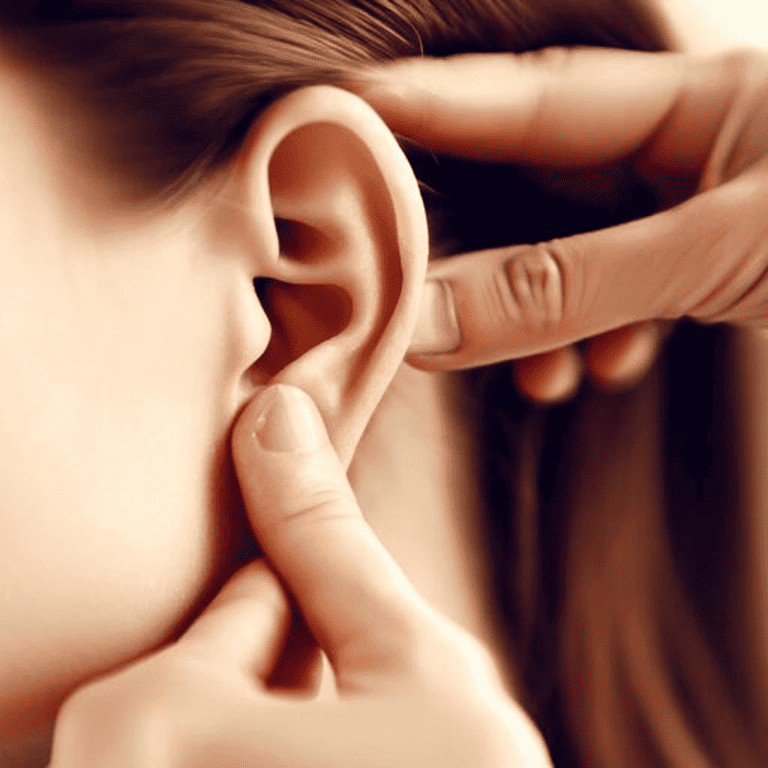
Located directly in front of the ear, in the depression that forms when you open your mouth. Triple Warmer 21 is one of the most important local points for any ear condition, including tinnitus. It is positioned right over the temporomandibular joint and directly influences blood flow to the ear canal and middle ear.
This point is particularly effective for tinnitus that is accompanied by a feeling of fullness or pressure in the ear, or tinnitus that worsens when you clench your jaw. It opens the ear channel in Chinese medicine terms, which translates to improving circulation and reducing congestion in the ear structures.
Press gently with your index finger into the depression in front of the ear while your mouth is slightly open. Hold for 60 to 90 seconds on each side. The pressure should be firm but not painful â pressing too hard here can irritate the TMJ. This point works best when combined with the other ear points in a sequence.
Small Intestine 19 (Tinggong)
Located directly in front of the ear tragus, in the depression that forms when you open your mouth. Small Intestine 19 is called the “Palace of Hearing” in Chinese medicine â and the name is not accidental. This is one of the primary points used in clinical practice for all hearing-related conditions, including tinnitus, hearing loss, and ear infections.
This point stimulates the auditory nerve pathways and improves circulation to the inner ear. Research has shown that stimulation of SI 19 produces measurable changes in blood flow to the cochlear region, which is significant because cochlear ischemia â reduced blood flow to the inner ear â is one of the most common physiological drivers of tinnitus.
Press firmly into the depression with your index finger while your mouth is slightly open. Hold for 60 seconds on each side. Many people feel a subtle sensation of warmth or openness in the ear when this point is properly stimulated.
Gallbladder 2 (Tinghui)
Located below the ear, in the depression in front of the earlobe, just below Small Intestine 19. Gallbladder 2 completes the trio of local ear points and is specifically indicated for tinnitus with a rushing or wind-like quality to the sound. In Chinese medicine, this point clears heat and opens the ear, which addresses the inflammatory and circulatory components of tinnitus.
This point is especially useful for tinnitus that started after exposure to loud noise, tinnitus that gets worse with stress, or tinnitus accompanied by headaches or jaw tension. Press into the depression below the ear with your index finger for 60 seconds on each side.
When you use Triple Warmer 21, Small Intestine 19, and Gallbladder 2 together â pressing all three points sequentially on each side â you create a powerful local treatment that addresses the ear from multiple angles. This three-point combination is the foundation of any acupressure protocol for tinnitus.
Kidney 3 (Taixi)
Located on the inner ankle, in the depression between the medial malleolus (the ankle bone) and the Achilles tendon. Kidney 3 may seem far from the ears, but in Chinese medicine, the kidneys govern the ears. This is not metaphorical â the kidney meridian has a direct energetic connection to the auditory system, and kidney deficiency is considered the most common underlying pattern in chronic tinnitus, particularly tinnitus that develops gradually with age.
If your tinnitus is a high-pitched, constant tone that has been present for months or years, gets worse when you are tired or run down, and is accompanied by other signs of depletion like lower back weakness, fatigue, or diminished hearing, kidney deficiency is almost certainly involved.
Kidney 3 is the source point of the kidney meridian and the single most important point for strengthening kidney energy. Press firmly into the depression between the ankle bone and Achilles tendon for 60 to 90 seconds on each side. This point often feels deeply tender, which is an indication that kidney energy needs support.
Liver 3 (Tai Chong)
Located on the top of the foot, between the first and second toes, about two finger widths from the web. Liver 3 addresses the liver fire pattern that drives many cases of tinnitus â particularly tinnitus that came on suddenly, is loud and pulsating, is accompanied by irritability or headaches, or gets significantly worse during periods of stress or anger.
In Chinese medicine, when liver qi stagnates and transforms into heat, that heat rises upward and disturbs the ears. This is why emotional stress is such a powerful tinnitus trigger for many people â the stress creates liver qi stagnation, which generates rising heat that intensifies the ringing.
Liver 3 moves stuck liver qi and clears rising heat, directly addressing this pattern. Press firmly for 60 seconds on each foot. If this point is very tender, that is a strong sign that liver qi stagnation is contributing to your tinnitus.
Gallbladder 20 (Feng Chi)
Located at the base of the skull, in the hollow between the two large neck muscles where they attach to the skull. Gallbladder 20 is essential for tinnitus because it addresses the neck tension and restricted blood flow to the head that contribute to so many cases. The vertebral arteries that supply blood to the inner ear pass through the cervical spine, and chronic neck tension can compress these arteries and reduce cochlear blood flow.
This point also clears wind from the head in Chinese medicine terms â which translates to reducing the hyperactive nerve signaling that generates tinnitus sounds. Many tinnitus sufferers notice that their ringing gets worse when their neck is stiff, and Gallbladder 20 directly addresses this connection.
Use your thumbs to press upward into both hollows simultaneously for 60 to 90 seconds. Let your head rest back into your thumbs so gravity helps create the pressure. This point often provides immediate relief for tinnitus that is related to neck tension.
Pericardium 6 (Neiguan)
Located on the inner forearm, about three finger widths from the wrist crease, between the two tendons. Pericardium 6 calms the nervous system and reduces anxiety â both of which are crucial for tinnitus management. The relationship between anxiety and tinnitus is bidirectional: anxiety makes tinnitus louder, and tinnitus creates anxiety. Breaking this cycle is essential for long-term improvement.
This point settles the heart and calms the spirit in Chinese medicine, which addresses the emotional distress that amplifies tinnitus perception. Many people find that pressing PC 6 does not change the tinnitus sound itself, but significantly reduces how much it bothers them â which is actually one of the most important outcomes in tinnitus treatment.
Press firmly between the two tendons for 60 seconds on each wrist. This point is easy to access throughout the day and can be pressed discreetly whenever tinnitus spikes.
Yifeng (Triple Warmer 17)
Located behind the earlobe, in the depression between the mastoid process and the jaw. Triple Warmer 17 is another powerful local ear point that is specifically indicated for tinnitus, deafness, and facial nerve issues. It directly influences the blood supply to the inner ear and the function of the auditory nerve.
This point is particularly useful for tinnitus that is accompanied by a sensation of blockage or fullness in the ear. Press gently into the depression behind each earlobe for 60 seconds. Be careful with pressure intensity here â the area is sensitive and contains important structures.
Building a Daily Tinnitus Protocol
Consistency matters more than intensity with tinnitus. The neurological patterns that generate tinnitus sounds have been established over time, and changing them requires regular, sustained input.
Morning routine (7 to 10 minutes): Start with the three local ear points â Triple Warmer 21, Small Intestine 19, and Gallbladder 2 â on both sides (60 seconds each point, each side). Follow with Gallbladder 20 at the base of the skull (90 seconds pressing both sides simultaneously). Finish with Kidney 3 on both ankles (60 seconds each).
Evening routine (10 to 15 minutes): Repeat the morning sequence, then add Liver 3 on both feet (60 seconds each), Pericardium 6 on both wrists (60 seconds each), and Triple Warmer 17 behind both earlobes (60 seconds each). Lying on your Pranamat for 15 to 20 minutes before bed provides broad nervous system regulation that complements the targeted point work. I have been using my Pranamat daily since 2017, and the effect on overall nervous system balance and tension levels is significant â both of which directly influence tinnitus perception.
During tinnitus spikes â moments when the ringing suddenly gets louder due to stress, fatigue, or noise exposure â press the three local ear points immediately, followed by Pericardium 6 for calming. This acute protocol can reduce the spike within 5 to 10 minutes.
What the Research Says
The evidence supporting acupressure and acupuncture for tinnitus is growing and encouraging, though the research acknowledges that results vary depending on the type and cause of tinnitus.
A 2018 systematic review published in Medicine examined 10 randomized controlled trials involving acupuncture for tinnitus and found that acupuncture significantly reduced tinnitus severity scores compared to control groups. The review noted particular effectiveness for subjective tinnitus â the most common type â and found that treatment effects persisted beyond the active treatment period.
Research published in Evidence-Based Complementary and Alternative Medicine demonstrated that auricular acupressure â stimulating acupuncture points on the ear â produced significant improvements in tinnitus loudness, awareness, and the distress it caused. Participants who received auricular acupressure showed measurable reductions in their Tinnitus Handicap Inventory scores after just four weeks of treatment.
A study in the American Journal of Chinese Medicine found that acupuncture at the local ear points â the same points described in this guide â produced measurable changes in cerebral blood flow patterns, providing a physiological mechanism for the observed improvements in tinnitus symptoms.
The research consistently shows that acupressure and acupuncture are most effective for tinnitus when used consistently over weeks to months, when combined with stress management, and when the protocol targets both local ear points and constitutional points based on the individual’s pattern.
Combining Acupressure With Other Approaches
Acupressure works best for tinnitus as part of a comprehensive management strategy.
Sound therapy is one of the most effective complementary approaches. Using white noise, nature sounds, or specialized tinnitus masking sounds during quiet periods prevents the brain from focusing on the tinnitus signal. Many people find that combining regular acupressure with consistent sound therapy produces better results than either approach alone.
Stress management directly reduces tinnitus perception because cortisol and adrenaline amplify the neural activity that generates tinnitus sounds. Daily relaxation practices â whether meditation, deep breathing, or lying on your Pranamat â lower your baseline stress level and make tinnitus less intrusive.
Jaw and neck tension release is essential because temporomandibular dysfunction and cervical muscle tension are contributing factors in many tinnitus cases. Regular stretching, massage, and the acupressure points in this protocol all address this component.
Protecting your hearing from further noise exposure prevents tinnitus from worsening. Use hearing protection in loud environments and be mindful of headphone volume.
If your tinnitus is severe, persistent, or accompanied by hearing loss, seeing an audiologist or ENT specialist is important to rule out treatable causes and explore options like hearing aids â which can reduce tinnitus perception by amplifying external sounds.
Common Mistakes to Avoid
Pressing too hard on the ear points can irritate the sensitive structures around the ear and TMJ. The points around the ear respond well to moderate, steady pressure â not aggressive force. If you feel sharp pain, ease up.
Expecting immediate results leads to discouragement and abandonment. Tinnitus is a neurological pattern that took time to establish, and it takes time to change. Most people notice gradual improvement over four to eight weeks of daily practice. The improvement often comes as reduced awareness of the tinnitus rather than the sound disappearing entirely â which is still a meaningful and valuable change.
Only focusing on ear points misses the bigger picture. The constitutional points â Kidney 3, Liver 3, Pericardium 6 â address the underlying patterns that drive tinnitus. Skipping them limits the effectiveness of your protocol.
Ignoring the stress connection undermines your results. For most people, tinnitus perception is directly linked to their stress and anxiety levels. Addressing the nervous system through acupressure, relaxation practices, and stress management is just as important as targeting the ears directly.
When to See a Professional
If your tinnitus is in one ear only, came on suddenly, is accompanied by hearing loss or vertigo, or is pulsatile â meaning you can hear your heartbeat in your ear â see a doctor promptly. These can be signs of conditions that require medical evaluation.
Professional acupuncturists who specialize in ear conditions can provide deeper and more targeted treatment than self-acupressure alone. They use needles to access points more precisely, can incorporate electroacupuncture for enhanced stimulation, and can customize protocols to your specific tinnitus pattern. Many patients use a combination of professional treatments and daily self-acupressure for the best results.
Audiologists can also fit you with hearing aids or tinnitus masking devices that work alongside acupressure to manage tinnitus more effectively.
The Bottom Line
Tinnitus is one of the most frustrating conditions because it lives inside your head and nobody else can hear it. Acupressure gives you a set of specific, evidence-supported techniques that you can use every day to reduce the volume, frequency, and emotional impact of the ringing.
The key points â Triple Warmer 21, Small Intestine 19, Gallbladder 2, Kidney 3, Liver 3, Gallbladder 20, Pericardium 6, and Triple Warmer 17 â target the exact mechanisms that drive tinnitus: reduced cochlear blood flow, nervous system hyperactivity, muscular tension in the jaw and neck, kidney deficiency, liver fire, and the anxiety-tinnitus cycle.
A consistent daily practice of 10 to 15 minutes, combined with sound therapy, stress management, hearing protection, and appropriate medical care when needed, creates a comprehensive approach that addresses tinnitus from every angle. It will not silence the ringing for everyone, but it can significantly reduce how loud it is, how often you notice it, and how much it affects your quality of life.
Frequently Asked Questions
Can acupressure cure tinnitus?
Acupressure cannot cure tinnitus in the sense of permanently eliminating it. However, consistent acupressure practice can significantly reduce the volume, frequency, and intrusiveness of tinnitus for many people. The most common outcome is that the tinnitus becomes quieter and less noticeable over time, and the distress it causes decreases substantially. Some people experience periods where they barely notice their tinnitus at all after several weeks of daily practice.
Which pressure point is best for tinnitus?
The three local ear points â Triple Warmer 21, Small Intestine 19, and Gallbladder 2 â used together are the most effective combination for directly addressing tinnitus. If you can only press one point, Small Intestine 19 (the Palace of Hearing) is the single most important point for tinnitus in traditional Chinese medicine. For the strongest effect, combine these local points with Kidney 3 to address the underlying constitutional pattern.
How long does it take for acupressure to help tinnitus?
Most people notice some reduction in tinnitus awareness within two to four weeks of daily practice. Significant improvement typically occurs after six to eight weeks of consistent use. The effects are cumulative â the longer you maintain a daily practice, the more the tinnitus pattern shifts. During the first few sessions, you may notice temporary relief that fades, but with consistent practice, the periods of reduced tinnitus become longer and more stable.
Does acupressure work for pulsatile tinnitus?
Pulsatile tinnitus â hearing your heartbeat in your ear â has different causes than subjective tinnitus and should always be evaluated by a doctor first to rule out vascular conditions. Acupressure may help with some cases of pulsatile tinnitus, particularly those related to muscle tension or stress-related blood pressure changes, but it is not a substitute for medical evaluation. Points that improve circulation like Gallbladder 20 and Kidney 3 are most relevant for this type.
Can stress make tinnitus worse?
Yes. Stress is one of the most powerful tinnitus amplifiers. When you are under stress, cortisol and adrenaline increase neural activity throughout the brain, including in the auditory processing centers that generate tinnitus sounds. This is why many people notice their tinnitus gets louder during stressful periods and quieter during relaxation. Acupressure points like Pericardium 6, Liver 3, and Gallbladder 20 directly address the stress-tinnitus connection by calming the nervous system and releasing tension.
Are ear seeds effective for tinnitus?
Ear seeds â small seeds or metal beads placed on auricular acupressure points â can be a helpful complement to finger acupressure for tinnitus. Research has shown that auricular acupressure using ear seeds can reduce tinnitus severity scores. The advantage of ear seeds is that they provide continuous, low-level stimulation throughout the day. The most effective auricular points for tinnitus correspond to the ear, kidney, and shenmen (calming) points on the external ear.
Related Reading
- Pressure Points for Stress
- Pressure Points for Sleep
- Face Pressure Points
- Pressure Points for Anxiety
- Acupressure Mat Benefits
Author

Free Mobile App
Find Pressure Points on the Go
Interactive 3D body map with 100+ acupressure points, step-by-step guides, and personalized routines.
Download Free App →