Pressure Points for Sleep: 9 Points That Actually Help You Fall Asleep Faster (2026)
If you are reading this at 2 a.m. staring at your phone, I understand. I have been there more times than I want to admit. Before I discovered acupressure back in 2017, my bedtime routine was basically lying in the dark getting increasingly annoyed at my own brain for not shutting off.
What changed things for me was learning that specific pressure points on the body can actually signal your nervous system to downshift. Not in a vague, mystical way â in a measurable, physiological way. Acupressure activates the parasympathetic nervous system, lowers cortisol, and increases melatonin production. And unlike sleeping pills, there are no side effects and no grogginess the next morning.
I have spent the last 9 years working with these points almost every night. Some work better than others. Some are overhyped. Here are the ones that actually make a difference, how to use them, and the routines I recommend for different sleep problems.
The Best Pressure Points for Sleep
HT 7 â Shenmen (Spirit Gate)
This is the single most important acupressure point for sleep. If you only learn one point from this entire article, make it this one.
Location: On the inner wrist, at the crease where your hand meets your forearm. Find the tendon on the pinky side of your wrist (the flexor carpi ulnaris tendon) and press into the small depression just beside it, on the pinky side.
What it does: HT 7 calms the mind, settles anxiety, and treats insomnia directly. In Traditional Chinese Medicine, it is the source point of the Heart meridian, which governs mental activity and emotional balance. In modern terms, stimulating HT 7 activates the parasympathetic nervous system and reduces sympathetic tone â meaning it shifts your body from fight-or-flight mode into rest-and-digest mode. Multiple clinical studies have confirmed that acupressure at HT 7 significantly improves sleep quality, reduces sleep onset time, and increases total sleep duration.
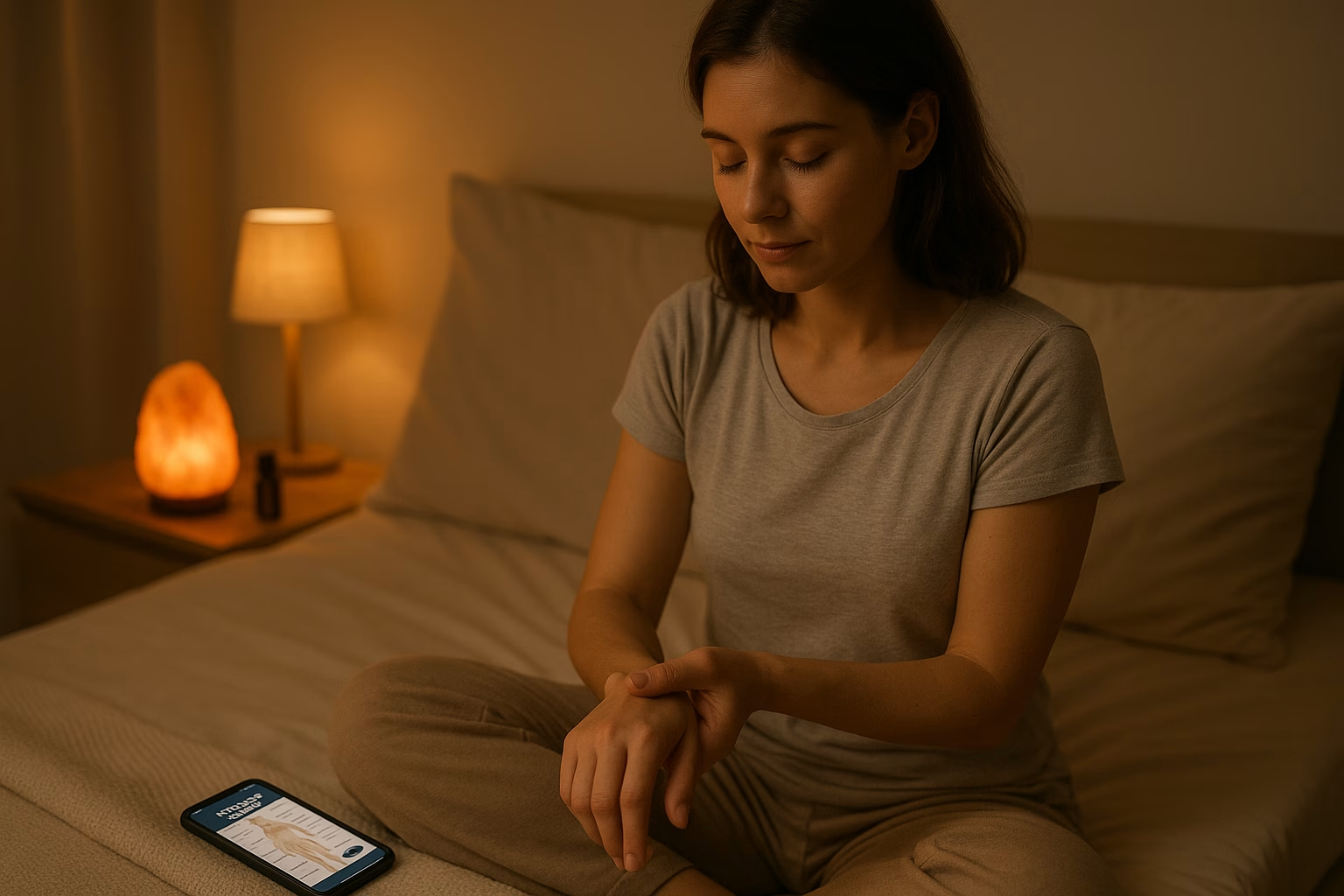
How to use it: Press firmly with your opposite thumb for 1 to 2 minutes per wrist. Use steady pressure rather than circular motion. You should feel a dull ache that gradually produces a calming sensation. Do this while lying in bed with the lights off. Many people notice increased drowsiness within the first minute.
SP 6 â Sanyinjiao (Three Yin Intersection)
SP 6 is the second most researched acupressure point for insomnia, and it works through a completely different mechanism than HT 7.
Location: On the inner leg, four finger-widths above the ankle bone (medial malleolus), just behind the shin bone (tibia). Place your pinky finger on the top of the ankle bone and stack four fingers â SP 6 is where your index finger lands.
What it does: SP 6 is where three yin meridians intersect â the Spleen, Liver, and Kidney channels. This makes it one of the most powerful points in the entire acupressure system. For sleep specifically, it nourishes the blood, calms the mind, and addresses the underlying deficiency patterns that cause chronic insomnia. It is particularly effective for the kind of insomnia where you can fall asleep but wake up repeatedly during the night, or where you wake up at 3 or 4 a.m. and cannot fall back asleep.
How to use it: Press with your thumb using moderate to firm pressure for 2 to 3 minutes per leg. You will likely feel significant tenderness at this point, especially if you are sleep-deprived. Start with lighter pressure and gradually increase. Do both legs.
Important: Avoid SP 6 during pregnancy, as strong stimulation of this point can induce uterine contractions.
An Mian â Peaceful Sleep
The name tells you everything. An Mian literally translates to “peaceful sleep” and it is an extra point specifically used for insomnia.
Location: Behind the ear, in the depression between the mastoid process (the bony bump behind your ear) and the base of the skull. Place your finger on the bony bump behind your ear and slide slightly backward and upward â you will find a soft depression. That is An Mian.
What it does: An Mian directly affects the brain stem areas that regulate sleep-wake cycles. It calms the mind, relieves restlessness, and reduces the kind of mental chatter that keeps you awake. It is especially useful for stress-related insomnia and the racing-thoughts pattern where your body is tired but your brain will not stop.
How to use it: Press gently with your index or middle finger on both sides simultaneously. Hold for 2 to 3 minutes using steady pressure. This point is sensitive, so use less pressure than you would on the wrist or leg. Many people feel a wave of relaxation spreading through the head within the first minute.
KD 1 â Yongquan (Bubbling Spring)
KD 1 is one of the most grounding points in acupressure and is surprisingly effective for sleep.
Location: On the sole of the foot, in the depression that forms when you curl your toes. It is approximately one-third of the way from the base of the second toe to the heel, in the center of the foot.
What it does: KD 1 is the lowest point on the body and the starting point of the Kidney meridian. Stimulating it draws energy downward, away from the head â which is exactly what you need when racing thoughts are keeping you awake. It reduces what TCM calls “excessive yang rising” and what modern medicine would describe as sympathetic nervous system overactivation. It also helps with night sweats, hot flashes that disrupt sleep, and restless leg syndrome.
How to use it: Press firmly with your thumb or use a tennis ball under your foot while seated. Hold for 1 to 2 minutes per foot. The pressure should be strong â the sole of the foot has thick skin and requires more force. This point works well combined with HT 7 for a comprehensive sleep routine.
PC 6 â Neiguan (Inner Gate)
PC 6 is primarily known for nausea relief, but it is also a powerful calming point that aids sleep.
Location: On the inner forearm, three finger-widths above the wrist crease, between the two tendons (palmaris longus and flexor carpi radialis). If you clench your fist and flex your wrist, you will see two tendons pop up â PC 6 is between them.
What it does: PC 6 calms the chest and the heart, relieves anxiety, and reduces the sensation of tightness or pressure that many people feel when they lie down to sleep. It is the opening point of the Yin Wei Mai (one of the eight extraordinary vessels), which regulates the internal emotional landscape. For sleep, it is particularly helpful when insomnia is accompanied by anxiety, palpitations, or that chest-tight feeling of dread that intensifies at night.
How to use it: Press with your thumb for 1 to 2 minutes per arm. Use moderate pressure with slight circular motion. This point often produces an immediate calming effect that you can feel spreading from your arm to your chest.
GV 20 â Baihui (Hundred Meetings)
GV 20 sits at the very top of the head and is one of the most important points for calming the mind.
Location: At the top of the head, on the midline, at the intersection of a line connecting the tops of both ears with a line running from the nose straight back over the head. The easiest way to find it â place both palms over your ears and extend your thumbs upward. Where your thumbs meet at the top of the head is approximately GV 20.
What it does: GV 20 clears the mind, lifts the spirit, and calms internal wind â the TCM concept that describes the restless, agitated energy that makes it impossible to settle down. It regulates the ascending and descending of qi, which means it can both energize and calm depending on how it is stimulated. For sleep, gentle pressure at GV 20 produces a settling effect that quiets mental noise.
How to use it: Press gently with your fingertip for 1 to 2 minutes. The pressure should be light â the top of the head is sensitive. You can also tap lightly with your fingertips in a rhythmic pattern for 1 minute. Many people feel a pleasant heaviness in the head and eyes after stimulating this point.
LV 3 â Taichong (Great Surge)
LV 3 is essential for sleep when the underlying cause is stress, frustration, or emotional tension.
Location: On the top of the foot, in the depression between the first and second metatarsal bones, about two finger-widths above the junction of the toes. Slide your finger along the groove between your big toe and second toe until you feel a depression before the bones converge. That is LV 3.
What it does: LV 3 is the source point of the Liver meridian, which in TCM is responsible for the smooth flow of emotions and qi throughout the body. When you are stressed, angry, or frustrated, Liver qi stagnates â and this stagnation directly disrupts sleep. LV 3 releases that stagnation, smooths emotional tension, and addresses the root cause of stress-related insomnia. It is particularly effective for people who lie awake replaying the day’s frustrations or worrying about tomorrow.
How to use it: Press firmly with your thumb for 1 to 2 minutes per foot. This point is often tender when you are stressed â that tenderness is a sign it needs work. Use steady downward pressure. Combining LV 3 with HT 7 creates one of the most powerful acupressure combinations for insomnia.
Yintang â Third Eye Point
Yintang is the same point I covered in the face pressure points article, but its sleep applications deserve specific attention.
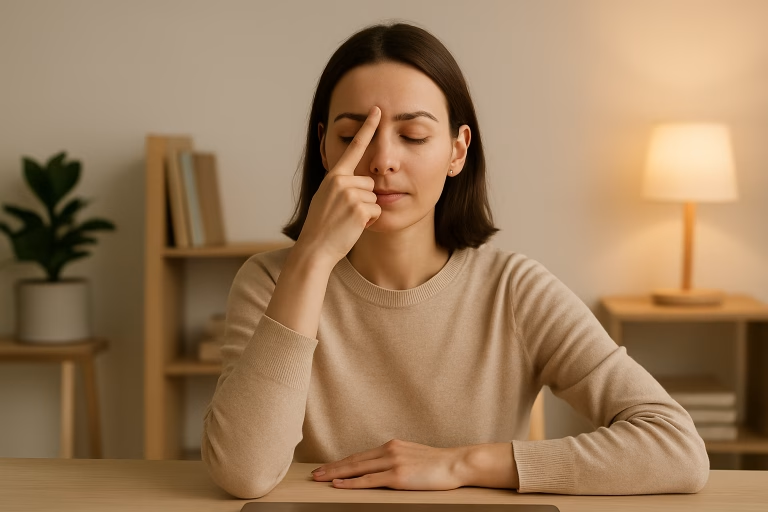
Location: Between the eyebrows, at the midpoint of the line connecting the inner ends of both eyebrows.
What it does: Yintang calms the shen (spirit/mind) and is one of the most clinically studied points for anxiety and insomnia. Research has consistently shown that acupressure at Yintang reduces cortisol levels, activates the parasympathetic nervous system, and improves subjective sleep quality. It is the go-to point for the “I cannot turn my brain off” type of insomnia.
How to use it: Press gently with your index or middle finger for 1 to 2 minutes. Close your eyes and breathe slowly while applying pressure. The calming effect is usually noticeable within 30 seconds.
Ear Shenmen â Ear Spirit Gate
This is different from HT 7 (which is also called Shenmen). The ear has its own Shenmen point that is remarkably effective for sleep.
Location: In the upper part of the ear, in the triangular fossa (the hollow area near the top of the ear, above the ear canal opening). It is roughly at the apex of the triangular depression.
What it does: Auricular (ear) acupressure has strong evidence for insomnia treatment. The ear Shenmen point specifically reduces nervous system arousal and promotes relaxation. A systematic review published in the Journal of Clinical Sleep Medicine found that auricular acupressure significantly improved sleep quality across multiple studies, with effects comparable to some sleep medications.
How to use it: Pinch the point between your thumb and index finger and apply firm pressure for 1 to 2 minutes per ear. You can also use a small, round seed or bead taped to the point (ear seeds) for continuous stimulation throughout the night. Many acupuncturists recommend ear seeds for chronic insomnia because they provide gentle, ongoing stimulation while you sleep.
My Nightly Routine (What Actually Works)
After 9 years of experimenting, here is the routine I use most nights. It takes about 10 minutes and it works consistently.
Start with Yintang (between eyebrows) for 1 to 2 minutes while lying in bed with your eyes closed. Move to HT 7 (inner wrist) for 1 to 2 minutes per wrist. Follow with SP 6 (inner ankle) for 2 minutes per leg. Finish with An Mian (behind the ears) for 1 to 2 minutes.
Total time is about 10 minutes. Most nights I do not make it through the full routine before falling asleep.
For Stress-Related Insomnia
If your insomnia is driven by stress and racing thoughts, modify the routine. Start with LV 3 (top of foot) for 2 minutes per foot to release emotional tension. Follow with PC 6 (inner forearm) for 1 minute per arm to calm the chest. Move to HT 7 (inner wrist) for 1 to 2 minutes per wrist. Finish with Yintang for 1 to 2 minutes. This routine targets the emotional root of the insomnia rather than just the symptom.
For Middle-of-the-Night Waking
If you fall asleep fine but wake at 3 or 4 a.m. and cannot get back to sleep, focus on SP 6 for 3 minutes per leg and HT 7 for 2 minutes per wrist. Do not turn on lights or look at your phone. Press the points in complete darkness. The combination of SP 6 and HT 7 addresses the blood deficiency and heart-kidney disharmony patterns that cause early-morning waking.
Using an Acupressure Mat for Sleep
An acupressure mat is the easiest way to activate multiple sleep-related points simultaneously without memorizing individual locations.
The Pranamat is what I use every evening. I lie on the mat for 15 to 20 minutes before bed. The spikes stimulate the acupressure points along the entire back, including the Bladder meridian points that run parallel to the spine â many of which directly affect sleep quality. The Bladder meridian points BL 15 (Heart Shu), BL 18 (Liver Shu), BL 20 (Spleen Shu), and BL 23 (Kidney Shu) all correspond to organs involved in sleep regulation according to TCM.
The initial sensation is intense â a strong prickling that forces your attention onto your body and out of your racing thoughts. After about 5 minutes, the body releases endorphins and the sensation transforms into deep warmth. By 15 minutes, most people experience significant drowsiness. I have been doing this since 2017 and it remains the most reliable part of my sleep routine.
Use the acupressure pillow under your neck at the same time. This stimulates the suboccipital points (GB 20 and An Mian) that are directly connected to sleep. The combination of the mat and pillow creates a full-body relaxation response that is difficult to achieve with manual point pressing alone.
What the Research Says
The evidence for acupressure and sleep is substantial.
Overall sleep quality: A meta-analysis published in the Journal of Clinical Sleep Medicine analyzed 30 randomized controlled trials and found that acupressure significantly improved sleep quality, with effects comparable to pharmacological treatments. The advantage of acupressure was the absence of side effects.
HT 7 specifically: Multiple studies have confirmed that acupressure at HT 7 reduces sleep onset latency (the time it takes to fall asleep), increases total sleep time, and improves sleep efficiency. One study found that 4 weeks of nightly HT 7 stimulation improved Pittsburgh Sleep Quality Index scores by an average of 3.4 points â a clinically significant improvement.
Auricular acupressure: A systematic review found that ear acupressure using seeds or beads improved sleep quality in populations including elderly adults, cancer patients, postmenopausal women, and university students with stress-related insomnia.
Acupressure mats: Research on spike mats has shown increased parasympathetic nervous system activity, reduced cortisol levels, and improved self-reported sleep quality after regular evening use.
Common Mistakes That Reduce Effectiveness
Pressing too lightly. Acupressure requires enough pressure to produce a dull ache or sensation of heaviness. If you feel nothing, you are pressing too lightly or slightly off the point. Increase pressure gradually until you feel a distinct sensation.
Doing it too early. Timing matters. Acupressure for sleep works best within 30 minutes of your target bedtime. Doing it 2 hours before bed gives the calming effect time to wear off.
Using your phone while doing it. The blue light from screens suppresses melatonin production and counteracts the calming effect of acupressure. Do your acupressure routine in dim light or darkness.
Skipping consistency. Acupressure for sleep is cumulative. The first night might produce modest results. By the second or third week of nightly use, the effect builds significantly. Give it at least 2 weeks of consistent practice before evaluating.
Only using one point. Individual points help, but combinations are more effective. A routine that hits 3 to 4 points from different meridians produces a stronger sleep response than pressing a single point for a long time.
When to See a Doctor
Acupressure is effective for common insomnia, but some sleep problems require medical evaluation. See a doctor if you experience loud snoring with daytime sleepiness (possible sleep apnea), insomnia lasting more than 3 months despite good sleep hygiene, excessive daytime sleepiness that interferes with daily activities, unusual movements during sleep such as kicking or acting out dreams, or insomnia accompanied by depression or severe anxiety that does not improve with self-care.
Acupressure works best as part of a comprehensive sleep approach that includes consistent sleep timing, a dark and cool bedroom, limited caffeine after noon, and regular exercise.
Bottom Line
Pressure points for sleep work. The research supports it, and my personal experience since 2017 confirms it. The most effective single point is HT 7 on the inner wrist. The most effective combination is HT 7 + SP 6 + Yintang + An Mian, done as a 10-minute nightly routine.
If you want the simplest possible approach, get an acupressure mat and lie on it for 15 to 20 minutes before bed. It activates dozens of sleep-related points simultaneously and requires zero technique. I use the Pranamat pillow and mat set and it has been the single most impactful change in my sleep routine.
Start with the basic routine tonight. Give it 2 weeks. Most people notice meaningful improvement within the first few days, with the effect strengthening over time.
Frequently Asked Questions
What is the best pressure point for falling asleep fast?
HT 7 (Shenmen) on the inner wrist is the most effective single point for falling asleep quickly. Press the point on the pinky side of the wrist crease for 1 to 2 minutes per wrist while lying in bed with the lights off. Most people notice increased drowsiness within the first minute. For faster results, combine HT 7 with Yintang (between the eyebrows).
How long does it take for acupressure to help with sleep?
Most people notice some improvement in sleep quality within the first 3 to 5 days of nightly acupressure. The full effect typically develops over 2 to 3 weeks of consistent daily practice. A single session can produce immediate drowsiness, but the cumulative benefit of regular practice produces the most significant sleep improvements.
Can I use pressure points for sleep every night?
Yes. Acupressure for sleep is safe for nightly use and actually works better with consistent practice. Unlike sleep medications, there is no tolerance buildup or dependency risk. The points become more responsive with regular stimulation, meaning the effect tends to improve over time rather than diminish.
Do acupressure mats help with insomnia?
Yes. Lying on an acupressure mat for 15 to 20 minutes before bed stimulates multiple sleep-related points simultaneously, including the Bladder meridian points along the spine that affect organ function and sleep regulation. Research has shown that regular acupressure mat use increases parasympathetic nervous system activity and improves self-reported sleep quality. The Pranamat is what I use nightly for this purpose.
What is the difference between pressure points for sleep and pressure points for relaxation?
There is significant overlap, but sleep-specific points like HT 7, SP 6, and An Mian target the mechanisms that directly regulate sleep-wake cycles â melatonin production, cortisol reduction, and brain stem sleep centers. General relaxation points like LI 4 or GB 21 reduce muscle tension and stress but do not specifically target sleep pathways. For insomnia, using dedicated sleep points produces better results than general relaxation acupressure.
Is it safe to do acupressure for sleep during pregnancy?
Most sleep acupressure points are safe during pregnancy, with one important exception. Avoid SP 6, as strong stimulation of this point can potentially induce uterine contractions. HT 7, Yintang, An Mian, and ear Shenmen are all safe alternatives for pregnant women with insomnia. Always consult your healthcare provider before starting any new therapy during pregnancy.
Can children use pressure points for sleep?
Yes, with lighter pressure. HT 7 and Yintang are particularly effective and safe for children. Use gentle pressure for 30 seconds to 1 minute per point. Many parents find that a brief acupressure routine before bedtime helps children transition from active play to sleep mode. Avoid using acupressure mats for young children under 8 years old, as the spike pressure is designed for adult body weight.
Related Reading
- Acupressure Mat Benefits: What Daily Use Actually Does
- Pressure Points for Stress Relief
- Face Pressure Points: What Actually Works
- Do Acupressure Mats Work? What the Evidence Really Says
- Pressure Points for Back Pain Relief
📚 Clinical Studies: Acupressure for Sleep
The information in this article is supported by peer-reviewed clinical research:
- Yeung WF, Ho FYY, Chung KF, et al. Self-administered acupressure for insomnia disorder: A randomized controlled trial. Phytomedicine. 2022;99:153993
- Waits A, Tang YR, Cheng HM, et al. Acupressure effect on sleep quality: A systematic review and meta-analysis. Sleep Med Rev. 2018;37:24-34
- Yeung WF, Chung KF, Poon MM, et al. Acupressure, reflexology, and auricular acupressure for insomnia: a systematic review of randomized controlled trials. Sleep Med. 2012;13(8):971-984
For more information about our research standards, visit our Editorial Process page.
Author

Free Mobile App
Find Pressure Points on the Go
Interactive 3D body map with 100+ acupressure points, step-by-step guides, and personalized routines.
Download Free App →