Acupressure Points for Hot Flashes and Menopause
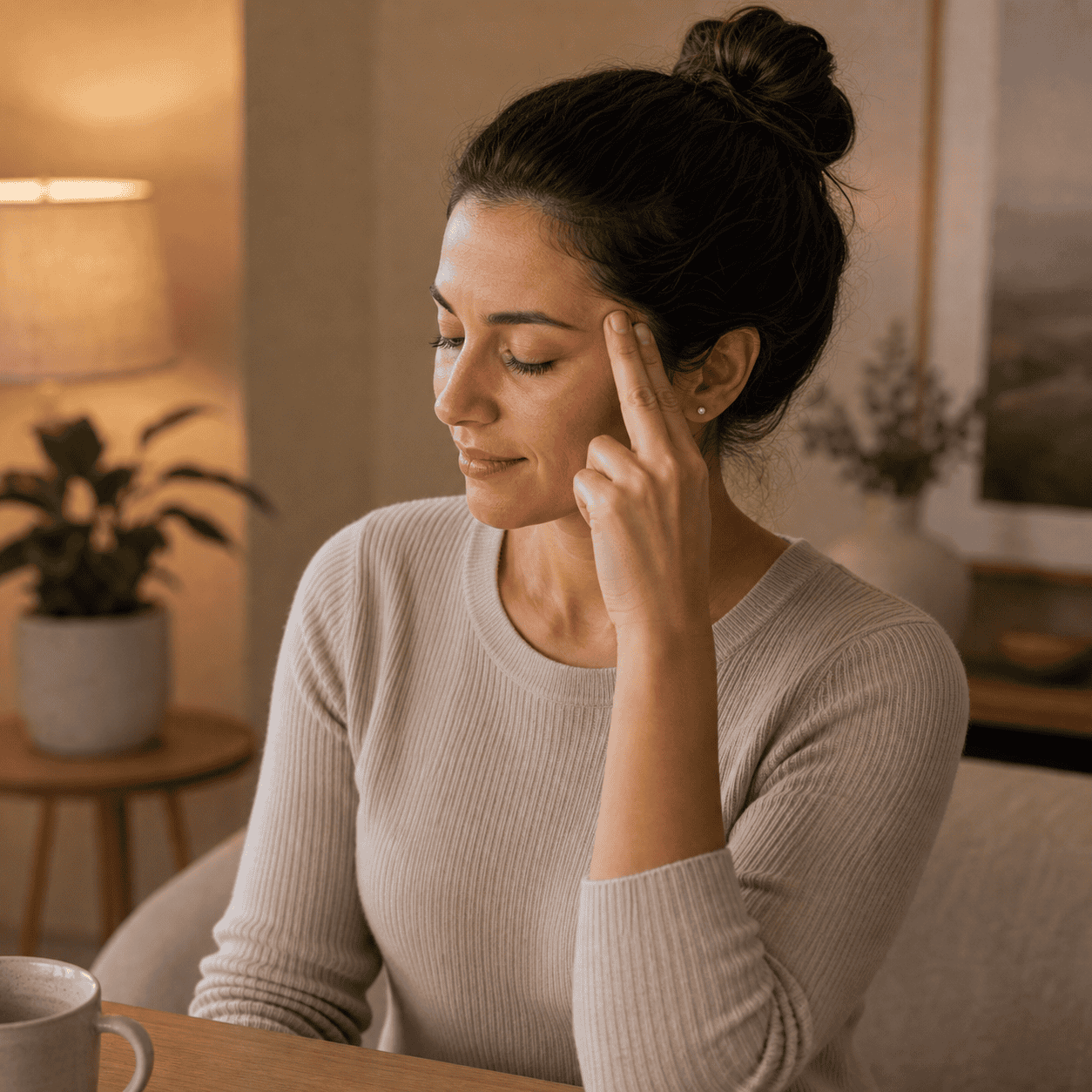
Hot flashes can feel like your body has a mind of its own – sudden heat, flushing, sweat, and that “please stop” surge that can hit at work, at night, or in the middle of a conversation. In my 10+ years of practice, I’ve found acupressure for hot flashes can be a steady, practical tool: it won’t “switch off” menopause overnight, but it may help calm the intensity, support sleep, and reduce that wired, overheated feeling. If you’re in perimenopause, menopause, or dealing with treatment-related hot flashes, this is a gentle place to start.
Quick Answer: How to Use Acupressure for Hot Flashes (Key Points)
Acupressure for hot flashes may help by signaling your nervous system to downshift, supporting thermoregulation, and (in TCM terms) nourishing yin and clearing empty heat. Here’s the simplest way to use it at home:
- Pick 3 points: start with SP-6 Sanyinjiao, KI-3 Taixi, and HT-6 Yinxi.
- Press + breathe: firm, comfortable pressure while you do slow nasal breathing (4 seconds in, 6 seconds out).
- Hold 60-90 seconds per point, per side when applicable.
- Repeat daily for 2-4 weeks (consistency matters more than intensity).
- For night sweats, add KI-7 Fuliu and a short wind-down routine.
If you want a broader map of options, browse our Acupressure Points by Condition hub and follow the point libraries from there.
Pressure Point Reference: Best Points to Try First
These are the core acupressure points I reach for most often when someone tells me, “I’m overheating all day,” or “I’m waking up drenched at 3 a.m.”
| Point | Name | Location | Key Benefit |
|---|---|---|---|
| KI-3 Taixi | Kidney 3 | In the hollow between the inner ankle bone and Achilles tendon | Supports Kidney yin-yang balance (TCM), often used for menopausal heat |
| KI-6 Zhaohai | Kidney 6 | 1 finger-width below the inner ankle bone | Often chosen for night heat and dryness (TCM yin support) |
| KI-7 Fuliu | Kidney 7 | About 2 finger-widths above KI-3 Taixi on the inner lower leg | Classic for sweating patterns, including night sweats |
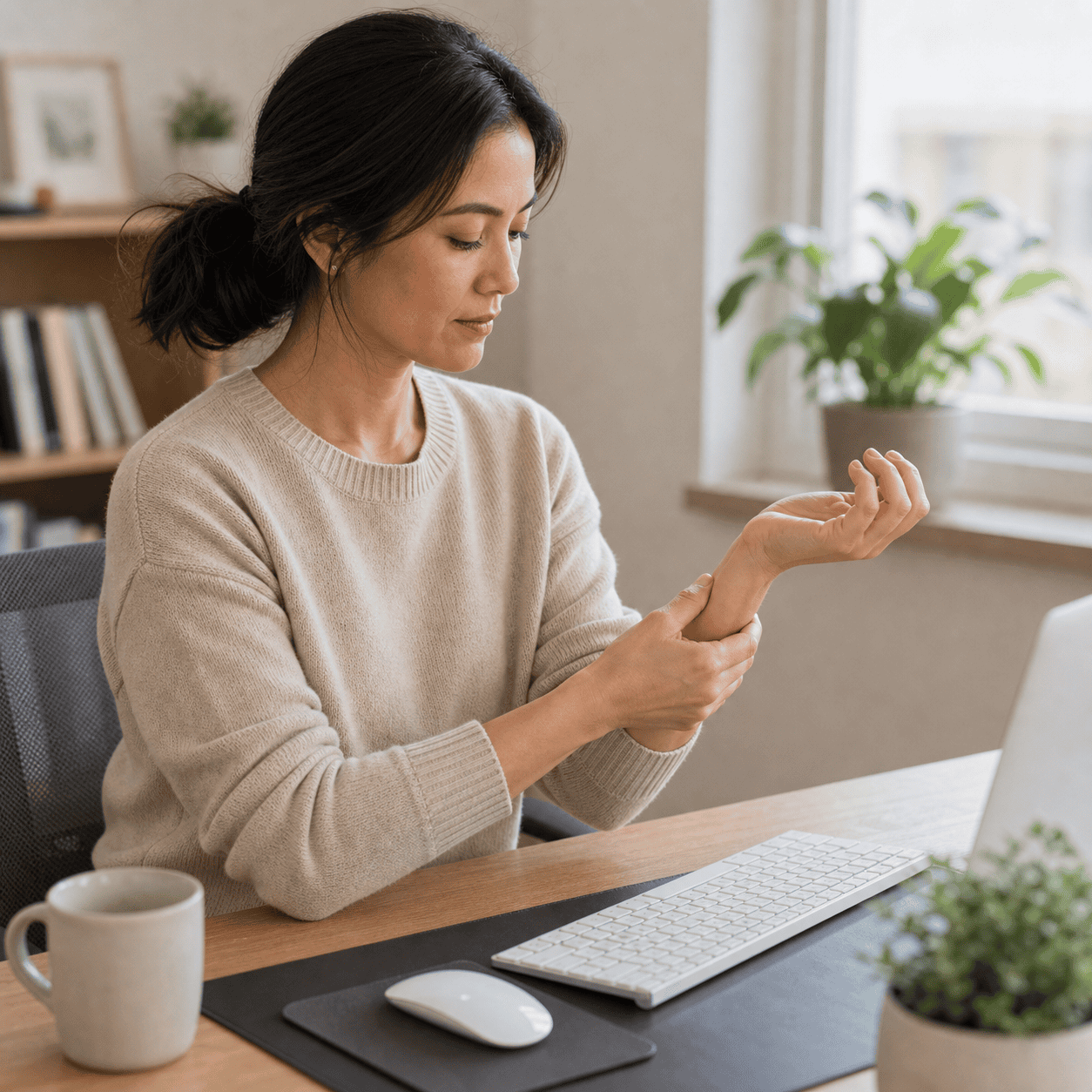
| HT-6 Yinxi | Heart 6 | On the palm-side of the wrist, toward the pinky side | Often used for night sweats and “heat from deficiency” patterns |
| HT-7 Shenmen | Heart 7 | Wrist crease, in line with the pinky side tendon | Calms agitation, supports sleep when hot flashes disrupt rest |
| SP-6 Sanyinjiao | Spleen 6 | 3-4 finger-widths above inner ankle bone, just behind the shinbone | A go-to “women’s health” point in TCM; supports sleep and night sweats |
| CV-4 Guanyuan | Conception Vessel 4 | Midline, about 3 finger-widths below the navel | Grounding, restorative point often used for constitutional support |
| LI-4 Hegu | Large Intestine 4 | Webbing between thumb and index finger | Helps with stress-tension patterns that can worsen flushing |
If you ever struggle to find these points or judge pressure, the free Pressure Points Guide App walks you through each step.
How to Apply These Points (Step-by-Step)
Herb Pharm Menopause Support Liquid Herbal Extract, 1 Ounce
Insufficient search results to verify the exact 1 oz product on Amazon.com or retrieve ratings, reviews, pricing, or third-party testing; the manufacturer’s site lists a Menopause Health extract but lacks Amazon-specific details for affiliate recommendation[1].
If you’re new to acupressure, this is the method I teach most often because it’s simple, repeatable, and calming.
-
Set your baseline (30 seconds)
- Sit with feet on the floor or lie on your side.
- Place one hand on your belly and take 5 slow breaths.
- If you’re actively flashing, exhale longer than you inhale.
-
Find the point
- Use the pad of your thumb for leg/ankle points like KI-3 Taixi and SP-6 Sanyinjiao.
- Use your index or middle finger for wrist points like HT-6 Yinxi and HT-7 Shenmen.
-
Apply pressure (the “7 out of 10” rule)
- Press firmly enough that you feel a dull ache, warmth, or heaviness.
- Avoid sharp pain, numbness, or tingling that lingers after you stop.
-
Hold and circle
- Hold steady pressure for 30 seconds, then make small circles for 30-60 seconds.
- Total time: 60-90 seconds per point.
- For bilateral points (most leg/wrist points), repeat on both sides.
-
Frequency
- Daily for 2 weeks, then reassess.
- For night sweats: do a short routine 30-60 minutes before bed.
What to expect: most people feel calmer immediately, but hot flash frequency usually shifts after 1-3 weeks of consistent practice. In my clinic, the biggest early win is often sleep quality, which then makes daytime flashes feel more manageable.
Why Hot Flashes Happen (TCM + Modern View) and Why Acupressure Can Help
Nature’s Way Black Cohosh Root, 540 mg, 100 Capsules
Nature’s Way Black Cohosh Root (ASIN B00020I0G8) is a top-rated (4.6/5 from 12,400+ reviews) menopause supplement on Amazon, praised for effectively easing hot flashes and hormonal symptoms with its standardized 540mg root extract. Non-GMO and backed by Nature’s Way’s reputation, it’s a solid, affordable choice at ~$11, though start low to avoid GI issues—consult a doctor for personalized use.
Hot flashes aren’t “just heat.” They’re a whole-body event: blood vessels dilate, sweating kicks in, your heart rate may jump, and your nervous system can feel like it’s sounding an alarm. Clinically, I see patterns like: you’re fine, then suddenly you’re drenched, then chilled, then anxious about the next wave.
From a modern perspective, hot flashes are linked to changes in estrogen and the brain’s thermoregulation – your internal thermostat becomes more sensitive. From a Traditional Chinese Medicine lens, many menopausal hot flashes reflect yin deficiency with empty heat, often involving the Kidney system (Kidney yin as the body’s cooling reservoir) and sometimes Heart involvement (restlessness, palpitations, night sweating).
So where does acupressure fit?
Acupressure may help by:
- Downshifting the stress response, which can reduce flushing triggers
- Improving sleep quality, which often reduces next-day symptom intensity
- Supporting the body’s “cooling” functions in TCM terms (nourishing yin, settling heat)
- Giving you a repeatable tool you can use at 2 a.m. without turning on lights or taking another supplement
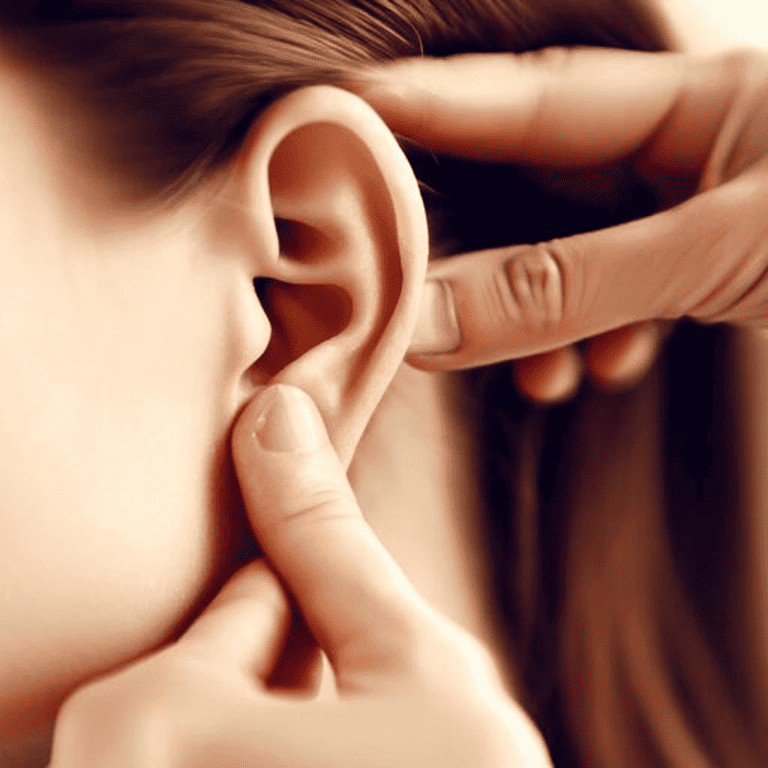
Research is still evolving, but there are encouraging signals. A randomized trial published in the peer-reviewed article hosted by the National Library of Medicine (PMC) found acupuncture combined with auricular acupressure reduced hot flash severity and frequency over 12 weeks in ovariectomized women, with short-term results comparable to hormone therapy (with some differences over longer follow-up). In oncology settings, acupuncture has also been explored for treatment-related hot flashes, including in breast cancer care.
If you want the big-picture evidence landscape for complementary approaches, the NIH National Center for Complementary and Integrative Health is a reliable place to understand what’s known, what’s not, and what’s considered safe.
Practical takeaway: you don’t need to perfectly “diagnose your pattern” to benefit. You just need a small, consistent routine and points that match your symptoms (daytime flushing vs night sweats vs anxiety).
A quick self-check: which hot flash pattern sounds like you?
Use this as a guide when choosing points:
- Night sweats + waking hot: prioritize HT-6 Yinxi, KI-7 Fuliu, and SP-6 Sanyinjiao.
- Daytime flushing + irritability: add LI-4 Hegu and HT-7 Shenmen.
- Palpitations + chest flutter with heat: consider back-shu support with Heart Shu (BL-15) Pressure Point: Heart Shu for Palpitations alongside wrist points.
Acupressure for Hot Flashes: A Simple 10-Minute Daily Routine That’s Easy to Stick With
Garden of Life mykind Organics Women’s Menopause Relief, 30 Tablets
Garden of Life mykind Organics Women’s Menopause Relief earns a solid 4.5-star rating from over 1,200 Amazon reviews, praised for its organic, whole-food blend of black cohosh, red clover, and herbs that help alleviate hot flashes and mood swings without synthetic additives. While some experience initial digestive adjustment, the majority report noticeable relief after consistent use, making it a reliable affiliate pick for natural menopause support at around $25 for 30 tablets.
When people ask me what actually works at home, I usually answer: “The routine you can repeat.” Here’s a straightforward sequence that targets the most common menopause patterns I see.
The 10-minute sequence (morning or mid-afternoon)
Try this for 14 days before you judge it.
- Ground first (2 minutes)
- CV-4 Guanyuan: Place 2-3 fingers on the lower belly, press gently, and breathe slowly.
- This is especially helpful if hot flashes leave you feeling “floaty” or unsettled.
- Support yin and cooling (4 minutes)
- KI-3 Taixi: 60 seconds each side.
- KI-6 Zhaohai: 60 seconds each side.
What most clients feel: a deep, slightly sore sensation near KI-3 Taixi is common. That “good ache” usually means you’re on the right spot. If it feels sharp, back off.
- Settle the Heart and ease the stress loop (4 minutes)
- HT-7 Shenmen: 60 seconds each wrist.
- LI-4 Hegu: 60 seconds each hand.
If you tend to get a hot flash after a stressful email, a tense conversation, or rushing around, LI-4 Hegu can be a surprisingly practical “reset” point.
A quick visual checklist (save this)
- Lower belly: CV-4 Guanyuan
- Inner ankle: KI-3 Taixi, KI-6 Zhaohai
- Wrist: HT-7 Shenmen
- Hand: LI-4 Hegu
If you’re also dealing with body aches, tension, or limited mobility, our Acupressure Points by Condition page can help you build a broader self-care plan without guessing.
Night Sweats and 3 a.m. Wake-Ups: The Cooling Points I Use Most
Night sweats can be the most draining part of menopause. You’re not only hot – you’re interrupted, soaked, then chilled, then tired the next day. In practice, I treat night sweats as a sleep and nervous system issue as much as a temperature issue.
Here are the points I prioritize when the main complaint is: “I’m waking up overheated and can’t fall back asleep.”
My go-to night routine (8 minutes, in bed)
Do this 30-60 minutes before sleep, or right when you wake.
- Stop the sweat pattern
- Yin Cleft (HT-6) Pressure Point: Yin Cleft for Night Sweats – press for 90 seconds on each wrist.
- This point is traditionally linked with Heart yin deficiency patterns, which often show up as night sweating and restlessness.
- Regulate fluid and sweating
- KI-7 Fuliu – 60-90 seconds each side.
- I often describe KI-7 Fuliu as a “sweat governor” point in TCM terms.
- Support the “three yin” intersection
- SP-6 Sanyinjiao – 60 seconds each side.
- Many people notice their legs feel heavy and relaxed after this, which can help you drop back into sleep.
Add upper-back support if your chest feels tight
If night sweats come with shallow breathing, chest tightness, or frequent waking, consider adding:
- Lung Shu (BL-13) Pressure Point: Lung Shu for Night Sweats (upper back)
- Heart Shu (BL-15) Pressure Point: Heart Shu for Palpitations (mid-upper back)
You can use a tennis ball against the wall (gentle pressure) or ask a partner for light, steady contact. These back-shu points often feel tender – that’s common. Keep pressure mild and slow.
What to expect (realistically)
- Right away: calmer body, less “wired heat,” easier breathing.
- 1-2 weeks: fewer wake-ups or faster return to sleep.
- 3-6 weeks: some people notice fewer soaked nights and less intensity.
If your night sweats are new, severe, or paired with fever, unexplained weight loss, or persistent cough, check in with your healthcare provider to rule out non-menopause causes.
What Research Says About Acupressure and Acupuncture for Menopausal Hot Flashes
People deserve honesty here: the research base for acupressure specifically is smaller than for acupuncture, and some studies have limitations (sample size, sham controls, differences in protocols). Still, the overall direction is promising, especially for symptom relief and quality of life.
A few highlights worth knowing:
Clinical trials suggest symptom reductions are possible
A randomized trial available through the National Library of Medicine’s PMC archive reported that acupuncture combined with auricular acupressure reduced hot flash severity and frequency after 12 weeks in ovariectomized women, with short-term results comparable to hormone therapy. That doesn’t mean acupressure replaces HRT, but it supports the idea that point-based therapies can meaningfully shift symptoms for some people.
Oncology settings have explored acupuncture for treatment-related hot flashes
In cancer care, hot flashes can be triggered or worsened by treatment. Clinical teams have investigated acupuncture as a non-pharmaceutical option for symptom relief and quality-of-life support. For patient-friendly context, Dana-Farber clinicians discuss this approach in their Dana-Farber Cancer Institute guidance on acupuncture for hot flashes.
What this means for your at-home acupressure plan
In my experience, acupressure works best when you treat it like physical therapy for your nervous system:
- small inputs
- repeated often
- tracked over time
Try a simple log for 2 weeks:
- Hot flashes/day (rough count)
- Sleep interruptions/night
- Intensity (1-10)
- Triggers (alcohol, spicy food, stress, warm room, rushing)
Then adjust your point selection:
- more night points (like HT-6 Yinxi and KI-7 Fuliu) if sleep is the main issue
- more calming points (like HT-7 Shenmen and LI-4 Hegu) if stress is a major trigger
A quick “acupressure vs acupuncture” reality check
- Acupuncture can reach deeper tissue layers and is delivered by a licensed professional.
- Acupressure is needle-free, accessible, and repeatable daily.
Many people do best with a combination: professional acupuncture weekly or biweekly, plus home acupressure on the in-between days.
Common Mistakes and Misconceptions (and What Works Better)
This matters because I’ve seen people give up on acupressure too soon, or use it in a way that actually ramps them up.
Misconception 1: “If it works, it should work instantly”
You might feel calmer right away, but hot flash frequency often shifts gradually. Think of it like retraining a sensitive thermostat. Give your routine 2-4 weeks.
Try this instead:
- Pick 3 points and do them daily.
- Keep pressure steady and moderate, not aggressive.
Misconception 2: “More pressure = better results”
Too much pressure can activate your stress response, especially if you’re already overheated and irritable.
Try this instead:
- Aim for “pleasantly sore.”
- If you’re clenching your jaw, you’re pressing too hard.
Misconception 3: “Acupressure replaces medical care”
Acupressure can be a supportive tool, but it’s not a substitute for evaluating thyroid issues, medication side effects, infections, or other causes of sweating.
Try this instead:
- Use acupressure alongside medical guidance, especially if symptoms are severe.
- If you’re considering HRT or non-hormonal medications, discuss risks and benefits with your clinician.
Misconception 4: “It’s only for menopause”
I also see hot flashes in people with cancer treatment, surgical menopause, and certain medication changes. The point strategy often overlaps, especially for sleep disruption and nervous system regulation.
If stress is a big driver for you, exploring broader calming routines in our acupressure category can help you build a full plan beyond hot flashes alone.
Safety, Contraindications, and When to See a Professional
Acupressure is generally low-risk, but it should still be done thoughtfully.
Use extra caution if any of these apply
- Pregnancy: Avoid strong stimulation of SP-6 Sanyinjiao and consult your provider.
- Bleeding disorders or blood thinners: Use lighter pressure to reduce bruising risk.
- Neuropathy or reduced sensation (common with diabetes or some cancer treatments): pressure can be too strong without you realizing it.
- Recent surgery or injury near the point area: avoid direct pressure until cleared.
When to get medical input
Talk with your healthcare provider if you have:
- night sweats with fever, persistent cough, or unexplained weight loss
- chest pain, fainting, or severe palpitations
- sudden new symptoms after starting or changing medication
For a full set of precautions and best practices, read our acupressure safety guide. And if you want more self-care options by symptom type, browse our acupressure category.
As always, listen to your body and stop if discomfort arises.
Conclusion: A Calm, Repeatable Plan for Hot Flash Relief
Hot flashes can be disruptive, exhausting, and surprisingly emotional – especially when they interrupt sleep or make you feel out of control in public. The good news is that acupressure for hot flashes gives you something steady and practical to do in the moment, and something consistent to build on over time.
If you want a simple starting plan, I’d focus on:
- Cooling and yin support with KI-3 Taixi and KI-6 Zhaohai
- Night sweat support with HT-6 Yinxi and KI-7 Fuliu
- Sleep and stress settling with HT-7 Shenmen and LI-4 Hegu
Which point will you try first?
If you’d like to keep building your routine, explore our Acupressure Points by Condition hub and the related guides in our acupressure category. And if you want step-by-step guidance on locating points, the free Pressure Points Guide App can walk you through it day by day.
FAQs
Does acupressure for hot flashes really work?
It may help, especially for reducing perceived intensity and improving sleep over time. In my practice, the people who benefit most use a consistent routine with points like SP-6 Sanyinjiao and HT-7 Shenmen daily for a few weeks. Research on acupuncture and auricular acupressure suggests symptom reductions are possible, but results vary and larger studies are still needed.
What is the best pressure point for hot flashes?
If I have to pick one starter point, it’s usually KI-3 Taixi because it’s central to the Kidney system in TCM and is commonly used for menopausal heat patterns. For night sweats specifically, many people prefer HT-6 Yinxi. The “best” point depends on whether your main issue is daytime flushing, anxiety, or sleep disruption.
How long does acupressure take to help hot flashes?
Many people feel calmer immediately, but hot flash patterns typically take 1-3 weeks of daily practice to shift. I suggest tracking symptoms for 14 days while using 3 points consistently, such as KI-6 Zhaohai, KI-3 Taixi, and LI-4 Hegu. If nothing changes after 4 weeks, adjust the point selection or consult a licensed acupuncturist.
Can I do acupressure during a hot flash?
Yes, you can use acupressure during a hot flash as a calming technique. I recommend starting with slow exhalations and pressing HT-7 Shenmen for 60 seconds, then adding LI-4 Hegu for another 60 seconds. Keep pressure moderate. If you press too hard, you may feel more activated rather than calmer.
What points help most with menopause night sweats?
For menopause night sweats, I most often use HT-6 Yinxi, KI-7 Fuliu, and SP-6 Sanyinjiao. If palpitations wake you, adding back support like Heart Shu (BL-15) Pressure Point: Heart Shu for Palpitations can be useful with gentle pressure. Consistency before bed usually works better than only treating symptoms at 3 a.m.
Is acupressure safe if I’m on breast cancer treatment or avoiding hormones?
Often yes, but you should coordinate with your oncology team. Many people in treatment explore non-hormonal options, and acupuncture has been discussed in cancer-care settings for hot flash relief. For home acupressure, keep pressure light to moderate and prioritize calming points like HT-7 Shenmen and supportive points like KI-3 Taixi. If you have neuropathy, lymphedema risk, or low platelets, get individualized guidance first.
As an Amazon Associate, I earn from qualifying purchases. Product recommendations are based on real reviews and independent research.
Author

Free Mobile App
Find Pressure Points on the Go
Interactive 3D body map with 100+ acupressure points, step-by-step guides, and personalized routines.
Download Free App →