
Last updated: March 2026
If you search for “best acupressure mat,” you will find dozens of listicles written by people who have never actually lied on one. They copy specs from Amazon, rearrange bullet points, and call it a review.
This is not that.
I have been using acupressure mats since 2017. That is nearly a decade of daily use — not one mat, but many. I rotate between them, test new ones as they come out, and I track how the materials hold up over months and years of daily bare-skin use. Some of these mats cost $23. One costs over $500. And I can tell you from experience that price alone does not tell you which one is worth your money.
Here are my picks for the 8 best acupressure mats you can buy right now, ranked by who they are best for.
My Top Picks at a Glance
| Rank | Mat | Best For | Price | Spikes | Filler | Score |
|---|---|---|---|---|---|---|
| 1 | Pranamat Classic Set | Best Overall (Mat + Pillow) | $315 | HIPS lotus-shaped | Coconut fiber | 4.8/5 |
| 2 | Shakti Mat | Best for Intense Acupressure | $109-$129 | ABS pyramidal | Foam rubber | 4.0/5 |
| 3 | CXCTCT XL Yoga Set | Best Value for Full Body | $70 | ABS | Foam | 4.2/5 |
| 4 | Spoonk Acupressure Eco Mat | Best Budget | $23-$50 | ABS | Foam | 3.5/5 |
| 5 | TimeBeeWell Eco Mat and Pillow | Best for Travel | $50 | ABS | Foam | 3.8/5 |
| 6 | Bed of Nails ECO | Best Eco Alternative | $122+ | HIPS | Coconut fiber | 3.7/5 |
| 7 | NAYOYA Mat and Pillow | Best for Back Pain and Sciatica | $25 | ABS | Foam | 3.6/5 |
| 8 | ProsourceFit Mat and Pillow | Best Budget Mat and Pillow Set | $30 | ABS | Foam | 3.5/5 |
Short version: If you want the best acupressure mat that will last years of daily use, the Pranamat Classic Set is the clear winner. It is the only mat here with HIPS medical-grade lotus spikes and coconut fiber filler, and after years of daily use mine still feels like new. If you are on a budget and just want to try acupressure therapy, the Spoonk or ProsourceFit will get the job done for under $30.
Acupressure Guide readers can use the exclusive coupon code acupressureguide for a special discount on Pranamat.
A Note About This Review
I want to be upfront. I have a partnership with Pranamat. But here is how that happened: I bought a Shakti Mat first, then tried a Pranamat on my own, and it became my daily go-to. I wrote about it because I genuinely loved it. The Pranamat team reached out after that and offered a reader coupon.
The partnership came after the opinion. Not the other way around.
The coupon code acupressureguide gets you a discount on Pranamat, and I benefit from that. But every mat in this list is ranked based on real testing, and I will tell you exactly where each one falls short. If a $23 Spoonk mat is the right choice for you, I will say so.
How I Tested These Mats
I did not test these mats for a weekend. I have been using acupressure mats daily since 2017 — that is nearly nine years of lying on them before bed, using them after workouts, and testing them for targeted back and neck sessions.
Here is what I evaluated:
- Spike quality — material, shape, sharpness, and how they hold up over months
- Mat filler — foam vs coconut fiber, how well it maintains firmness
- First-use comfort — how does it feel for someone brand new to acupressure mats?
- Long-session comfort — can you stay on it for 20-30 minutes bare-skinned?
- Skin reaction — any irritation, marks, or issues from prolonged daily contact?
- Build quality — stitching, covers, overall construction after heavy use
- Durability — does it hold up after 6 months? 12 months?
- Value — what do you actually get for the price?
I scored each mat on a 5-point scale across these criteria and averaged them for the overall score.
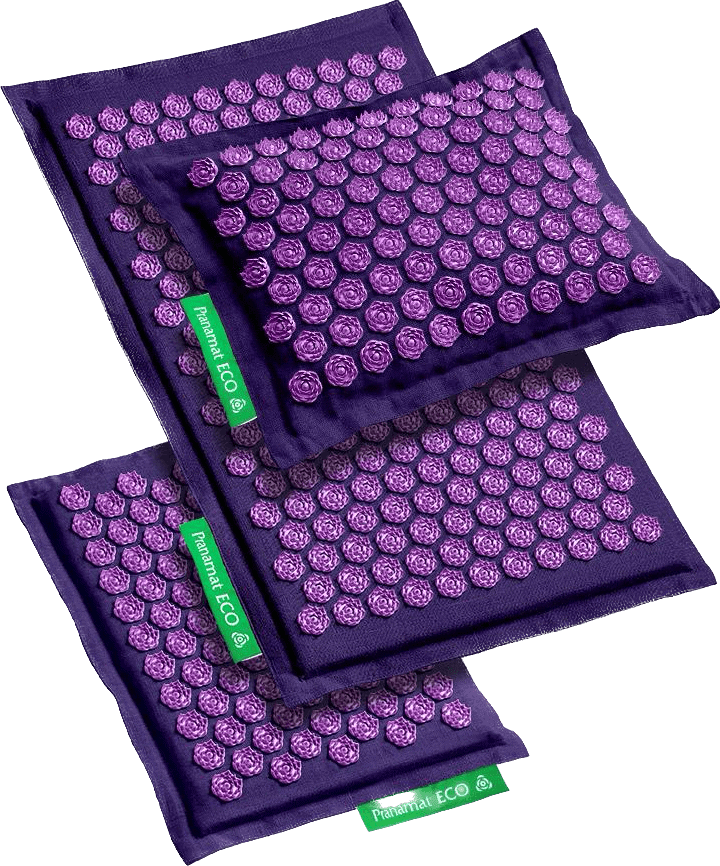
1. Pranamat Classic Set — Best Overall Acupressure Mat and Pillow
Best for: Daily users who want the highest quality mat and pillow set
Score: 4.8 / 5
| Price | $315 (Classic Set: Mat + Pillow) |
| Spikes | HIPS medical-grade plastic, patented lotus-shaped |
| Filler | 100% natural coconut fiber |
| Cover | Natural, ethically sourced (OEKO-TEX STANDARD 100 certified) |
| Dimensions | Mat: 73 x 45 cm / Pillow: 45 x 34 cm |
| Includes | Mat + Pillow |
| Warranty | 5 years |
| Return policy | 30 days |
Pros
- Patented lotus-shaped spikes distribute pressure evenly — comfortable from day one on bare skin
- Coconut fiber filler stays firm after years of daily use
- OEKO-TEX certified materials — safe for intensive daily skin contact
- Handcrafted in Europe
- Mat + pillow set covers entire upper body (back, neck, shoulders)
- Zero chemical smell out of the box
Cons
- Most expensive mat on this list by a wide margin
- No carrying case included
- Cannot buy just the mat — only sold as sets
- Pillow sold only as part of a set
My experience: This is the mat I reach for every single day. My Pranamat is over 8 years old now, and it still feels and looks the same as the day I got it. The coconut fiber filler is still firm and springy, the lotus spike elements show zero wear, and the cover looks almost new. That is not something I can say about any other mat on this list.
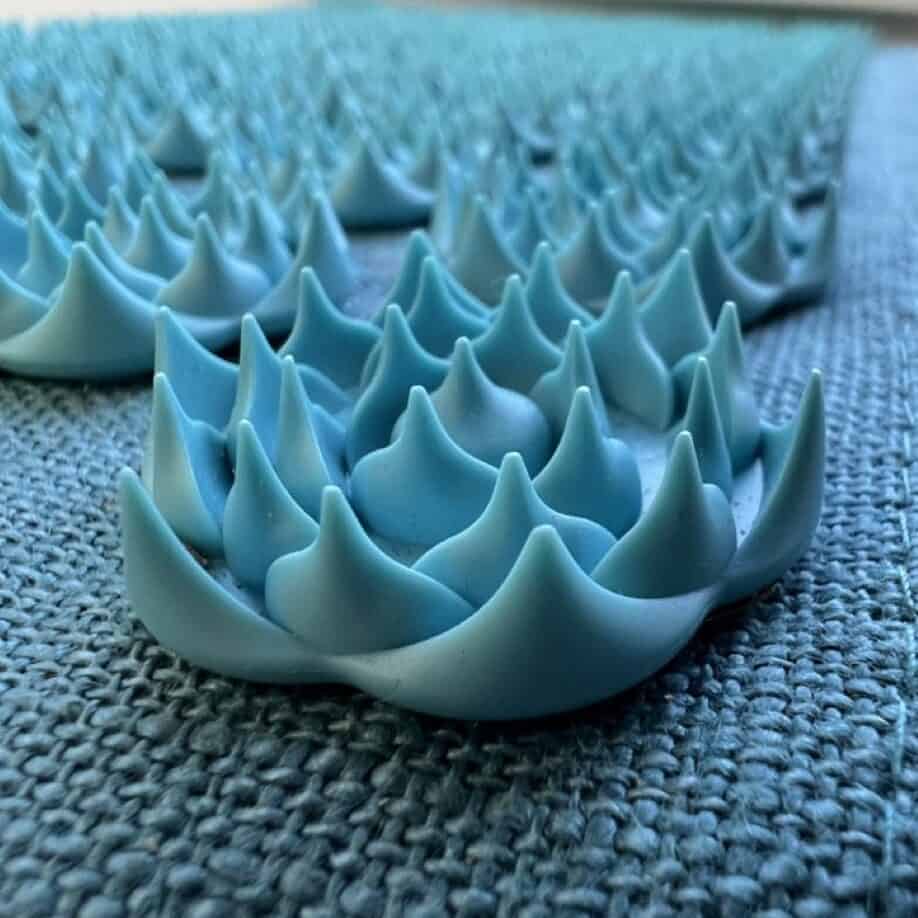
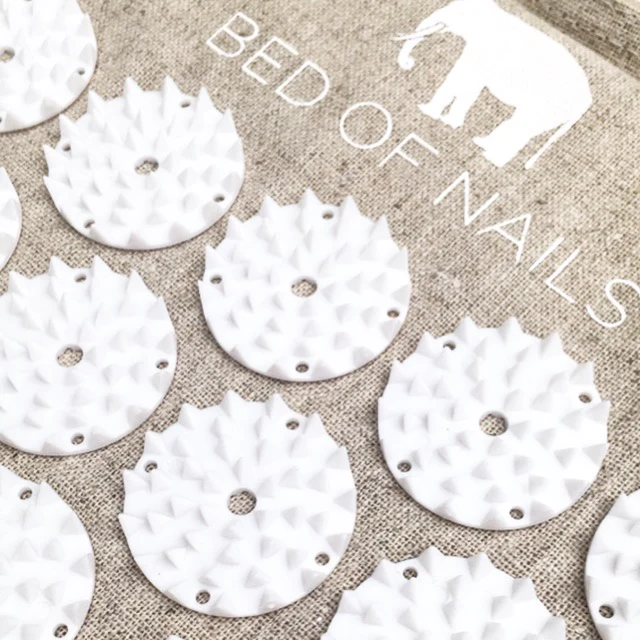
The patented lotus-shaped spikes are what sets Pranamat apart from everything else on this list. Every other mat here uses some variation of sharp, pointed ABS plastic pyramids. The Pranamat lotus design uses HIPS (High Impact Polystyrene) medical-grade plastic with slightly rounded tips and smooth edges. The difference you feel is real: pressure gets distributed across a wider area instead of concentrating into sharp points.
Most people can lie on the Pranamat bare-skinned from the very first session. With every other mat on this list, I needed a T-shirt buffer for at least the first week.
The mat + pillow combination is a big deal. The pillow targets your neck and shoulders, which is where most tension builds up. Using both together turns a 20-minute session into full upper-body coverage that you can actually feel working.
Is it worth $315? If you plan to use it daily, yes. Mine is 8+ years old and still going strong — so that $315 divided over 8 years is under $40 per year. Compare that to replacing a budget mat every 12-18 months and the math speaks for itself. I cover this math in detail in my Shakti Mat vs Pranamat comparison.
Who should buy this: Anyone who wants the best possible product on the market — not because it is trendy or well-known, but because you know you deserve the best for your skin and body. This is not a gadget you try once. It is a daily investment in how you feel, and the Pranamat is built to last a lifetime. If you value quality over hype, this is the one.
Check current Pranamat prices and use code acupressureguide for a discount
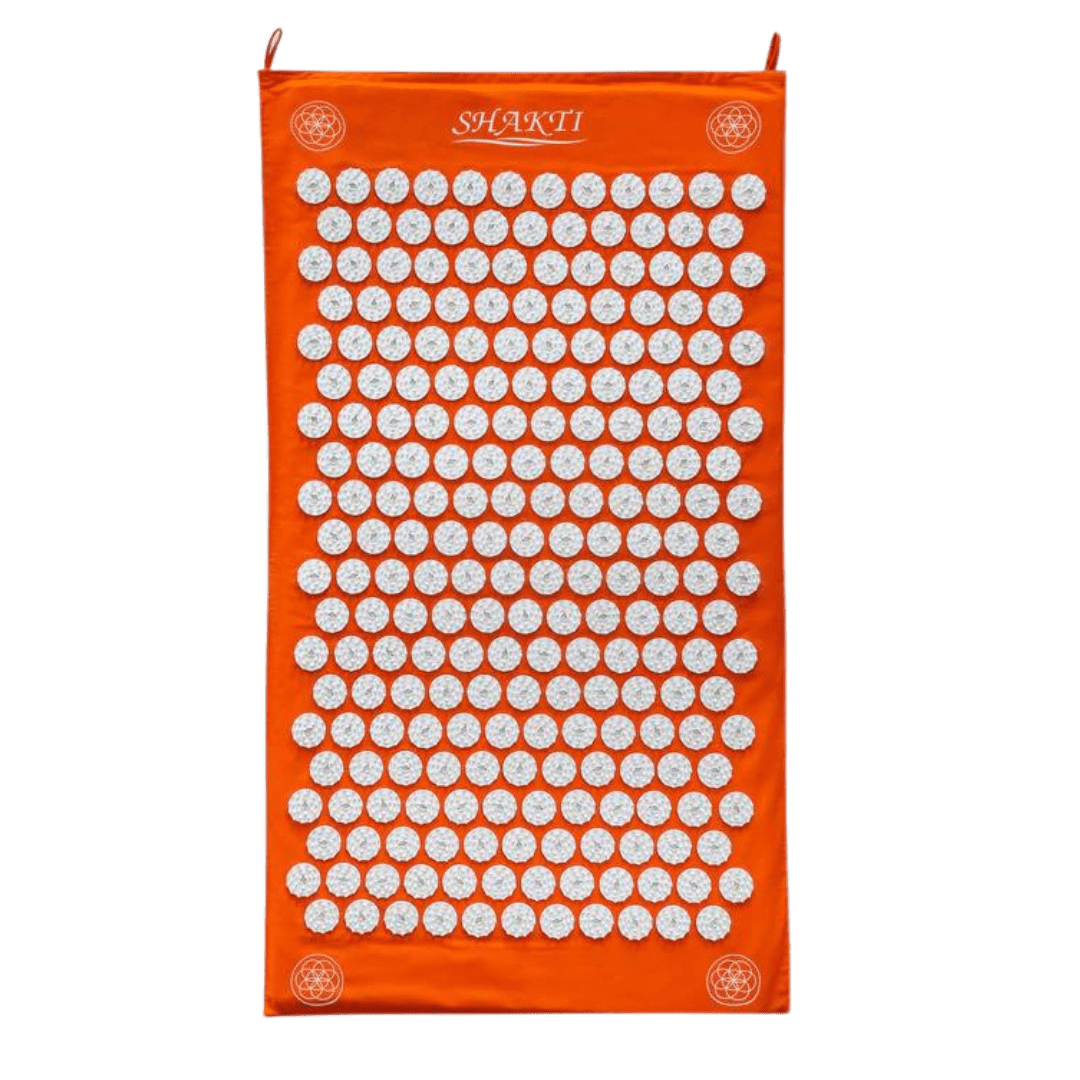
2. Shakti Mat — Best for Intense Acupressure Stimulation
Best for: People who want strong, focused pressure point stimulation and a brand with real heritage
Score: 4.0 / 5
| Price | $109 (Classic) / $129 (Premium) / $165-$198 (bundles with pillow) |
| Spikes | ABS plastic, sharp pyramidal points |
| Filler | Foam rubber |
| Cover | Certified organic cotton, natural dyes |
| Dimensions | Standard acupressure mat size |
| Includes | Mat only (pillow sold separately) |
| Warranty | 5 years |
| Return policy | 30 days |
Pros
- Handcrafted in India with certified organic materials
- 3 intensity levels (Light: 8,000 points, Original: 6,000, Advanced: 4,000)
- Individually placed spikes using a glue-free clip method
- Strong brand reputation since 2008
- 10% of profits donated to charitable causes in India
Cons
- Strong chemical smell out of the box — takes about 2 weeks to off-gas
- Foam filler compresses after 6+ months of daily use
- Sharp pyramidal spikes can feel aggressive for beginners
- Pillow costs extra ($75-$85)
My experience: I used the Shakti Mat daily for months before trying anything else. It does what it says. The sharp ABS spikes create intense, focused pressure that gets blood flowing and triggers a strong endorphin response.
The intensity is both a strength and a weakness. If you have experience with acupressure and want that deep, targeted stimulation, the Shakti Mat delivers. But most beginners need a T-shirt for the first week because the pyramidal points are genuinely sharp.
The biggest issue I noticed over time is the foam filler. After about 6 months of daily use, the foam started compressing in the spots where my back presses hardest. Once the filler softens, the spikes cannot maintain consistent pressure anymore. The mat still works, but it is noticeably less effective than when it was new.
Also, nobody warns you about the smell. When my Shakti Mat arrived, I could smell it before I opened the box. A strong chemical, glue-like odor that took two weeks near an open window to fully clear. For a product you put on bare skin, that is not ideal.
Who should buy this: Experienced acupressure users who want strong stimulation and appreciate ethically made products. Also a solid choice if you want to try acupressure mats and your budget is around $100-$130.
Read my full Shakti Mat vs Pranamat side-by-side comparison for a deeper look at how these two compare.
Check current Shakti Mat prices
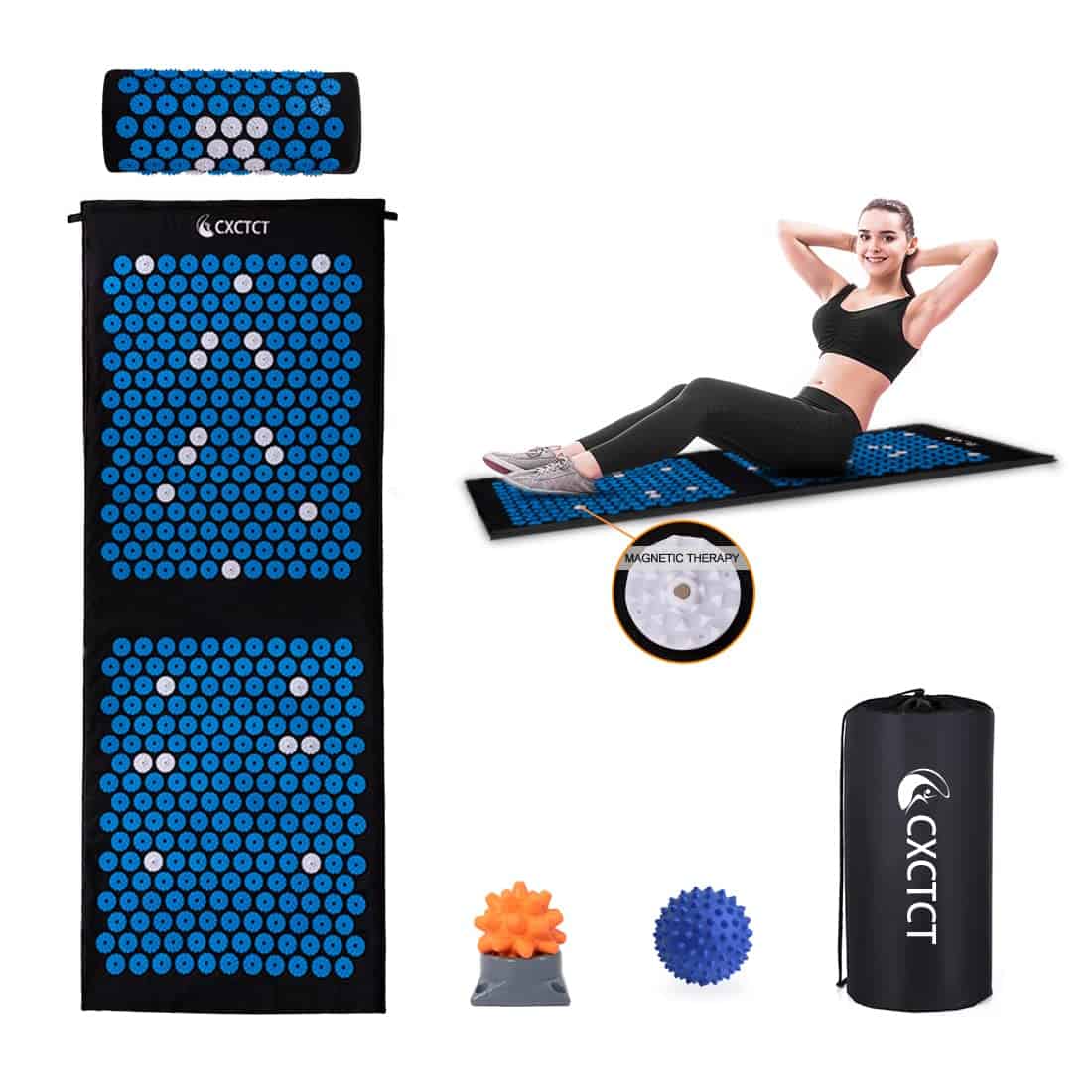
3. CXCTCT XL Yoga Acupressure Mat Set — Best Value for Full Body
Best for: People who want full-body coverage and accessories at a mid-range price
Score: 4.2 / 5
| Price | $70 |
| Spikes | ABS plastic |
| Filler | Foam |
| Cover | Cotton blend |
| Dimensions | 47″ L x 15.6″ W (extra-long) |
| Includes | Extra-long mat, pillow, 2 mobility balls, carrying case |
| Warranty | Not specified |
Pros
- Extra-long mat (47 inches) covers more of your body than standard mats
- Comes with pillow, 2 mobility balls, and carrying case
- Good value for a complete acupressure set
- Multiple color options
Cons
- Foam filler will compress over time (same as all foam-based mats)
- ABS spikes feel intense for first-time users on bare skin
- Not machine washable
- No third-party material certifications
My experience: The CXCTCT XL stands out because of its size. At 47 inches, this mat covers your entire back from shoulders to glutes, which most standard acupressure mats cannot do. For the price, the included accessories (pillow, mobility balls, carrying case) make it an excellent starter package.
The spike quality is standard ABS plastic — nothing special, but functional. The foam filler is typical for this price range. It will give you good support for 12-18 months before you notice it softening.
If you want full-body coverage and you are not ready to spend $315 on a Pranamat, this is where I would start.
Who should buy this: Budget-conscious buyers who want a complete acupressure kit with full-body coverage. Great first acupressure mat.
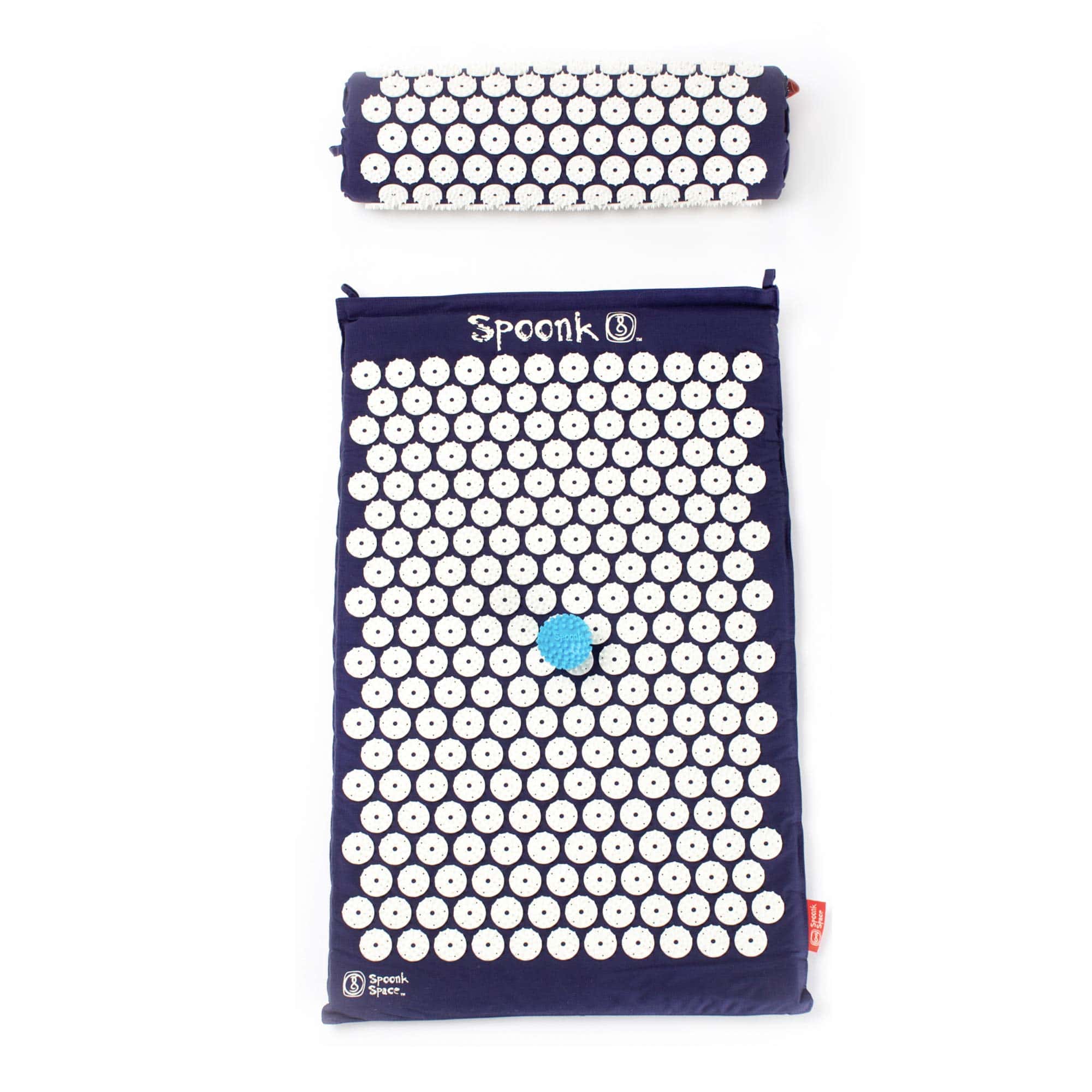
4. Spoonk Acupressure Eco Mat — Best Budget Acupressure Mat
Best for: People who want to try acupressure therapy for the lowest possible price
Score: 3.5 / 5
| Price | $23-$50 (varies by size) |
| Spikes | ABS plastic, 6,000+ points |
| Filler | Foam |
| Cover | Cotton |
| Dimensions | Travel size (16″ x 14″) and regular size available |
| Includes | Mat + travel mat + carrying bag |
| Warranty | Not specified |
Pros
- The most affordable entry point for acupressure
- Travel-size mat included as a bonus
- Carrying bag for portability
- Over 6,000 acupressure points
Cons
- Travel size is quite small (16″ x 14″) — barely covers your lower back
- No pillow included
- Foam filler quality is basic
- Mixed effectiveness reviews from users
- Limited color options
My experience: At $23 for the entry-level option, the Spoonk is the cheapest way to find out if acupressure therapy works for your body. The mat does apply pressure to your back. The spikes are functional. It will trigger some endorphin response.
But you get what you pay for. The foam is thin, the mat is small, and after a few months of regular use the quality difference compared to the Pranamat or even the Shakti Mat is obvious. Think of it as a trial run, not a long-term investment.
The travel-size mat that comes included is a nice bonus for targeting specific areas like your feet or lower back while sitting in a chair.
Who should buy this: Anyone on a strict budget who wants to test whether acupressure mats are worth using before investing in a premium option.
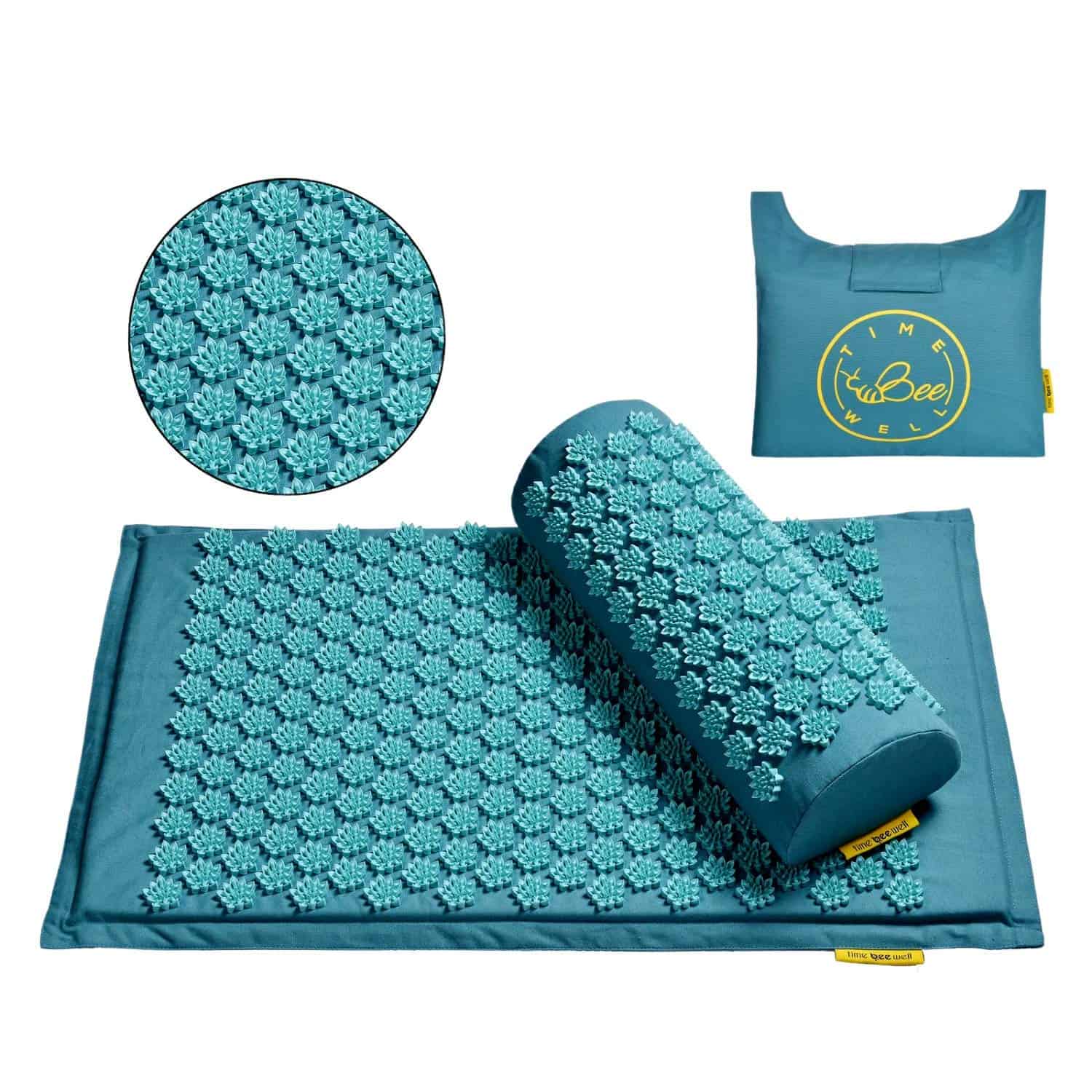
5. TimeBeeWell Eco Mat and Pillow Travel Set — Best Acupressure Mat for Travel
Best for: People who want to bring their acupressure mat on trips
Score: 3.8 / 5
| Price | $50 |
| Spikes | ABS plastic, 253 spike clusters |
| Filler | Foam (details not specified by manufacturer) |
| Cover | 100% cotton |
| Dimensions | 28.35″ L x 17.32″ W |
| Includes | Mat, pillow, carrying bag |
| Warranty | Not specified |
Pros
- Comes with a carrying bag designed for travel
- Mat and pillow included at a reasonable price
- Made with eco-friendly materials
- Lightweight and easy to roll up
Cons
- Manufacturer does not disclose inner foam material details
- Hand wash only
- Limited color options (3 colors)
- Standard ABS spikes
My experience: If you travel regularly and want to keep up your acupressure routine on the road, the TimeBeeWell is built for exactly that. The included carrying bag makes it easy to toss in a suitcase or gym bag.
The mat itself is decent quality for the price. The cotton cover feels good against skin, and the included pillow is a nice addition for targeting your neck after a long flight. The main limitation is that TimeBeeWell does not disclose what type of foam they use inside, which is a transparency issue given that you are lying on this with bare skin.
For home use, there are better options. For travel specifically, this is the most practical choice I have found.
Who should buy this: Frequent travelers or gym-goers who want a portable acupressure mat with a pillow at a reasonable price.
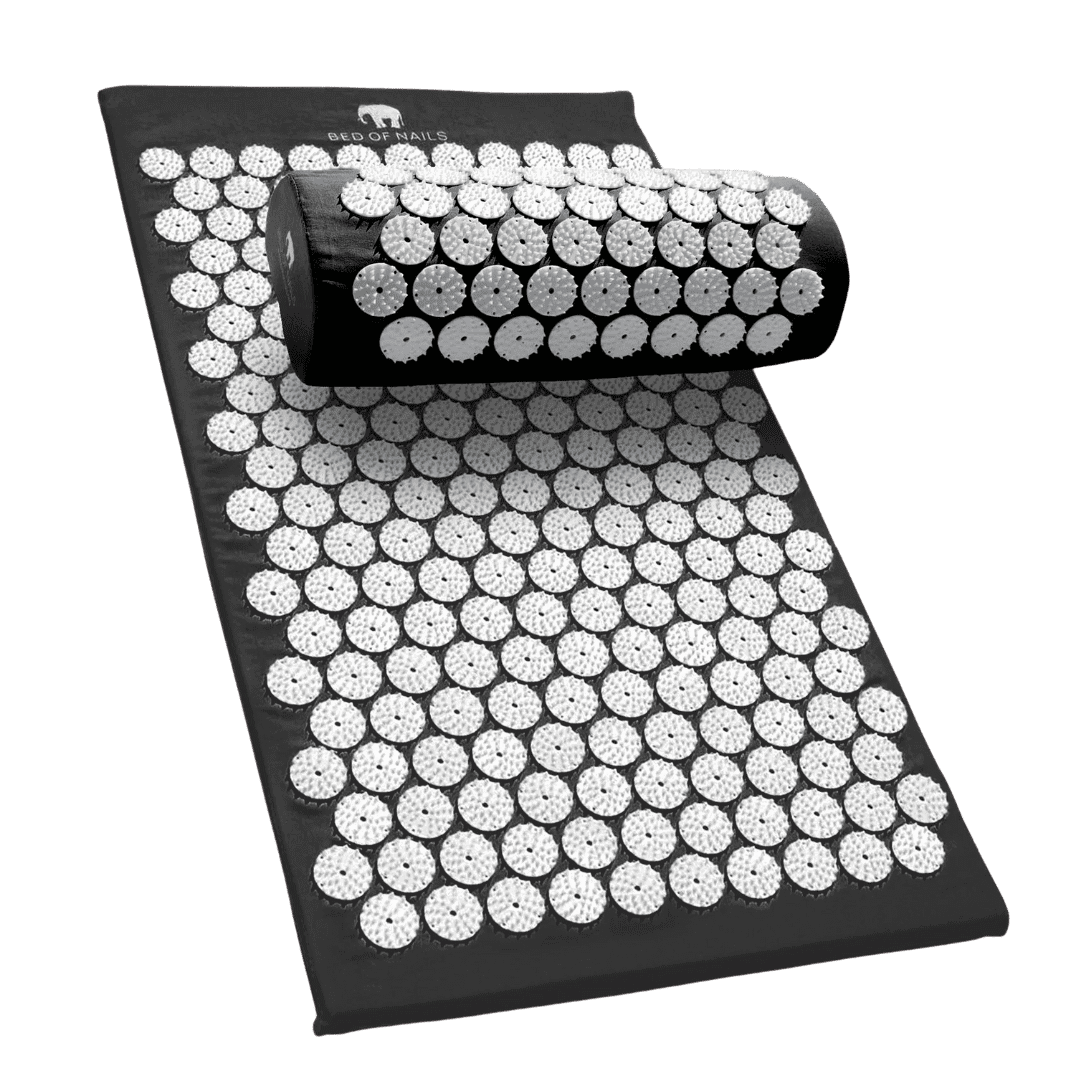
6. Bed of Nails ECO Mat — Best Eco-Friendly Alternative to Pranamat
Best for: People who want premium eco-friendly materials but want to explore beyond Pranamat
Score: 3.7 / 5
| Price | From $122 |
| Spikes | HIPS eco plastic |
| Filler | Coconut fiber |
| Cover | Organic cotton |
| Dimensions | Standard acupressure mat size |
| Includes | Mat + tote bag |
| Warranty | Not specified |
| Return policy | 60 days |
Pros
- HIPS plastic spikes (same material class as Pranamat — gentler than ABS)
- Coconut fiber filler (durable, no compression issues)
- Eco-friendly materials and production
- 60-day return policy (longer than most competitors)
- Includes a tote bag
Cons
- Less refined spike design compared to Pranamat lotus shape
- Pillow sold separately
- Smaller product range
- Less established brand than Pranamat or Shakti
My experience: Bed of Nails is an interesting option because it shares some of the same material advantages as Pranamat — HIPS plastic spikes and coconut fiber filler — at a lower price point. The spike design is not as refined as the Pranamat lotus pattern, so the pressure distribution is not quite as even. But it is noticeably smoother than the sharp ABS pyramids on budget mats.
The coconut fiber filler is the same story: it holds up better than foam over time, resists odor and mold, and provides consistent firmness. At $122, it sits in an interesting middle ground between budget foam mats and premium Pranamat pricing.
The 60-day return window is the most generous on this list, which is a plus if you are unsure.
Who should buy this: People who want the material benefits of HIPS plastic and coconut fiber but are not ready for the Pranamat price. A solid mid-range choice.
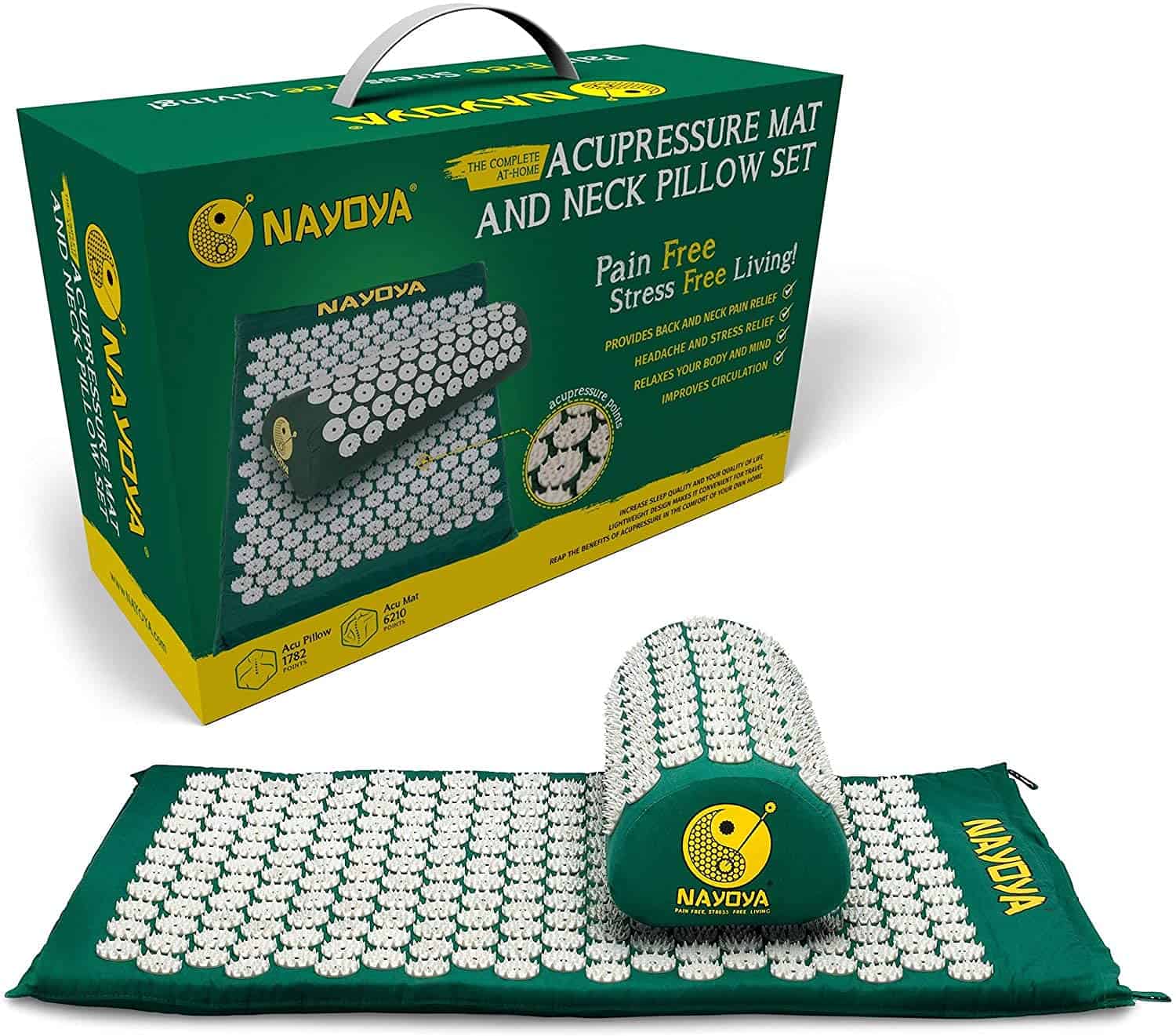
7. NAYOYA Acupressure Mat and Pillow — Best for Back Pain and Sciatica
Best for: People specifically looking for back pain and sciatica relief
Score: 3.6 / 5
| Price | $25 |
| Spikes | ABS plastic, 6,210 points |
| Filler | Foam |
| Cover | Cotton/polyester blend |
| Dimensions | 26″ L x 16″ W |
| Includes | Mat, pillow, carrying case |
| Warranty | Not specified |
Pros
- Specifically marketed for back pain and sciatica relief
- Mat, pillow, and carrying case included for $25
- 6,210 acupressure points
- Thousands of positive reviews from back pain sufferers
Cons
- Foam filler will compress over time
- ABS spikes are standard quality
- Smaller mat size
- No material certifications
My experience: The NAYOYA is one of the most reviewed acupressure mats on Amazon, and it has earned its reputation for back pain relief specifically. The spike layout is dense enough (6,210 points) to spread pressure well across your back, and the included pillow targets the neck area.
For $25 with a pillow and carrying case included, the value proposition is hard to beat if your primary goal is managing back pain or sciatica symptoms. Just know that the foam filler and ABS spikes put it in the same durability category as other budget mats — expect 12-18 months of good use.
Many users in reviews specifically mention sciatica relief, which makes sense. Lying on the mat increases blood flow to the lower back area and can help relax the muscles putting pressure on the sciatic nerve. If that is your main concern, this is a targeted, affordable option.
Who should buy this: People dealing with chronic back pain or sciatica who want an affordable mat specifically designed for that purpose.
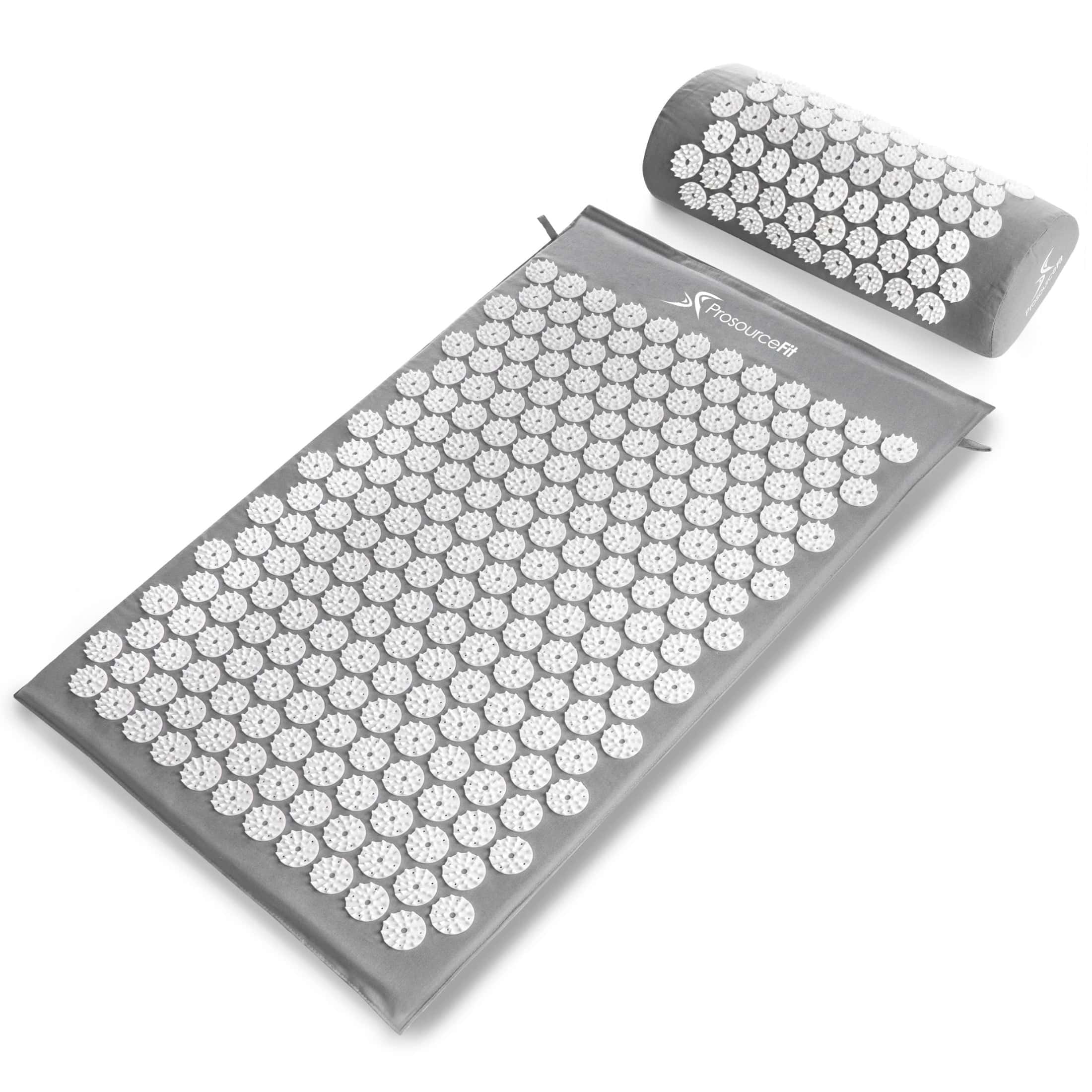
8. ProsourceFit Acupressure Mat and Pillow Set — Best Budget Mat and Pillow Set
Best for: Budget buyers who want both a mat and pillow
Score: 3.5 / 5
| Price | $30 |
| Spikes | ABS plastic, 6,210 points (mat) / 1,782 points (pillow) |
| Filler | Foam |
| Cover | Cotton |
| Dimensions | 26.5″ L x 16.5″ W (half body) / Also available in XL |
| Includes | Mat + pillow |
| Warranty | Lifetime |
| Colors | 11 options |
Pros
- Mat and pillow for $30 — best budget combo
- Available in half-body and full-body sizes
- 11 color options (most on this list)
- Lifetime warranty (rare at this price)
- Mostly positive customer reviews
Cons
- Cover is hand-wash only
- Foam insert can shift around inside the cover
- Fewer spikes per cluster means more concentrated pressure (less comfortable for beginners)
- Limited colors in full-body version
My experience: The ProsourceFit is the budget mat and pillow set I recommend when someone says “I want to try acupressure but I only have $30.” You get a functional mat, a pillow for your neck, and a lifetime warranty — all for the price of a large pizza.
The catch is comfort. The ProsourceFit appears to have fewer spikes per cluster than some competitors, which means more concentrated pressure on each point. For first-time users, this can feel pretty uncomfortable. Start with a T-shirt and work your way to bare skin.
The lifetime warranty is a standout. At this price, most companies do not offer any warranty at all.
Who should buy this: Budget buyers who want the mat + pillow combo for the lowest price, and people who want color variety in their acupressure mat.
Full Comparison Table: All 8 Acupressure Mats Side by Side
| Feature | Pranamat | Shakti Mat | CXCTCT XL | Spoonk | TimeBeeWell | Bed of Nails | NAYOYA | ProsourceFit |
|---|---|---|---|---|---|---|---|---|
| Price | $315 | $109-$198 | $70 | $23-$50 | $50 | $122+ | $25 | $30 |
| Best For | Daily use | Intense stimulation | Full body value | Budget trial | Travel | Eco alternative | Back pain | Budget set |
| Spike Material | HIPS medical-grade | ABS plastic | ABS plastic | ABS plastic | ABS plastic | HIPS eco | ABS plastic | ABS plastic |
| Spike Design | Patented lotus | Pyramidal | Pyramidal | Pyramidal | Pyramidal | Rounded | Pyramidal | Pyramidal |
| Filler | Coconut fiber | Foam rubber | Foam | Foam | Foam | Coconut fiber | Foam | Foam |
| Cover | OEKO-TEX certified | Organic cotton | Cotton blend | Cotton | Cotton | Organic cotton | Cotton/poly | Cotton |
| Pillow Included | Yes | No (extra $75+) | Yes | No | Yes | No | Yes | Yes |
| Carrying Case | No | No | Yes | Yes | Yes | Yes (tote) | Yes | No |
| Warranty | 5 years | 5 years | — | — | — | — | — | Lifetime |
| Durability | 8+ years | 1-2 years | 1-1.5 years | 1 year | 1-1.5 years | 2-3 years | 1-1.5 years | 1-1.5 years |
| Beginner Comfort | Bare skin from day 1 | T-shirt needed | T-shirt needed | T-shirt needed | T-shirt needed | Gentler than ABS | T-shirt needed | T-shirt needed |
| Score | 4.8/5 | 4.0/5 | 4.2/5 | 3.5/5 | 3.8/5 | 3.7/5 | 3.6/5 | 3.5/5 |
What to Look for When Buying an Acupressure Mat
If you are overwhelmed by choices, here is what actually matters, ranked by importance.
Spike Material: ABS vs HIPS Plastic
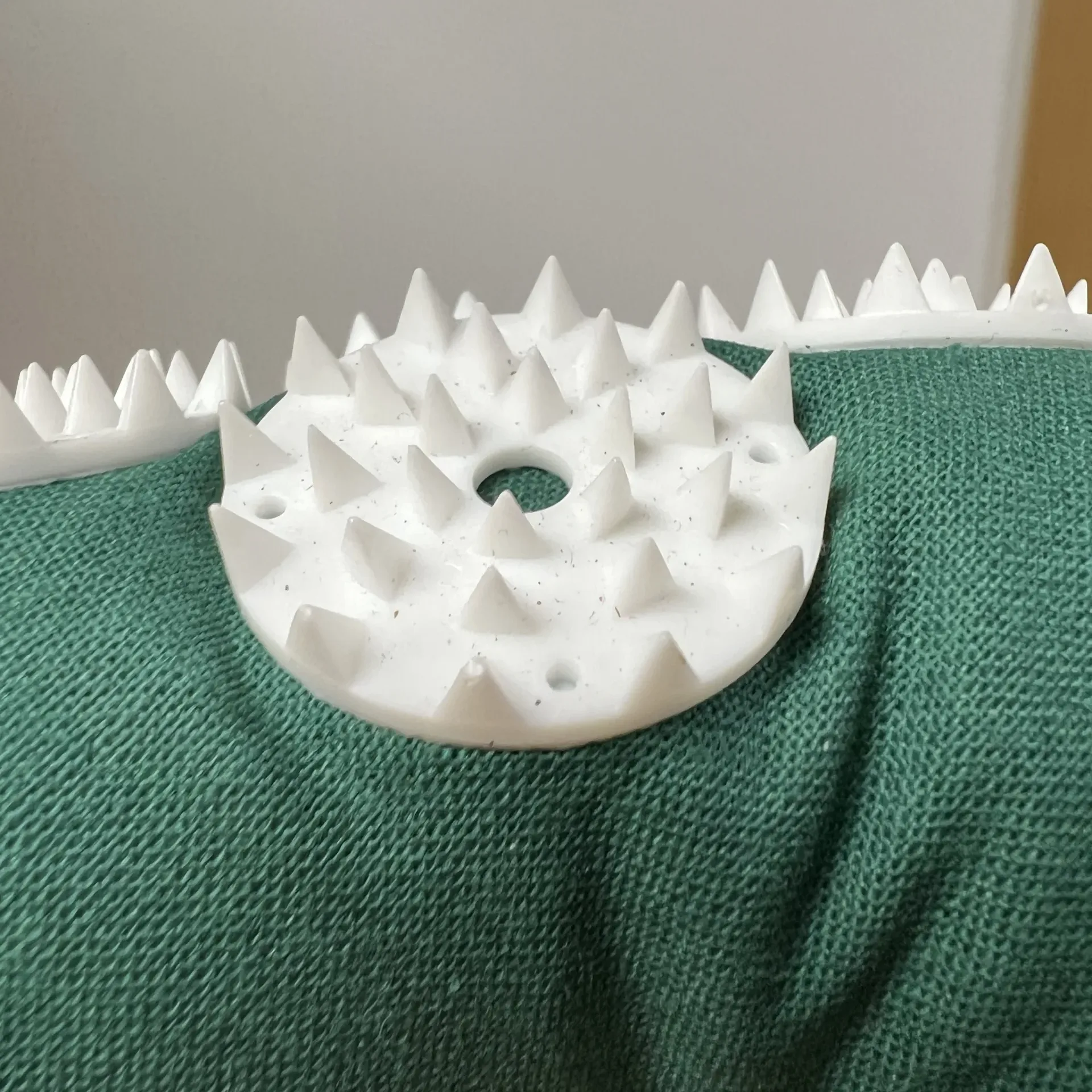
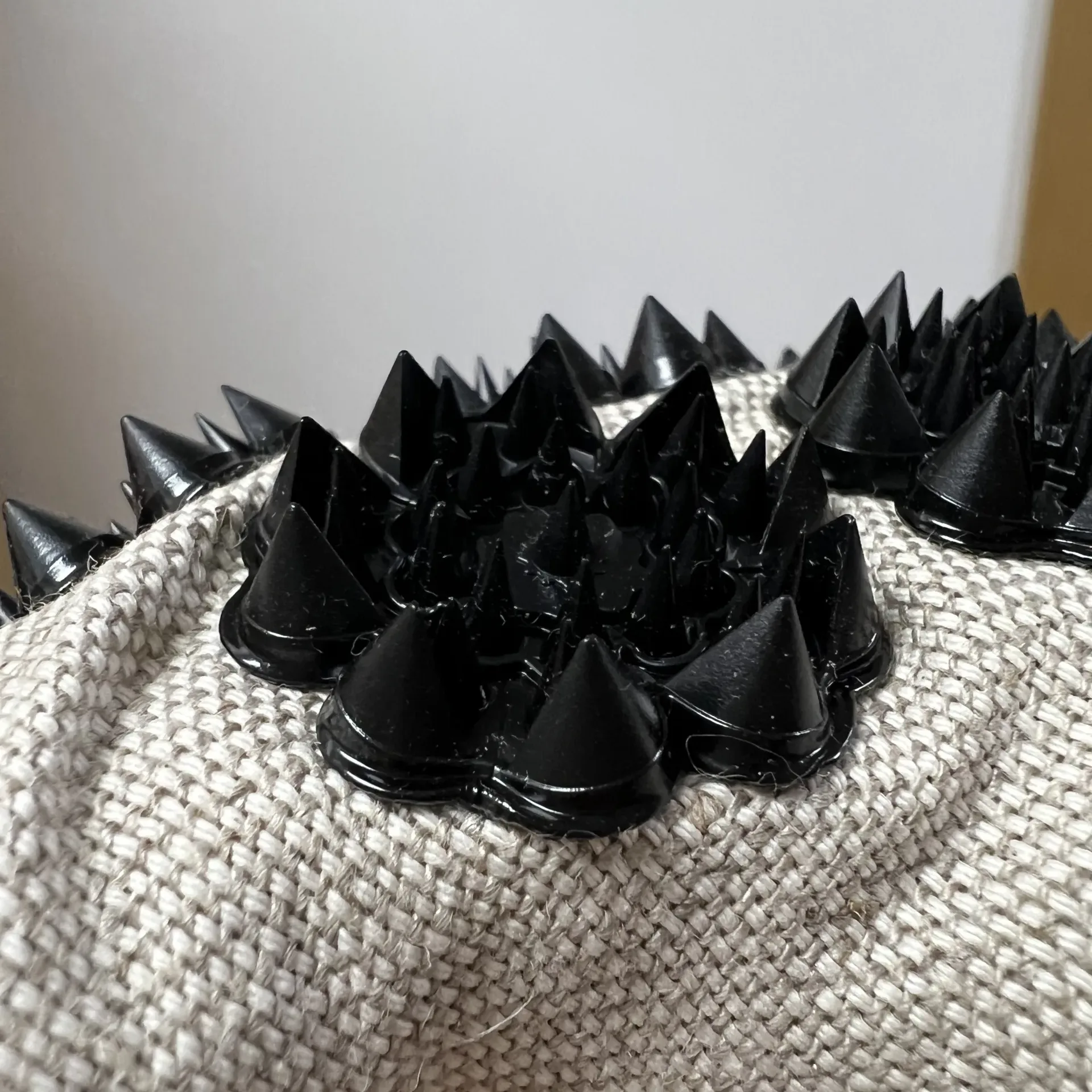
This is the single biggest quality differentiator. Most mats use ABS (Acrylonitrile Butadiene Styrene) plastic — the same cheap plastic in most household products. ABS spikes are sharp, pointed, and get the job done, but they concentrate pressure into small points.
Premium mats use HIPS (High Impact Polystyrene) medical-grade plastic. HIPS is slightly more flexible, produces smoother edges, and is considered safer for prolonged skin contact. Of the 8 mats reviewed here, only Pranamat and Bed of Nails use HIPS.
Spike Design and Shape
Beyond the material, the shape matters. Pyramidal spikes (most budget mats) create intense, focused pressure. Lotus-shaped spikes (Pranamat) distribute pressure across more contact points, making the experience less sharp and more comfortable, especially for longer sessions.
If you are new to acupressure mats, a gentler spike design will make your first few weeks much more pleasant.
Mat Filler: Foam vs Coconut Fiber
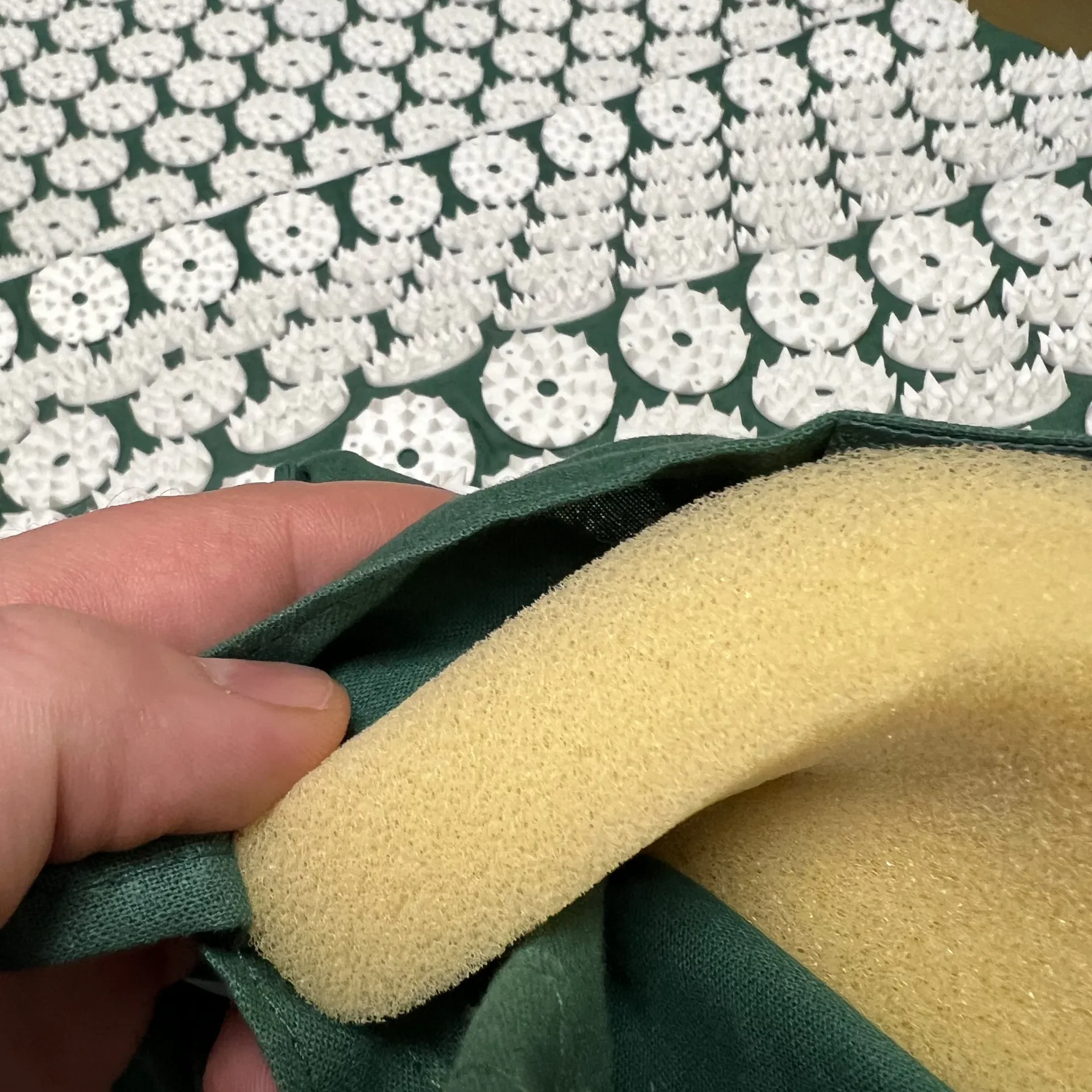
Foam rubber is cheap, lightweight, and gives decent cushioning initially. The problem is that foam compresses under repeated pressure. After 6-12 months of daily use, you will notice the filler getting soft in the spots where your body presses hardest. Once that happens, the spikes cannot maintain consistent contact with your skin.
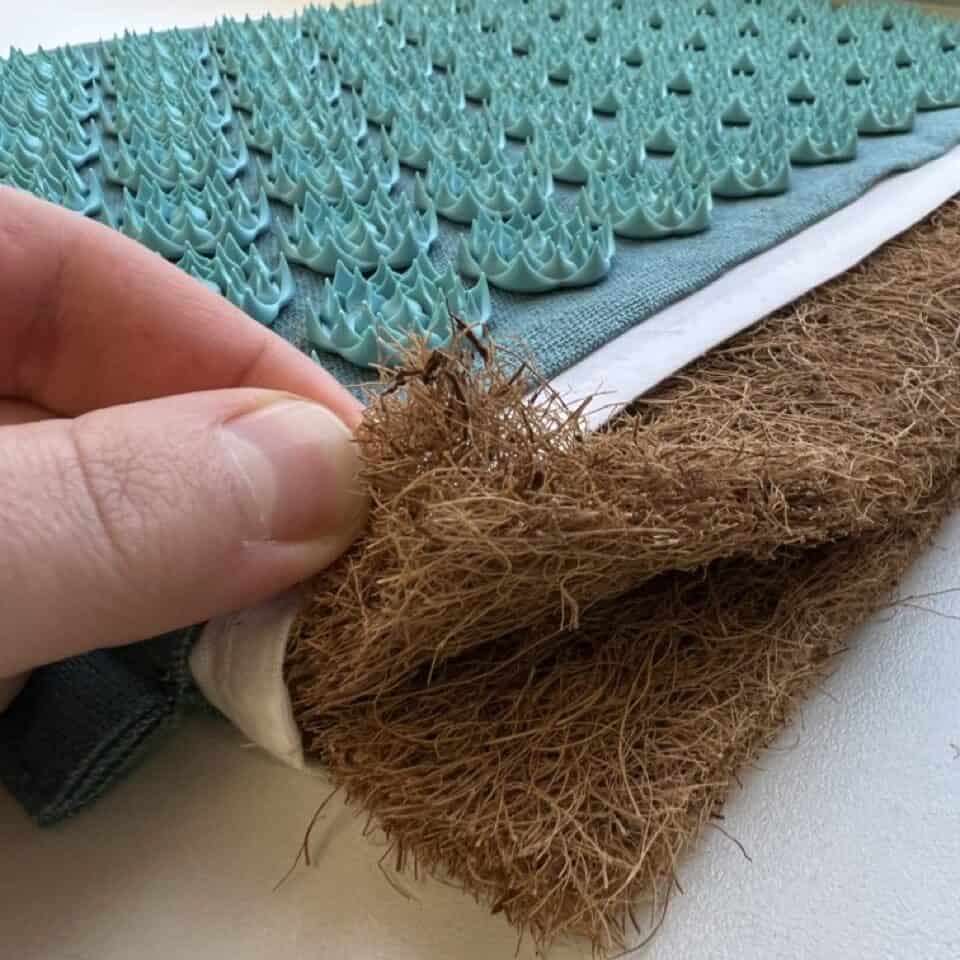
Coconut fiber (coir) is firm, springy, and holds its shape. It pushes back consistently session after session, even after years of daily use. It is also naturally resistant to dust mites, mold, and odor — real advantages for something you lie on with bare skin regularly.
Only Pranamat and Bed of Nails use coconut fiber. Every other mat on this list uses foam.
Cover Material and Certifications
Look for natural materials like cotton or linen. Avoid synthetic covers that trap heat and sweat.
The gold standard is OEKO-TEX STANDARD 100 certification, which guarantees materials are free from harmful substances and safe for intensive skin contact. Only the Pranamat carries this certification.
Size
Standard acupressure mats cover your mid-to-upper back (roughly 26-29 inches long). That is enough for most people. Extra-long mats like the CXCTCT (47 inches) cover your full back and glutes, which is better for full-body sessions.
If you plan to target your neck and shoulders too, get a set that includes a pillow.
Price and Value
Acupressure mats range from $23 to $500+. Here is how to think about value:
- Under $30: Trial mats. Good for finding out if acupressure works for you. Expect 12-18 months of use.
- $50-$130: Mid-range. Better materials, some include pillow. 1-2 years of regular use.
- $300+: Premium. HIPS spikes, coconut fiber, certifications. 8+ years of daily use (my Pranamat is proof).
When you do the math per year: a $30 mat replaced every 18 months = $20/year. A $315 Pranamat lasting 8+ years = under $40/year. You pay more upfront, but premium mats actually cost less in the long run.
Benefits of Acupressure Mats: What the Science Says
I am not going to oversell this. The scientific research on acupressure mats specifically is still limited. But what exists is promising, and it lines up with what I and thousands of users experience.
Pain Relief
A 2021 randomized controlled study found that using an acupressure mat in combination with therapeutic exercise significantly reduced chronic low back pain and improved quality of life, especially over 6 months. The group using acupressure mats reported lower pain ratings than the control group.
Stress Reduction
A 2023 study published in Applied Psychology found that regular acupressure mat use reduced subjective stress levels. The researchers noted that the relaxation benefits may come partly from simply taking 20 minutes to lie still and focus on your body — which is valuable in itself.
Improved Sleep
A 2018 systematic review and meta-analysis examined multiple studies on acupressure therapy and sleep. The findings showed that acupressure had positive effects on sleep quality across several study populations.
Better Circulation
A 2024 study in the European Journal of Applied Physiology found that acupressure increased blood circulation in treated areas, though the effect was more modest than acupuncture.
The bottom line: Acupressure mats are not a miracle cure. But there is real evidence they can help with pain management, stress reduction, and sleep quality — especially when used consistently as part of a daily wellness routine.
How to Use an Acupressure Mat
If you are new to acupressure mats, here is how to start:
- Place the mat on a flat surface. Your bed gives softer pressure (good for beginners). The floor gives deeper pressure (for experienced users).
- Start with a thin T-shirt. Most beginners find bare-skin contact too intense at first, especially with sharp ABS spike mats.
- Lie down slowly. Lower yourself onto the mat gradually. Do not drop onto it.
- Start with 10-15 minutes. Increase by 5 minutes every few sessions until you reach 20-30 minutes.
- Focus on breathing. The first 2-3 minutes will feel intense. After that, your body adjusts and endorphins kick in.
- Try bare skin when ready. For maximum benefit, direct skin contact is ideal. Most people can transition to bare skin within 1-2 weeks.
For a more detailed guide, read our article on how to use an acupressure mat effectively.
FAQ
What is the best acupressure mat for back pain?
For chronic back pain, I recommend either the Pranamat (for daily users willing to invest in quality) or the NAYOYA (for budget buyers). Both provide good coverage across the back. The Pranamat coconut fiber filler gives more consistent pressure over time, which matters for daily therapeutic use. A 2021 clinical study found acupressure mats effective for chronic low back pain when used regularly.
Do acupressure mats actually work?
There is growing scientific evidence that they help with pain relief, stress reduction, and sleep quality. The research is still limited to small studies, but the results are largely positive. Thousands of user reviews consistently report real benefits, especially for back pain and relaxation. They work best when used daily for 15-30 minutes.
How long should you lie on an acupressure mat?
Start with 10-15 minutes if you are new. Work up to 20-30 minutes per session. Some experienced users go longer, but 20-30 minutes is the sweet spot for most people. You will feel the endorphin response kick in after about 3-5 minutes.
What is the difference between ABS and HIPS plastic spikes?
ABS is a common, hard plastic used in most budget acupressure mats. HIPS (High Impact Polystyrene) is a medical-grade plastic that is slightly more flexible and produces smoother edges. HIPS spikes feel gentler on skin and are considered safer for prolonged bare-skin contact. Pranamat and Bed of Nails use HIPS. Most other mats use ABS.
Is coconut fiber really better than foam filler?
Yes, for acupressure mats specifically. Coconut fiber stays firm under pressure, meaning the spikes maintain consistent contact with your skin session after session. Foam compresses over time, creating uneven pressure as it wears down. Coconut fiber is also naturally resistant to mold, dust mites, and odor. The trade-off is cost — coconut fiber mats are significantly more expensive.
Can you use an acupressure mat every day?
Absolutely. Daily use is how most people get the best results. Both the scientific research and user experience point to consistent daily sessions of 15-30 minutes as the most effective approach.
Are acupressure mats safe for sensitive skin?
They are safe, but sharp ABS spike mats can feel aggressive on sensitive skin. If you have sensitive skin, start with a T-shirt as a buffer, or choose a mat with HIPS spikes (Pranamat or Bed of Nails) which have smoother edges and distribute pressure more gently.
How many spikes should an acupressure mat have?
A good range is 6,000-8,000 spikes. More spikes means the pressure is distributed across more points, which generally feels more comfortable. Fewer, sharper spikes create more intense, focused pressure. The Shakti Mat offers 3 levels: Light (8,000), Original (6,000), and Advanced (4,000).
Related Reading
- Shakti Mat vs Pranamat: Which One Is Actually Worth Your Money?
- The Dark Side of Acupressure Mats: How Cheap Mats Can Harm You
- The Science Behind Needle Mats with Spikes
- How to Clean Your Acupressure Mat and Pillow Set
- Do Acupressure Mats Work?
- Acupressure Mat for Lower Back Pain Relief
- Acupressure Mats and Pregnancy: A Wise Choice or a Risky Move?
Free Mobile App
Find Pressure Points on the Go
Interactive 3D body map with 100+ acupressure points, step-by-step guides, and personalized routines.
Download Free App →