Back Pain Relief for Women Over 45: Why It Gets Harder and What Actually Helps (2026)
If you are a woman over 45 and your back hurts more now than it did ten years ago, you are not imagining things. Something genuinely shifts in your body during this decade, and back pain is often the first thing to announce it. The ache that used to go away after a good stretch now lingers for days. Movements that felt effortless start feeling risky. And the advice you get â “just do some yoga” or “take an ibuprofen” â feels maddeningly inadequate.
I have been working with acupressure and pain management since 2017, and a huge portion of the women I hear from are in this exact stage. The back pain they are experiencing is not just wear and tear. It is driven by a specific set of hormonal, structural, and lifestyle changes that hit hard in the mid-40s and beyond. Understanding what is happening is the first step toward actually fixing it.
This guide breaks down why back pain intensifies for women over 45, what the science says about each contributing factor, and the strategies that make a real, measurable difference. No generic advice. No “just lose weight.” Real solutions for real changes happening in your body right now.
Why Back Pain Gets Worse After 45
The spike in back pain that women experience after 45 is not random. Several biological processes converge during this period, and they all affect your spine, muscles, and nervous system simultaneously.
Understanding these factors matters because the right treatment depends on which ones are driving your pain. A woman whose back pain is primarily hormonal needs a different approach than one whose pain is driven by muscle deconditioning or joint degeneration.
The Estrogen Factor
Here is the thing nobody warns you about: estrogen is not just a reproductive hormone. It is a powerful anti-inflammatory, and it plays a direct role in keeping your spinal discs hydrated, your joints lubricated, and your pain sensitivity in check.
When estrogen levels begin declining in perimenopause â often starting in the early to mid-40s â your body loses one of its primary pain-management tools. Spinal discs start to lose water content faster than they can replenish it. Cartilage thins. Inflammation that was previously kept under control starts ramping up.
A 2019 study in the journal Menopause found that women in the menopausal transition had a 50% higher incidence of new-onset back pain compared to premenopausal women. A separate 2020 study in Spine confirmed that declining estrogen levels correlated directly with increased disc degeneration in women over 45.
This is not something you can fix with better posture alone. It is a systemic change that requires a systemic approach.
Bone Density and Spinal Health
After 45, women lose bone density at roughly 1-2% per year. In the first five years after menopause, this rate can accelerate to 3-5% per year. This is not just an osteoporosis concern â it directly affects your spine.
As vertebrae lose density, they become less able to absorb the daily compression forces that come with standing, walking, and sitting. Microfractures can develop without you even knowing. Compression fractures in the thoracic and lumbar spine are one of the most common causes of unexplained back pain in women over 50.
A DEXA scan is the gold standard for measuring bone density. If you are over 45 and experiencing back pain that seems disproportionate to your activity level, ask your doctor about getting one. Knowing your baseline is crucial for choosing safe exercises and treatments.
Muscle Loss and Core Weakness
Starting around age 30, women lose approximately 3-8% of muscle mass per decade. After 50, this accelerates. The muscles most affected are the deep stabilizing muscles of the core â the transverse abdominis, multifidus, and pelvic floor muscles â which are responsible for supporting your spine.
When these muscles weaken, your spine loses its primary support system. The vertebrae, discs, and ligaments have to absorb forces that muscles should be handling. This leads to disc bulges, facet joint irritation, and that deep, aching pain that gets worse as the day goes on.
The frustrating part is that traditional ab exercises like crunches do almost nothing for these deep stabilizers. You need targeted training that specifically activates the transverse abdominis and multifidus. More on that below.
Joint Changes and Stiffness
Facet joints â the small joints on either side of each vertebra â undergo degenerative changes that accelerate after 45. The cartilage that cushions these joints thins, the joint capsules become less flexible, and morning stiffness becomes a daily reality.
This is compounded by the fact that the intervertebral discs are also losing height. As discs thin, the facet joints are forced to bear more load than they were designed for, which accelerates their degeneration. It is a cycle that feeds itself.
If your back pain is worse first thing in the morning and improves somewhat after moving around, facet joint involvement is likely. If it is worse after prolonged standing or walking, disc-related issues may be the primary driver.
What Actually Helps: Evidence-Based Strategies
Now for the part that matters. These are the strategies that research consistently shows make a meaningful difference for women over 45 with back pain. I have organized them from the most accessible to the most involved.
Acupressure for Back Pain Relief
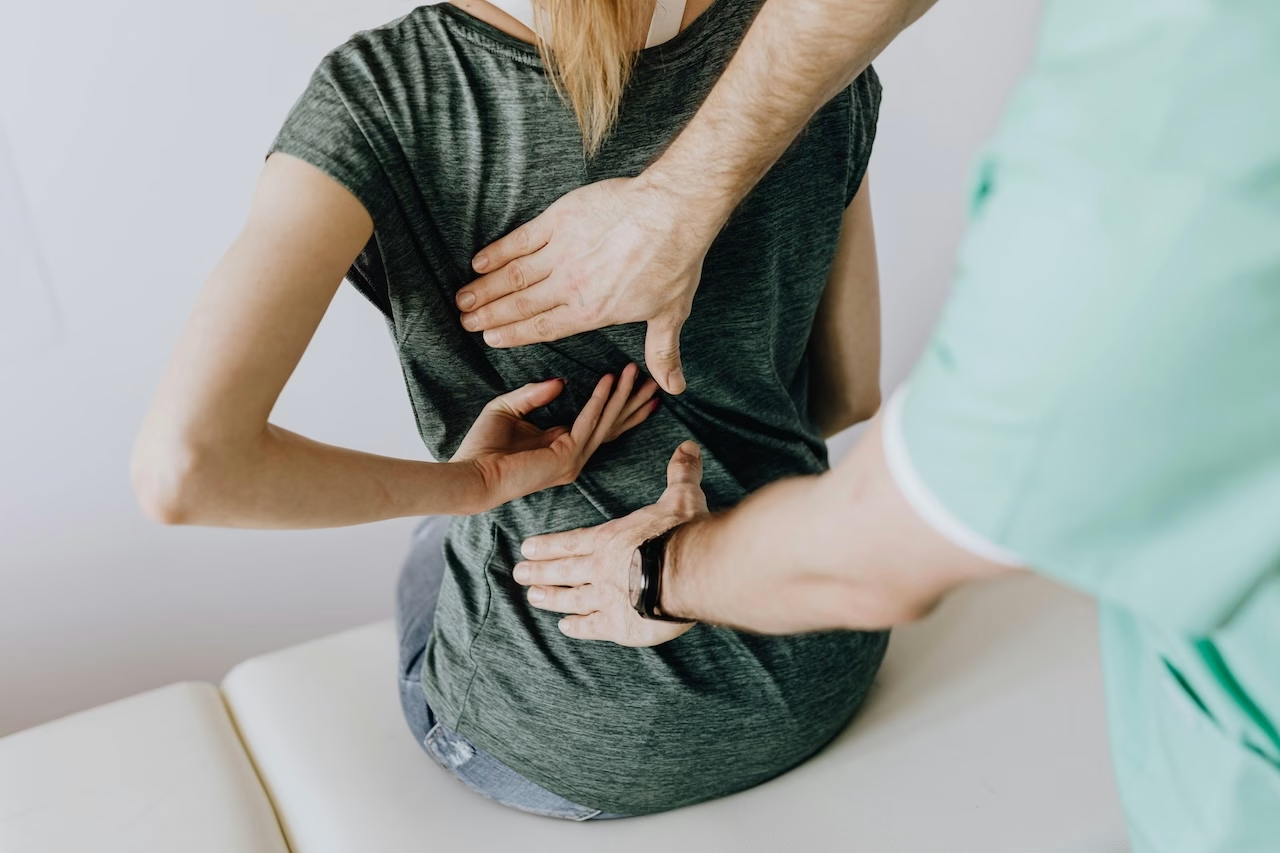
Acupressure is where I always start, because it is something you can do right now, today, with nothing but your hands. Specific pressure points along the back, hips, and legs can reduce pain, release muscle tension, and decrease inflammation.
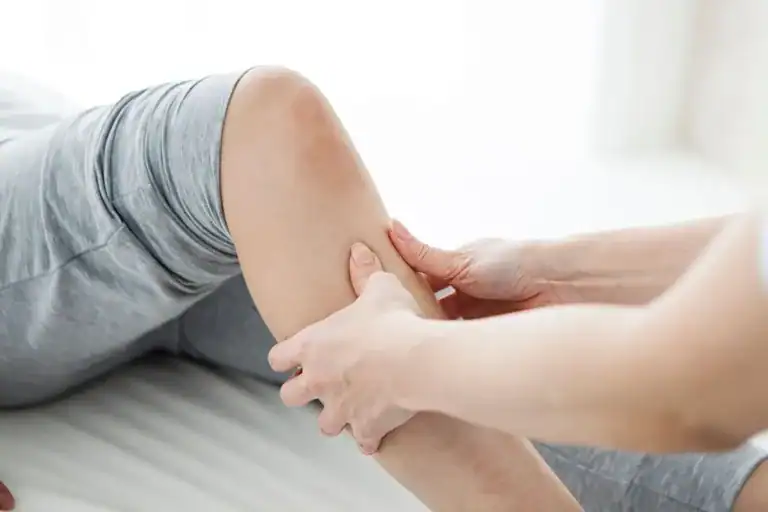
The key points for lower back pain in women over 45 include Bladder 23 (Kidney Shu), which sits on either side of the spine at waist level and addresses deep lumbar pain. Bladder 40 (Wei Zhong), behind the knee, is remarkably effective for acute lower back spasms. And Gallbladder 30 (Huan Tiao), on the buttock, targets the sciatic nerve irritation that many women develop in this age range.
I have been practicing acupressure since 2017, and the combination of these three points provides noticeable relief within minutes for most people. Press each point firmly for 60 to 90 seconds, breathing deeply through the pressure.
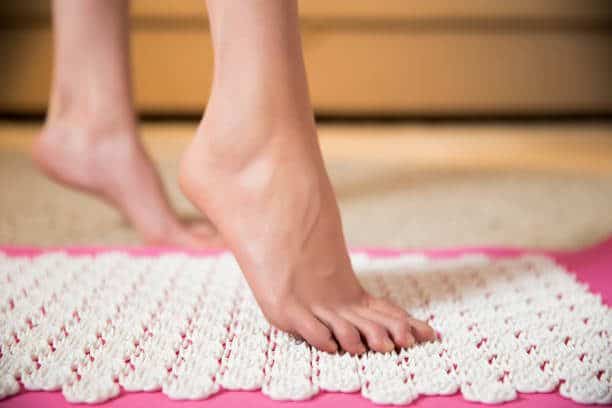
For a more comprehensive approach, lying on an acupressure mat stimulates dozens of back pressure points simultaneously. I use my Pranamat for 20 minutes every evening, and the effect on chronic back tension is cumulative â it genuinely gets better over weeks of consistent use.
An acupressure mat is particularly well-suited for women over 45 because it does not require any physical exertion. You simply lie down and let the spikes do the work. The mat stimulates blood flow to the muscles along the spine, releases endorphins, and activates the parasympathetic nervous system, which reduces the pain-amplifying effects of stress.
Targeted Core Strengthening
Forget crunches. The exercises that actually protect your spine after 45 target the deep stabilizing muscles that most fitness routines ignore.
Dead bugs are the single best exercise for activating the transverse abdominis without loading the spine. Lie on your back with knees bent at 90 degrees, arms reaching toward the ceiling. Slowly lower one arm overhead while extending the opposite leg, keeping your lower back pressed flat into the floor. Return and switch sides. Start with 8 repetitions per side.
Bird dogs train the multifidus and erector spinae muscles while challenging balance. From hands and knees, extend one arm forward and the opposite leg back, keeping the spine neutral. Hold for 5 seconds, return, and switch sides. The goal is zero movement in the trunk â your core should be so stable that someone could balance a glass of water on your back.
Pelvic floor activation is often overlooked but critical. The pelvic floor muscles form the base of the core cylinder. When they weaken â as commonly happens after childbirth and during perimenopause â the entire core system becomes less effective at supporting the spine.
Start with 3 sessions per week of 15-20 minutes each. Within 6-8 weeks, most women notice a significant reduction in daily back pain.
Walking â The Underrated Back Treatment
Walking is the most underrated treatment for back pain in women over 45. It provides low-impact spinal loading that keeps discs hydrated, gentle rhythmic movement that lubricates facet joints, and whole-body muscle activation that supports the spine without overloading it.
A 2019 study in the British Journal of Sports Medicine found that a structured walking program was as effective as supervised clinical exercise for chronic low back pain. The key is consistency: 30 minutes of moderate-paced walking, 5 days per week.
Start where you are. If 30 minutes feels like too much, start with 10 and add 5 minutes each week. The important thing is that walking becomes a non-negotiable daily habit, not an occasional activity.
Hormone Optimization
If your back pain started or significantly worsened during perimenopause, hormonal factors deserve serious attention. This is a conversation to have with your doctor, but here is what the research says:
Hormone replacement therapy (HRT) has been shown to improve bone density, reduce inflammation, and decrease musculoskeletal pain in menopausal women. A 2021 review in Climacteric found that women on HRT reported significantly less back pain than those who were not.
This is not a recommendation to start HRT â that decision involves weighing multiple factors including cardiovascular risk, breast cancer risk, and family history. But if back pain is significantly affecting your quality of life and coincides with menopausal symptoms, it is worth discussing with your healthcare provider.
Anti-Inflammatory Nutrition
Chronic low-grade inflammation is a major contributor to back pain after 45, and what you eat either fuels it or fights it.
The foods that fight inflammation include fatty fish (salmon, sardines, mackerel), which provide omega-3 fatty acids that directly reduce inflammatory markers. Leafy greens, berries, nuts, olive oil, and turmeric all have well-documented anti-inflammatory properties.
The foods that fuel inflammation include refined sugars, processed carbohydrates, seed oils, excessive alcohol, and processed meats. Reducing these is often as impactful as adding anti-inflammatory foods.
A practical approach: aim for 2-3 servings of fatty fish per week, a handful of nuts daily, and making vegetables the largest portion of each meal. You do not need to overhaul your entire diet overnight. Small, consistent changes add up.
Sleep Position and Spinal Alignment
How you sleep for 7-8 hours every night directly impacts your back pain. After 45, spinal alignment during sleep becomes more critical because your structures are less forgiving of poor positioning.
Side sleepers should place a pillow between the knees to keep the pelvis aligned. The pillow should be thick enough that your top knee is level with your hip. Without this, the top leg pulls the pelvis into rotation, stressing the sacroiliac joint and lumbar spine.
Back sleepers should place a pillow or bolster under the knees. This tilts the pelvis slightly, reducing the lordotic curve in the lower back and taking pressure off the facet joints.
Stomach sleeping is the worst position for back pain at any age, but it becomes particularly problematic after 45. If you cannot break the habit, place a thin pillow under your pelvis to reduce lumbar hyperextension.
Your mattress matters too. A medium-firm mattress has the most evidence supporting it for back pain. If your mattress is older than 8-10 years, it has likely lost its supportive properties.
Stress Management and Pain Sensitivity
This is the factor that most people underestimate. After 45, many women are managing careers, aging parents, adolescent or adult children, and their own health changes simultaneously. This level of chronic stress directly amplifies pain signals.
Stress increases cortisol, which promotes inflammation. It activates the sympathetic nervous system, which increases muscle tension. And it sensitizes pain pathways in the spinal cord, meaning the same level of physical stimulus produces more pain.
Daily stress management is not optional for back pain relief â it is essential. Acupressure, meditation, deep breathing, time in nature, and adequate social connection all help. My evening routine on the Pranamat mat serves double duty â it addresses both the physical tension in my back and the nervous system activation from daily stress.
A Sample Weekly Routine
Here is a practical weekly schedule that combines the most effective strategies:
- Daily: 30-minute walk, evening acupressure mat session (20 minutes), sleep position optimization
- 3x per week: Core strengthening exercises (dead bugs, bird dogs, pelvic floor work â 15-20 minutes)
- Daily: Anti-inflammatory nutrition focus (omega-3s, vegetables, minimal processed food)
- As needed: Targeted acupressure for acute pain flare-ups (Bladder 23, Bladder 40, Gallbladder 30)
- Ongoing: Stress management practices (choose what works for you)
This routine takes less than an hour per day on exercise days and about 30 minutes on non-exercise days. It is sustainable, evidence-based, and addresses every major factor driving back pain in women over 45.
When to See a Doctor
Self-care strategies are powerful, but some situations require professional evaluation. See a healthcare provider if:
- Your back pain is accompanied by numbness, tingling, or weakness in your legs
- You experience changes in bladder or bowel function
- Pain wakes you from sleep consistently
- You have unexplained weight loss along with back pain
- Pain is severe after a fall or injury
- Your pain has not improved after 6 weeks of consistent self-care
- You are over 50 and experiencing new back pain with no obvious cause (a DEXA scan may be warranted)
These can be signs of conditions that need specific medical treatment, including compression fractures, spinal stenosis, or nerve root compression.
The Bottom Line
Back pain after 45 is not a life sentence, and it is not something you just have to accept. It has specific, identifiable causes â hormonal changes, bone density loss, muscle weakness, joint degeneration, inflammation, and stress â and each of those causes has effective solutions.
The women who see the most improvement are the ones who address multiple factors simultaneously rather than looking for a single fix. Daily walking plus core exercises plus an acupressure mat plus anti-inflammatory nutrition is exponentially more effective than any one of those strategies alone.
Your body is changing. That is real and that matters. But your body also responds remarkably well to the right inputs. Give it consistent movement, proper support, the right nutrition, and regular pain relief through acupressure, and it will repay you with less pain and more function than you might expect.
Start with whatever feels most accessible today. The perfect routine you never start is less effective than the imperfect one you begin right now.
Frequently Asked Questions
Why does my back hurt more since turning 45?
Multiple factors converge around age 45 for women. Declining estrogen reduces your body’s natural anti-inflammatory protection and accelerates disc degeneration. Bone density decreases, putting more stress on spinal structures. Core muscles weaken, reducing spinal support. And the cumulative effects of decades of sitting, stress, and postural habits reach a tipping point. The good news is that all of these factors are addressable.
Can an acupressure mat help with chronic back pain?
Yes. Acupressure mats stimulate multiple pressure points along the spine simultaneously, increasing blood flow, releasing endorphins, and activating the parasympathetic nervous system. For chronic back pain, consistent use â 15-20 minutes daily â produces cumulative benefits. I use my Pranamat mat every evening and it has been one of the most effective tools in my back pain management routine since 2017.
Is it safe to exercise with back pain after 45?
In most cases, appropriate exercise is not just safe â it is essential. The key word is “appropriate.” High-impact activities, heavy lifting, and exercises that load the spine in flexion (like sit-ups) should be avoided during acute pain. Walking, swimming, core stabilization exercises, and gentle stretching are generally safe and beneficial. If you are unsure, consult a physiotherapist who can assess your specific situation.
Does menopause cause back pain?
Menopause does not directly cause back pain, but the hormonal changes associated with it significantly increase your risk. Declining estrogen levels lead to reduced disc hydration, increased inflammation, decreased bone density, and changes in pain sensitivity â all of which contribute to back pain. Women who experienced back pain before menopause often find it worsens, and many women develop new-onset back pain during the menopausal transition.
What sleeping position is best for back pain?
Side sleeping with a pillow between the knees is generally the best position for back pain. It keeps the spine aligned and reduces stress on the lumbar and sacroiliac joints. Back sleeping with a pillow under the knees is also good. Stomach sleeping is the worst for back pain and should be avoided if possible. Your mattress should be medium-firm â soft mattresses allow the spine to sag, while very firm mattresses create pressure points.
How long does it take for core exercises to help back pain?
Most women notice a meaningful reduction in daily back pain after 6-8 weeks of consistent core training, performed 3 times per week. The exercises must target the deep stabilizers â transverse abdominis, multifidus, and pelvic floor â not the superficial muscles. Dead bugs, bird dogs, and pelvic floor activation are more effective for back pain than traditional ab exercises like crunches or planks.
Should I see a doctor for back pain after 45?
See a doctor if your pain is accompanied by leg numbness or weakness, bladder or bowel changes, unexplained weight loss, or does not improve after 6 weeks of self-care. Women over 50 with new-onset back pain should also consider a DEXA scan to check bone density, as compression fractures are a common and often undiagnosed cause of back pain in this age group.
Related Reading
- Pressure Points for Back Pain
- How to Use Acupressure Mat for Lower Back Pain
- Lower Back Pressure Points
- Acupressure Mat Benefits
- Acupressure Mats and Fibromyalgia
Author

Free Mobile App
Find Pressure Points on the Go
Interactive 3D body map with 100+ acupressure points, step-by-step guides, and personalized routines.
Download Free App →