Heavenly Bone Hole (TW-15) Pressure Point: Benefits & Technique
TW-15 Tianliao is an upper shoulder-blade pressure point used in traditional acupressure for neck and shoulder tension. To try it safely, use broad, gentle pressure near the top inner shoulder blade for 30 to 60 seconds. Stop if pain feels sharp, electric, numbing, radiating, or if symptoms travel into the arm.
Quick answer
| Need | TW-15 guidance |
|---|---|
| Exact area | Upper shoulder-blade region, near the neck-shoulder junction |
| Practical landmark | Near the top inner corner of the shoulder blade |
| Pressure style | Gentle fingers, thumb pad, palm heel, or soft massage ball |
| Time | 30 to 60 seconds per side |
| Traditional uses | Shoulder and neck tension, stiffness, upper-back tightness |
| Avoid | Direct pressure on the spine, throat, severe pain, numbness, weakness, or radiating arm symptoms |
Where is TW-15 located?
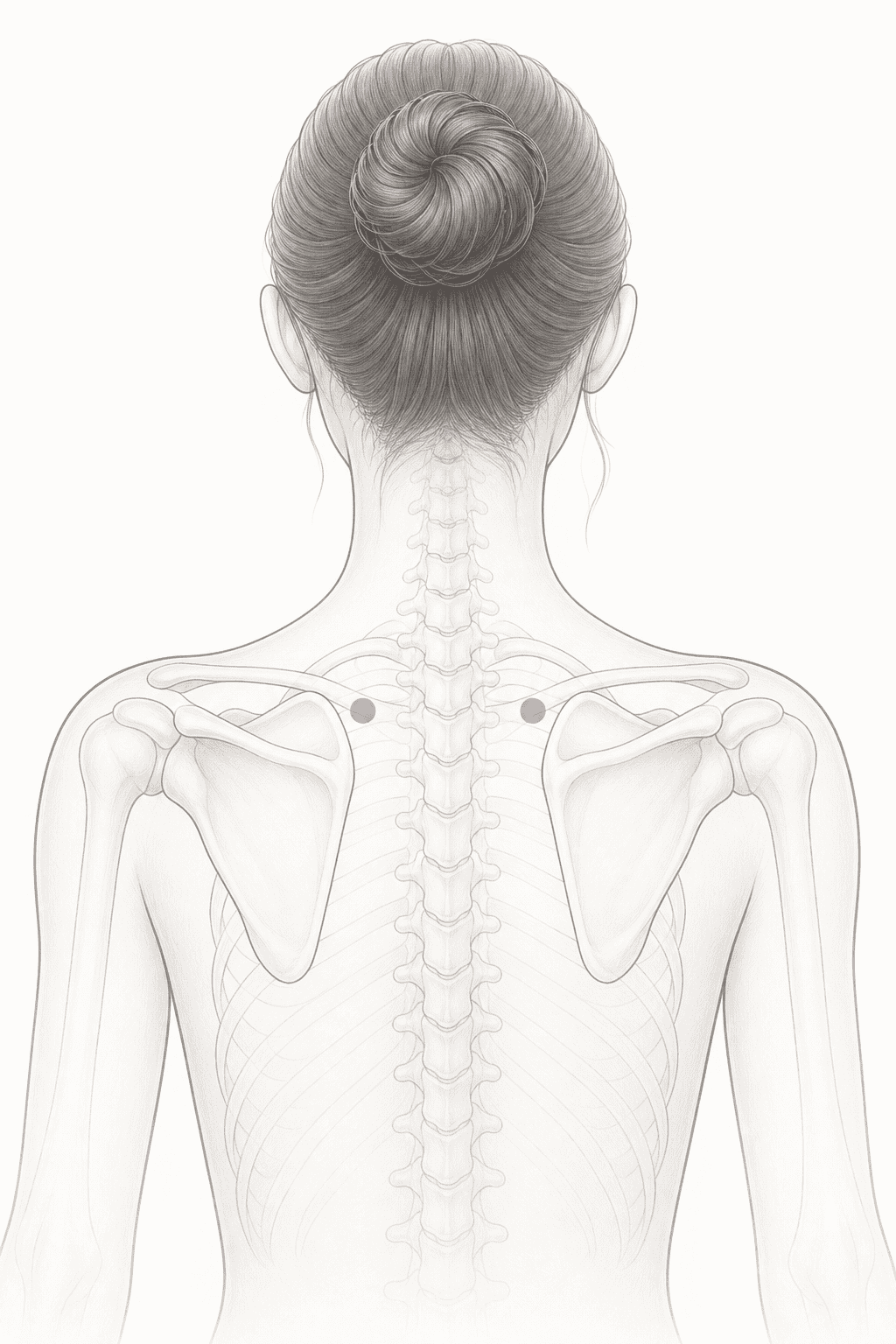
TW-15 is usually described in the upper shoulder-blade region, near the area between the base of the neck and the shoulder blade. Some references write it as TE-15 Tianliao because the Triple Warmer channel is also called Triple Energizer or San Jiao.
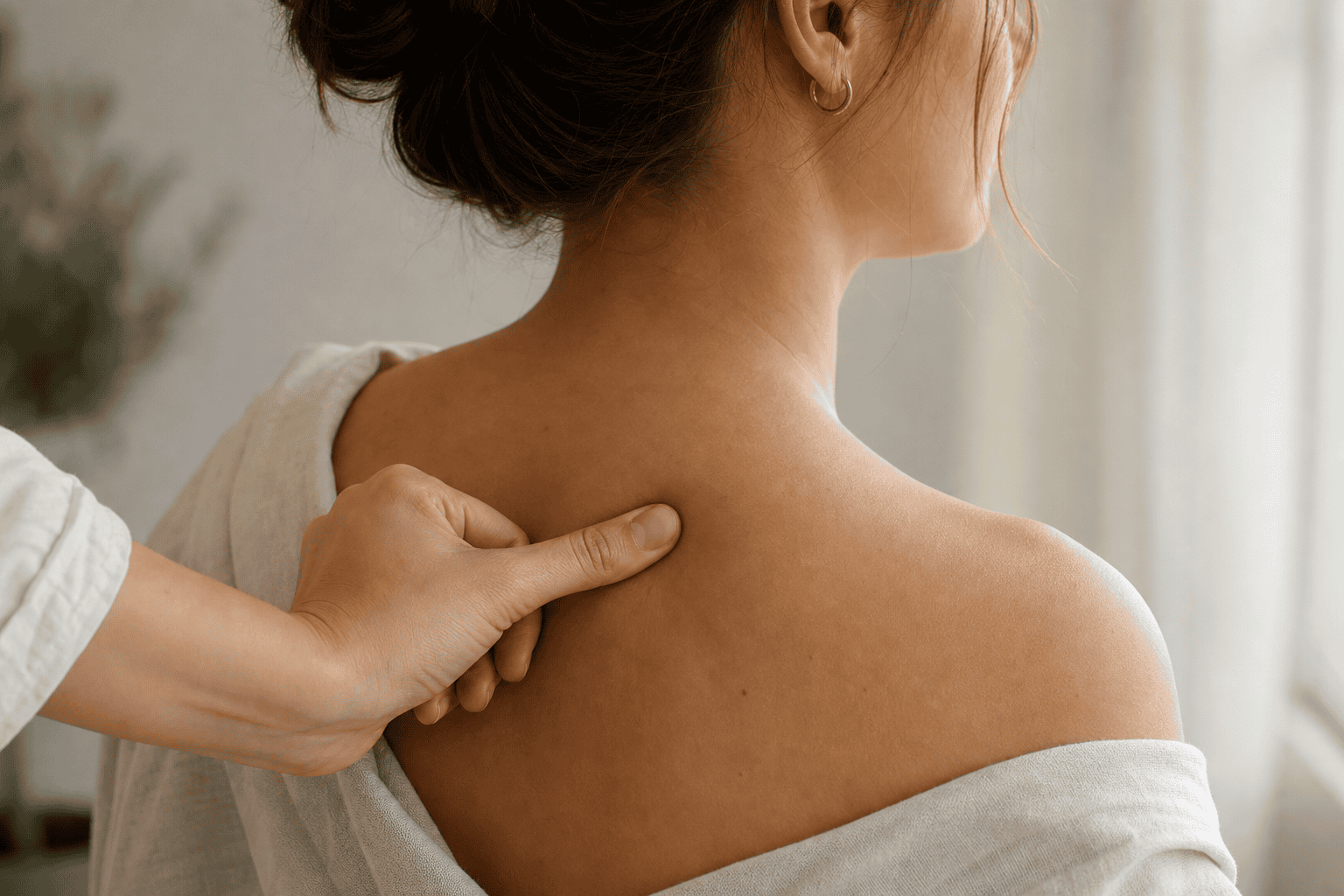
For a practical landmark, place your hand on the upper back and find the top inner area of the shoulder blade. TW-15 is not on the bony spine, not on the front of the neck, and not in the throat. Think of it as an upper-back point, not a neck-vessel point.
If you cannot identify the exact spot, use a broader area of comfortable pressure around the upper shoulder blade. Do not dig with a hard tool or hunt for pain.
How to use TW-15
Use comfortable pressure only. Place two fingers, a thumb pad, the heel of your palm, or a soft massage ball near the upper inner shoulder blade. Hold steady pressure for 30 to 60 seconds, breathe slowly, then release gradually.
For self-acupressure, a soft massage ball against a wall is often easier than reaching awkwardly across your back. Keep the ball below the neck and slightly away from the spine. Lean in lightly until the sensation feels dull, broad, and manageable.
You can repeat on the other side if both shoulders feel tight. Keep the session short. More pressure is not better, and pain is not proof that the point is working.
Actionable takeaway: TW-15 should feel like broad pressure on upper-back muscle, not sharp pressure into bone, nerve, or neck tissue.
Pressure Points App
Learn how to locate and apply pressure points with guided sessions, illustrations, and step-by-step instructions. Free to download.
What is TW-15 used for?
TW-15 is traditionally used in routines for shoulder and neck stiffness, upper-back tension, and arm discomfort patterns. That does not mean it can diagnose or treat the cause of pain. Neck and shoulder symptoms can come from posture, muscle overload, joint irritation, nerve compression, injury, stress, or other medical issues.
In practical self-care, TW-15 fits best when the problem feels like local shoulder-blade tension: a tight, tired, overworked area after desk work, phone posture, carrying a bag, or holding stress in the shoulders.
It is not a good match for severe neck pain, traumatic pain, chest symptoms, sudden weakness, spreading numbness, or pain that travels strongly into the arm. Those are not acupressure problems to solve at home.
What the evidence says
TW-15 is a standardized acupuncture point, and the point name appears in standard point-location references such as the WHO acupuncture point location guide. That supports the location and naming, not a guarantee of clinical benefit.
For neck pain more broadly, acupressure has been studied, including a systematic review of acupressure for neck pain syndrome (PMC6160503). The useful takeaway is cautious: acupressure may be worth studying and may help some people, but study protocols vary, and this does not prove that TW-15 alone treats neck pain.
NCCIH gives a similar broad reminder for complementary approaches: evidence depends on the condition and method, and these approaches should not replace professional medical care. Use TW-15 as supportive self-care, not as a replacement for diagnosis, physical therapy, dental care, emergency care, or medical treatment.
Safety and contraindications

Do not press TW-15 over bruised skin, rash, open wounds, infection, swelling, recent surgery, or an area with reduced sensation. Avoid hard tools, deep digging, and direct pressure on the spine.
Stop right away if pressure causes sharp, electric, radiating, numbing, or weakening symptoms. Also stop if it worsens a headache, triggers dizziness, makes you feel faint, or sends pain into the arm, chest, jaw, or hand.
Seek medical care for sudden severe neck pain, pain after a fall or accident, fever with neck stiffness, new weakness, numbness, trouble walking, chest pain, shortness of breath, or symptoms that keep worsening. Acupressure should not delay care for those signs.
If you are pregnant, have osteoporosis, a bleeding disorder, neuropathy, cancer-related bone risk, recent surgery, or a known spine condition, ask a qualified clinician before applying pressure around the neck and upper back.
Actionable takeaway: Use TW-15 for mild, local upper-back tension only. Do not use it to push through nerve-like or emergency symptoms.
Related guide
If you are new to pressure points, start with the broader safety guide: How to Do Acupressure on Yourself. It explains pressure level, hold time, stop signals, and how to avoid overdoing a session.
Frequently asked questions
Where exactly is TW-15?
TW-15 is in the upper shoulder-blade region near the neck-shoulder junction. A practical landmark is the top inner area of the shoulder blade. Keep pressure on the upper back, not on the bony spine or the front of the neck.
Can I press TW-15 by myself?
Yes, if you keep it gentle. Use fingers, a thumb pad, the palm heel, or a soft massage ball against a wall. Avoid twisting your neck or forcing your arm behind your back.
How hard should I press?
Use comfortable pressure that feels dull and broad. It should not feel sharp, electric, pinching, numbing, or radiating. If you need to brace, hold your breath, or tense up, the pressure is too strong.
Can TW-15 help tech neck?
It may be useful as a short support habit when tech neck feels like upper shoulder-blade tension. It should be paired with breaks, screen-height changes, gentle movement, and realistic expectations. It is not a cure for neck pain.
How long should I hold TW-15?
Hold for 30 to 60 seconds per side, then release slowly. If the area feels irritated afterward, use less pressure or skip the point next time.
Bottom line
TW-15 Tianliao is an upper shoulder-blade pressure point traditionally used for neck and shoulder tension. The safest way to try it is with short, broad, comfortable pressure on the upper back, away from the spine and throat.
The evidence for acupressure in neck pain is not strong enough to promise results from one point. Use TW-15 as supportive self-care, and treat sharp, radiating, neurological, severe, or worsening symptoms as medical issues.
This article is for educational purposes only and is not medical advice. Acupressure may be useful as supportive self-care, but it should not replace diagnosis or treatment from a qualified clinician. Seek urgent care for severe, sudden, or worsening symptoms.
Common mistakes
The most common mistake is using TW-15 as if it needs to hurt. It does not. A pressure point can feel mildly tender, but strong pain is not the goal. If the area feels sharp, electric, bruised, or irritated, reduce pressure or stop.
A second mistake is using the point as a diagnosis. Tenderness near TW-15 does not prove that a specific organ, nerve, joint, or muscle is the cause of the symptom. It only tells you that the area responded to pressure. Keep the interpretation simple and practical.
A third mistake is pressing for too long. A short hold gives you enough information. If 30 to 60 seconds does not feel useful, a longer hold is not automatically better. Let the tissue settle, then decide whether this point belongs in your routine.
How to add it to a routine
Use TW-15 after you have checked your stop signals. Then pair it with one basic habit: slower breathing, a posture change, a warm compress, a short walk, or a clinician-approved movement. That makes the point part of a practical self-care routine rather than a stand-alone promise.
If you use more than one point, start with the easiest and safest area first. Keep the whole session under five minutes. The best routine is the one that leaves you feeling settled, not the one with the most points.
Quick fit check
Use TW-15 only when the symptom feels mild, familiar, and local enough for self-care. Skip it when the symptom feels severe, new, spreading, or medically unclear.
A good response is subtle: the area feels calmer, breathing feels easier, or you notice less bracing. A poor response is also useful information. If pressure makes the area more sensitive, stop and choose a gentler option next time.
Fit check: the point belongs in your routine only if it feels safe, simple, and repeatable.