
Sinus Pressure Points: 9 Points for Fast, Natural Congestion Relief (2026)
Sinus pressure can turn an ordinary day into a miserable one. That throbbing ache behind your eyes, the heaviness in your forehead, and the relentless stuffiness that makes breathing feel like a chore — if you’ve experienced it, you know exactly how debilitating it can be.
Acupressure offers a drug-free, clinically studied approach to sinus relief. By applying targeted pressure to specific points on your face, head, and hands, you can promote sinus drainage, reduce inflammation, and relieve pain — often within minutes. A 2019 study published in the American Journal of Otolaryngology found that acupressure significantly reduced sinus symptoms in patients with chronic rhinosinusitis compared to a control group.
In this evidence-based guide, you’ll learn exactly which pressure points relieve sinus congestion, how to locate and stimulate each one correctly, and how to combine them into a complete sinus relief routine.
Understanding Sinus Pressure: Why Your Sinuses Get Blocked
Your sinuses are four pairs of air-filled cavities located behind your forehead (frontal sinuses), between your eyes (ethmoid sinuses), behind your cheekbones (maxillary sinuses), and deep behind your nose (sphenoid sinuses). When the mucous membranes lining these cavities become inflamed — from allergies, a cold, or infection — they swell and produce excess mucus, blocking the narrow drainage pathways.
This blockage creates the pressure, pain, and congestion you feel. Acupressure works by stimulating specific points along meridian pathways that correspond to the sinus regions, promoting vasodilation (increased blood flow), reducing local inflammation, and encouraging mucus drainage through the natural sinus pathways.
9 Most Effective Pressure Points for Sinus Relief
The following pressure points have the strongest evidence and practical effectiveness for sinus congestion, headaches, and facial pressure. Each point includes its Traditional Chinese Medicine (TCM) meridian code, exact anatomical location, and step-by-step instructions.
1. Yintang (EX-HN3) — Third Eye Point
Location: The midpoint between your eyebrows, directly above the bridge of your nose.
Why it works: Yintang sits directly over the frontal sinus cavity. Stimulating this point promotes drainage from the frontal sinuses, relieves forehead pressure, and has a calming effect on the nervous system. A 2017 study in Evidence-Based Complementary and Alternative Medicine demonstrated that stimulating Yintang significantly reduced anxiety and stress responses — factors that can worsen sinus inflammation.
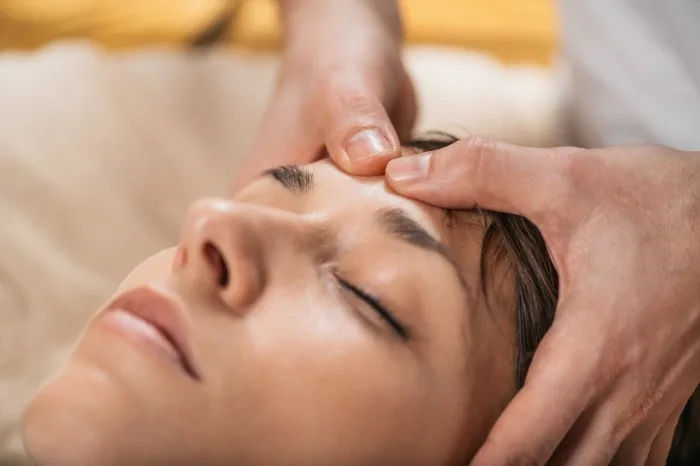
How to stimulate: Place the tip of your index finger or thumb on the point between your eyebrows. Apply steady, firm pressure for 60–90 seconds. You can add small circular motions every 10 seconds. Breathe slowly and deeply through your mouth while pressing. You should feel a mild ache or warmth — this indicates the point is activated.
2. Yingxiang (LI-20) — Welcome Fragrance
Location: On both sides of your nose, in the groove where your nostril meets your cheek (the nasolabial fold), level with the widest part of the nostril.
Why it works: LI-20 is the single most important acupressure point for nasal congestion. It sits directly adjacent to the maxillary sinus and nasal passages. Pressing this point stimulates the trigeminal nerve branches that control blood flow to the nasal mucosa, helping to open blocked nasal passages almost immediately. In TCM, this point is on the Large Intestine meridian, which governs the nose and respiratory function.
How to stimulate: Place both index fingers in the grooves beside your nostrils. Press inward and slightly upward toward the cheekbone. Apply firm, steady pressure for 1–2 minutes while breathing through your mouth. You should feel your nasal passages begin to open. For stronger effect, use small circular motions alternating clockwise and counterclockwise.
3. Bitong (EX-HN8) — Clear the Nose
Location: On either side of the bridge of your nose, at the junction where the nasal bone meets the cartilage — roughly at the inner corner of each eye.
Why it works: Bitong translates literally as “clear the nose” in Chinese. This extra-meridian point directly overlies the ethmoid sinuses and the junction between the frontal and maxillary sinuses. Stimulating it promotes drainage from all three anterior sinus pairs simultaneously.
How to stimulate: Place your thumbs on the inner corners of your eyebrows. Slide them down slightly to the bony ridge where the nose meets the eye socket. Apply firm pressure pressing inward toward the bridge of your nose. Hold for 60–90 seconds. You may feel a sensation of warmth spreading across your cheekbones — this is normal and indicates increased blood flow to the sinus region.
4. Juliao (ST-3) — Great Bone Hole
Location: Directly below the pupil of each eye, at the level of the lower border of the nostril, in the depression at the lower edge of the cheekbone (zygomatic bone).
Why it works: ST-3 sits directly over the maxillary sinus — the largest sinus cavity and the one most frequently affected by sinusitis. This Stomach meridian point promotes drainage from the maxillary sinuses, relieves cheekbone pressure, and reduces swelling in the nasal passages. It is particularly effective for sinus pressure that manifests as a deep ache in the cheeks.
How to stimulate: Place both index fingers on the lower edge of your cheekbones, directly below the center of each eye. Press gently upward into the bone. Hold for 60 seconds, then release for 10 seconds and repeat three times. Combine with deep breathing for best results.
5. Fengchi (GB-20) — Wind Pool
Location: At the base of the skull, in the hollows on either side of the spine where the neck muscles (trapezius and sternocleidomastoid) attach to the skull.
Why it works: GB-20 is one of the most versatile acupressure points in TCM. For sinus issues, it works by improving blood flow and lymphatic drainage from the entire head and face. It also relieves the tension headaches that often accompany sinus congestion. A clinical trial published in Complementary Therapies in Medicine showed that stimulating GB-20 reduced headache intensity significantly within 30 minutes.
How to stimulate: Interlace your fingers behind your head and use your thumbs to locate the two depressions at the base of your skull. Press firmly upward at a 45-degree angle toward the center of your head. Hold for 2 minutes. You may feel the pressure radiate across your head — this is the point working to release tension and improve drainage.
6. Hegu (LI-4) — Joining Valley
Location: In the fleshy area between your thumb and index finger, at the highest point of the muscle when you bring your thumb and finger together.
Why it works: LI-4 is the master point for the face and head on the Large Intestine meridian. While it’s not located near the sinuses, it has a powerful referred effect on nasal congestion and facial pain. Research has shown that stimulating LI-4 triggers the release of endorphins and activates descending pain-inhibitory pathways, reducing sinus headache pain. It’s also one of the most studied acupressure points, with evidence supporting its use for headaches, dental pain, and sinus congestion.
How to stimulate: Using the thumb and index finger of your opposite hand, squeeze the fleshy mound between thumb and index finger. Find the most tender spot — that’s the point. Apply firm, pinching pressure for 1–2 minutes on each hand. You should feel a dull ache radiating into the hand. Note: Avoid this point during pregnancy, as strong stimulation of LI-4 can induce uterine contractions.
7. Zanzhu (BL-2) — Drilling Bamboo
Location: At the inner end of each eyebrow, in the small notch where the eyebrow meets the bridge of the nose.
Why it works: BL-2 lies directly above the ethmoid sinuses and near the frontal sinus drainage pathway. This Bladder meridian point is particularly effective for relieving pressure behind the eyes, frontal headaches, and eye pain associated with sinus congestion. It also helps reduce excessive tearing and redness that often accompanies sinusitis.
How to stimulate: Place your thumbs on the inner corners of your eyebrows. Press firmly upward into the bony ridge above. Hold steady pressure for 60 seconds. Then make small outward circular motions for another 30 seconds. This point can be quite sensitive — start with light pressure and gradually increase.
8. Shangxing (GV-23) — Upper Star
Location: On the midline of the head, approximately one thumb-width above the front hairline.
Why it works: GV-23 is a Governing Vessel point that overlies the frontal sinus region from above. It’s particularly effective for frontal sinus pressure — the type that creates a band-like headache across the forehead. In TCM, this point is known for clearing nasal obstruction and brightening the eyes.
How to stimulate: Place your middle finger on the midline of your head, about one inch above your hairline. Press downward toward the skull with firm pressure. Hold for 60–90 seconds. You can also tap this point rapidly with your fingertip for 30 seconds as an alternative technique.
9. Lieque (LU-7) — Broken Sequence
Location: On the inner forearm, about 1.5 inches above the wrist crease, in the depression between the tendons on the thumb side.
Why it works: LU-7 is the command point of the head and neck on the Lung meridian. Since the lungs govern the nose in TCM theory, stimulating LU-7 helps open the nasal passages, reduce mucus production, and relieve sinus headaches. It’s especially useful for sinus issues caused by colds and upper respiratory infections.
How to stimulate: Cross your thumbs with both hands and extend your index finger along the opposite wrist. Where your index fingertip lands naturally on the inner wrist is approximately LU-7. Press firmly with your thumb for 1–2 minutes on each wrist. Combine with slow, deep breathing for maximum effect.
Complete 5-Minute Sinus Relief Routine
For the most effective relief, work through these points in a specific sequence that follows the natural sinus drainage pathways from top to bottom:
Step 1 (60 seconds): Begin at GV-23 (Upper Star) on your forehead to open the frontal sinuses.
Step 2 (60 seconds): Move to Yintang (third eye point) between your eyebrows to continue frontal drainage.
Step 3 (60 seconds): Press BL-2 (Drilling Bamboo) at the inner eyebrows to target the ethmoid sinuses.
Step 4 (60 seconds): Move down to Bitong and LI-20 (sides of the nose) to open the nasal passages and drain the maxillary sinuses.
Step 5 (60 seconds): Finish with LI-4 (hand webbing) to consolidate the effects across all facial meridians.
Repeat this full sequence 2–3 times daily during active sinus congestion. Many people notice partial or complete relief after the first round.
Complementary Techniques to Boost Sinus Acupressure
Acupressure works best when combined with other evidence-based approaches:
Steam inhalation before acupressure: Breathing steam for 5 minutes before your acupressure routine loosens mucus and makes the pressure points more responsive. Add a few drops of eucalyptus or peppermint essential oil for additional decongesting effects.
Warm compress application: Place a warm, damp cloth across your sinuses for 2–3 minutes before beginning acupressure. The heat increases local blood flow and relaxes the tissues, making the pressure points more effective.
Nasal irrigation: Using a saline rinse (neti pot or squeeze bottle) after acupressure can help flush out the mucus that the pressure point stimulation has loosened.
Hydration: Drinking at least 8 glasses of water daily thins mucus, making it easier for your sinuses to drain. Warm fluids like herbal tea are particularly effective.
Acupressure mat sessions: Lying on an acupressure mat for 15–20 minutes stimulates hundreds of pressure points simultaneously, promoting overall circulation and immune function — both of which support sinus healing.
When Sinus Acupressure Won’t Be Enough
Acupressure is effective for mild to moderate sinus congestion and pressure, but certain situations require medical attention. See a doctor if you experience high fever (above 102°F/39°C) alongside sinus symptoms, severe facial pain or swelling that doesn’t respond to any self-care, sinus symptoms lasting more than 10 days without improvement, greenish-yellow nasal discharge with fever, or recurrent sinus infections (4 or more per year).
These may indicate a bacterial sinus infection requiring antibiotics, or a structural issue like nasal polyps or a deviated septum that needs medical evaluation.
Frequently Asked Questions
What are the pressure points to drain sinuses?
The most effective drainage points are LI-20 (Welcome Fragrance) beside the nostrils, Bitong (EX-HN8) on the bridge of the nose, and ST-3 (Great Bone Hole) on the cheekbones. These three points correspond directly to the maxillary and ethmoid sinus drainage pathways. Work them in sequence from bridge of nose downward to nostrils to cheekbones for the best drainage effect.
How quickly does acupressure relieve sinus pressure?
Most people feel partial relief within 1–3 minutes of sustained pressure on the key facial points (especially LI-20 and Bitong). Full relief from a complete 5-minute routine typically occurs within 15–30 minutes as sinus drainage takes effect. For chronic sinusitis, consistent daily practice over 1–2 weeks produces the most noticeable long-term improvement.
Can acupressure help with sinus infections?
Acupressure can help manage the symptoms of a sinus infection — particularly congestion, pressure, and headaches — but it does not treat the underlying bacterial or viral infection. Use it as a complementary approach alongside any treatment your doctor recommends. The immune-boosting and circulation-promoting effects of points like LI-4 and GB-20 may help your body fight the infection more effectively.
How often should I do sinus acupressure?
During acute sinus congestion, you can safely perform the 5-minute routine 3–4 times daily. For prevention during allergy season or cold season, once daily (ideally in the morning) helps maintain clear sinus drainage. There are no known side effects from frequent acupressure — the worst that can happen is temporary soreness at the pressure points.
Is sinus acupressure safe during pregnancy?
Most sinus pressure points are safe during pregnancy. However, avoid strong stimulation of LI-4 (Hegu, the hand webbing point), as this point has been traditionally used to induce labor and can stimulate uterine contractions. All other facial and head points described in this guide are considered safe. As always, consult your healthcare provider if you have concerns.
Summary: Your Sinus Relief Toolkit
Sinus pressure points offer a practical, evidence-backed way to manage congestion, headaches, and facial pain without medication. The nine points covered in this guide — Yintang, LI-20, Bitong, ST-3, GB-20, LI-4, BL-2, GV-23, and LU-7 — target all four sinus cavities from multiple angles. Combine them into the 5-minute routine for the most effective relief, and pair with steam inhalation or warm compresses to maximize results.
For a guided, hands-on experience with sinus pressure points and dozens of other acupressure routines, try the Acupressure Guide app — it features interactive 3D body maps and step-by-step instructions for 70+ conditions.
Author

Free Mobile App
Find Pressure Points on the Go
Interactive 3D body map with 100+ acupressure points, step-by-step guides, and personalized routines.
Download Free App →