Acupressure for Raynaud’s Syndrome: Pressure Points That Improve Circulation, Warm Cold Hands, and Reduce Flare-Ups (2026)
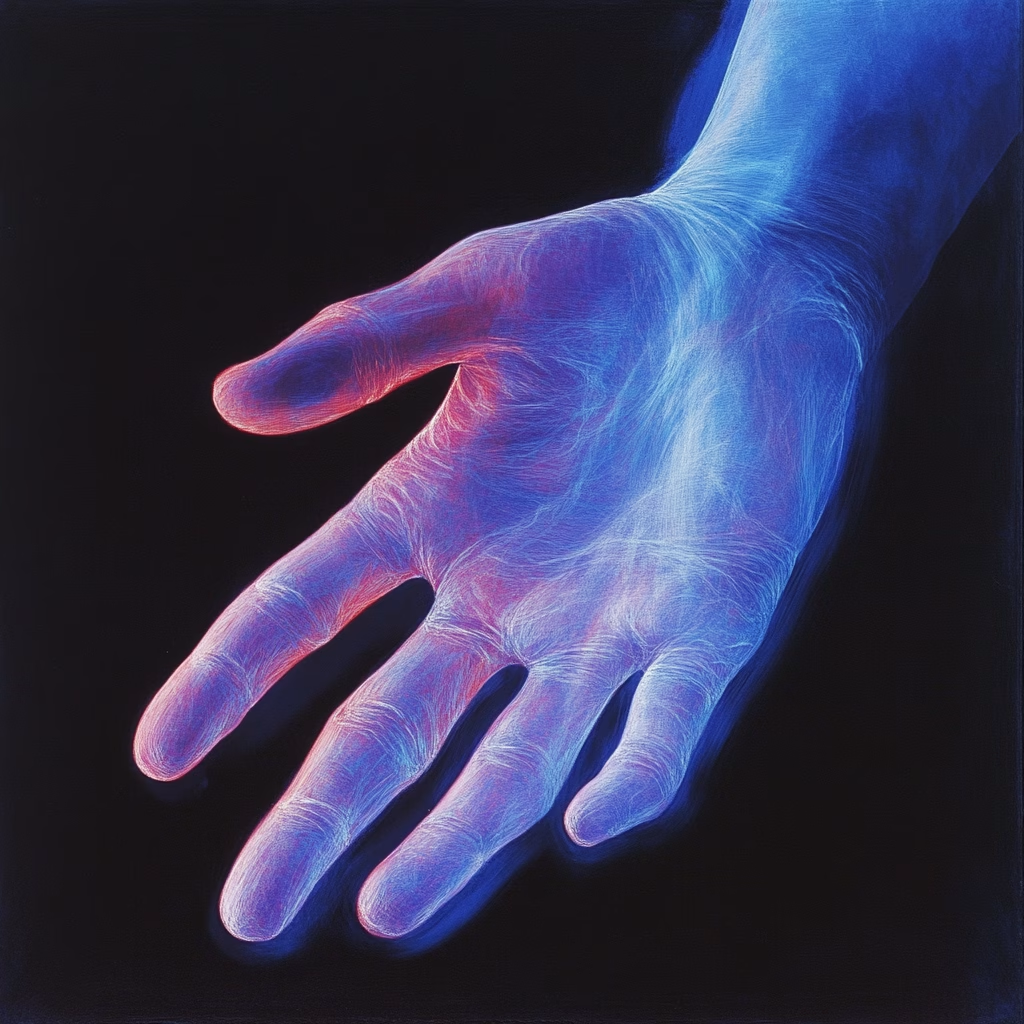
If you have Raynaud’s syndrome, you know the drill. Your fingers go white, then blue, then an angry red as the blood returns. It happens when you grab something cold from the fridge, walk outside on a cool morning, or sometimes for no obvious reason at all. The numbness, the tingling, the pain during rewarming — it ranges from annoying to genuinely disabling, and conventional treatment options are surprisingly limited.
I have been working with acupressure since 2017, and one of the things that consistently impresses me is how effectively targeted pressure point work can improve peripheral circulation. Raynaud’s is fundamentally a circulation disorder — the blood vessels in your extremities overreact to cold or stress, constricting far more dramatically than they should. Acupressure works directly on the mechanisms that govern blood vessel tone, nervous system regulation, and blood flow to the hands and feet. It is not a cure, but as a daily management tool, the results can be significant.
This guide covers the specific pressure points that Traditional Chinese Medicine and modern research support for Raynaud’s, how to use them to warm cold hands quickly during an episode, and how to build a daily protocol that reduces the frequency and severity of attacks over time.
Understanding Raynaud’s Through the Lens of Chinese Medicine
Western medicine classifies Raynaud’s as either primary (no underlying cause) or secondary (associated with autoimmune conditions like scleroderma or lupus). In both cases, the mechanism involves excessive vasoconstriction in response to cold or emotional stress. Treatment typically involves calcium channel blockers and lifestyle modifications, but many people find medications insufficient or difficult to tolerate.
Traditional Chinese Medicine views Raynaud’s through a different framework — as a pattern of yang deficiency combined with blood stasis and cold obstruction in the channels. The body lacks sufficient warming energy (yang qi) to keep blood flowing smoothly to the extremities, and the cold causes blood to stagnate in the vessels. This framework is remarkably consistent with the Western understanding of vasospasm, just described in different language.
The practical value of the TCM framework is that it identifies multiple pathways for treatment. Instead of just trying to force blood vessels to relax (as calcium channel blockers do), acupressure simultaneously warms yang qi, moves stagnant blood, opens the channels to the extremities, and calms the nervous system response that triggers the vasospasm in the first place. This multi-pathway approach explains why many people find acupressure more effective than they expected.
The Best Pressure Points for Raynaud’s Syndrome
LI-4 (Hegu) — The Master Circulation Point for the Hands
Located in the web of flesh between the thumb and index finger. Large Intestine 4 is the single most important point for improving circulation to the hands. It is called “Joining the Valley” and it is the master command point for the face, head, and hands — meaning it has a disproportionate effect on blood flow to these areas compared to other points.
For Raynaud’s affecting the hands, LI-4 is essential. It moves qi and blood through the upper body and extremities, breaks through cold obstruction in the channels, and has well-documented effects on peripheral circulation. Research on this point shows measurable changes in skin temperature and blood flow to the hands after stimulation. It also has a powerful analgesic effect that helps with the pain during rewarming episodes.
Press deeply for 2 to 3 minutes on each hand. During an active Raynaud’s episode, press the unaffected hand first (or have someone else press both hands for you). The warming effect is typically noticeable within minutes. Pregnant women should avoid this point.
LV-3 (Taichong) — The Four Gates Partner
Located on the top of the foot, in the depression between the first and second metatarsal bones, about two finger widths back from the web of the toes. Liver 3 is the most important point for moving stagnant qi and blood throughout the body, and combined with LI-4, it creates the “Four Gates” combination — one of the most powerful protocols in all of Chinese medicine for improving overall circulation.
For Raynaud’s, the Four Gates combination addresses both the qi stagnation that contributes to vasospasm and the emotional stress that triggers many episodes. Liver 3 also smooths liver qi, which directly reduces the stress reactivity that causes blood vessels to constrict excessively. Many people with Raynaud’s notice that their episodes are worse during stressful periods — Liver 3 addresses this trigger directly.
Press firmly for 1 to 2 minutes on each foot. This point benefits from strong pressure. When combined with LI-4 simultaneously (pressing both points at the same time), the circulatory effects are significantly amplified.
H-7 (Shenmen) — The Heart and Circulation Regulator
Located on the inner wrist crease, in the depression on the pinky side of the tendon. Heart 7 is the primary point for regulating heart function and blood circulation. In Chinese medicine, the heart governs blood vessels and controls the movement of blood throughout the body.
For Raynaud’s, Heart 7 addresses the condition from the cardiovascular side — strengthening the heart’s ability to push blood to the periphery and improving the tone of blood vessels throughout the body. It also calms the nervous system, which is significant because the autonomic nervous system drives the vasospastic response. By calming sympathetic nervous system overactivation, Heart 7 reduces the trigger mechanism for Raynaud’s episodes.
This point is also valuable for the anxiety and stress that both trigger and accompany Raynaud’s flares. The emotional distress of dealing with unpredictable episodes — the worry about when the next one will hit, the social embarrassment of discolored fingers — creates a stress cycle that Heart 7 helps break.
Press gently for 1 to 2 minutes on each wrist. This point responds better to gentle, sustained pressure than to strong force.
P-6 (Neiguan) — The Inner Gate
Located on the inner forearm, about two finger widths above the wrist crease, between the two tendons. Pericardium 6 is called “Inner Gate” and it is one of the most important points for regulating circulation in the arms and hands. It works through the pericardium channel, which in Chinese medicine protects the heart and governs the blood vessels.
For Raynaud’s specifically, P-6 opens circulation through the arms to the hands and has a direct warming effect on the extremities. It relaxes the smooth muscle in blood vessel walls, which is exactly the mechanism that needs to happen during a Raynaud’s episode — the blood vessels need to relax and allow blood to flow again. P-6 also calms the mind and settles nausea, making it useful for people whose Raynaud’s is triggered by emotional stress.
Press for 1 to 2 minutes on each arm. This point is easy to access and discreet enough to use in any situation where you feel an episode developing.
SP-6 (Sanyinjiao) — The Blood Builder
Located on the inner leg, four finger widths above the ankle bone, behind the tibia. Spleen 6 is the meeting point of the spleen, liver, and kidney channels, making it one of the most important points in all of Chinese medicine for nourishing blood and improving circulation.
For Raynaud’s, SP-6 addresses the underlying blood deficiency that makes the condition worse. When blood volume and quality are insufficient, the body prioritizes core organs and reduces flow to the periphery — exactly the pattern that Raynaud’s amplifies. Spleen 6 nourishes blood, moves stagnant blood through the vessels, and strengthens the spleen system that produces new blood. Over time, consistent use of this point improves the overall quality and volume of blood available for peripheral circulation.
This point is particularly important for women with Raynaud’s, as it also regulates menstruation and addresses the hormonal factors that can influence vasospastic episodes. Many women notice that their Raynaud’s symptoms fluctuate with their menstrual cycle — SP-6 helps stabilize these fluctuations. Pregnant women should avoid this point.
Press firmly for 2 minutes on each leg.
KID-1 (Yongquan) — The Warming Foundation
Located on the sole of the foot, in the depression that forms when you curl your toes, about one-third of the way from the toes to the heel. Kidney 1 is called “Gushing Spring” and it is the starting point of the kidney channel — the channel most responsible for the body’s foundational yang (warming) energy.
For Raynaud’s affecting the feet, Kidney 1 is essential. It draws warmth and circulation to the feet, stimulates kidney yang (the body’s internal furnace), and activates the return circulation from the lower extremities. It also benefits people with cold constitution — those who always feel cold, who wear extra layers, whose hands and feet are perpetually chilly even in warm environments.
Press firmly for 2 minutes on each foot. This point benefits from strong pressure. Using a golf ball or tennis ball to roll under the foot while seated at a desk provides sustained stimulation throughout the day.
ST-36 (Zusanli) — The Energy Builder
Located four finger widths below the kneecap, one finger width to the outside of the shinbone. Stomach 36 is the most important point for building overall qi and blood in the body. It is called “Three Mile Point” because stimulating it was said to give travelers enough energy to walk three more miles.
For Raynaud’s, ST-36 addresses the underlying energy deficiency that allows the condition to persist. It strengthens the digestive system’s ability to extract energy and nutrition from food, builds blood volume, and boosts yang qi throughout the body. Over weeks and months of consistent use, ST-36 creates a warmer, more resilient constitution that is less susceptible to cold-triggered vasospasm.
Press firmly for 2 minutes on each leg. This is a point for long-term constitutional building rather than acute episode management.
The Raynaud’s Acupressure Protocol
Acute Episode Protocol (5 minutes)
When you feel a Raynaud’s episode developing — or when your fingers or toes have already gone white — start with LI-4 on each hand for 2 minutes. This is the most direct way to push blood flow back into the fingers. Follow with P-6 on each forearm for 1 minute to open the circulation channels in the arms. If your feet are also affected, press Kidney 1 on each foot for 1 minute. The goal is to counteract the vasospasm quickly and restore blood flow before the full episode develops.
This protocol works best when started at the first sign of color change or numbness. The earlier you intervene, the more effectively acupressure can prevent the episode from progressing through the full white-blue-red cycle.
Daily Prevention Protocol (15 minutes)
Start your morning with the Four Gates combination — press LI-4 on each hand for 2 minutes and LV-3 on each foot for 2 minutes. This opens circulation throughout the body and sets a baseline of smooth blood flow for the day. Follow with Heart 7 on each wrist for 1 minute to regulate cardiovascular function. Then press SP-6 on each leg for 2 minutes to nourish blood. Finish with ST-36 on each leg for 2 minutes to build overall yang qi.
For the most powerful effect, do this morning protocol while lying on your Pranamat — the broad stimulation of the acupressure mat activates parasympathetic nervous system response throughout the body, which relaxes blood vessels and improves overall circulation. The combination of targeted point work and broad-spectrum acupressure mat stimulation addresses Raynaud’s from multiple angles simultaneously.
Evening Warming Routine (10 minutes)
Press Heart 7 on each wrist for 2 minutes to calm the nervous system and improve circulation. Follow with Kidney 1 on each foot for 2 minutes to draw warmth to the extremities. Finish with SP-6 on each leg for 2 minutes to nourish blood before sleep. Many Raynaud’s sufferers experience their worst symptoms at night — cold feet that make it impossible to fall asleep, episodes triggered by the drop in body temperature during sleep. This evening routine helps maintain warmth and circulation through the night.
I have been using my Pranamat daily since 2017, and for circulation-related issues specifically, the mat is remarkably effective. Lying on it for 15 to 20 minutes in the evening creates a deep warming effect throughout the body that lasts well into the night. The endorphin release and parasympathetic activation create the kind of relaxed, warm-body state that directly counteracts the cold-triggered vasospasm of Raynaud’s. For a comprehensive look at all the ways acupressure mats support health, see our guide to acupressure mat benefits.
Cold Weather Preparation Protocol (3 minutes)
Before going outside in cold weather — the most common trigger for Raynaud’s episodes — press LI-4 on each hand for 1 minute and P-6 on each forearm for 30 seconds. This pre-activates circulation to the hands and opens the channels before cold exposure. Many people find this simple protocol significantly reduces the frequency of cold-triggered episodes.
What the Research Shows
The research on acupressure specifically for Raynaud’s is limited but growing. The broader evidence base for acupuncture at points including LI-4, LV-3, and SP-6 shows significant effects on peripheral circulation, skin temperature, and blood vessel function. Studies using thermal imaging demonstrate measurable increases in finger and toe temperature after stimulation of these points, with effects lasting well beyond the treatment session.
The neuroscience supports the mechanism. Acupoint stimulation modulates sympathetic nervous system activity — the system responsible for the exaggerated vasoconstriction in Raynaud’s. It triggers the release of nitric oxide, which is a direct vasodilator, and increases levels of calcitonin gene-related peptide (CGRP), which also promotes blood vessel relaxation. These are not speculative claims — they are documented in controlled studies using Doppler ultrasound and thermal imaging.
The research on acupressure for stress reduction is particularly relevant, since stress is a major trigger for Raynaud’s episodes. Points including Heart 7, P-6, and Yintang have well-documented effects on autonomic nervous system regulation, reducing the sympathetic overdrive that triggers vasospasm.
Lifestyle Factors That Support Acupressure for Raynaud’s
Acupressure works best as part of a comprehensive approach. Several lifestyle factors significantly influence how effectively your body responds to pressure point stimulation for Raynaud’s.
Keeping the core body temperature warm is fundamental. When your core temperature drops, the body redirects blood from the extremities to protect vital organs — exactly the mechanism Raynaud’s exaggerates. Layering clothing, wearing a hat (you lose significant heat through the head), and keeping the torso warm all help maintain peripheral circulation.
Regular exercise improves baseline circulation and builds cardiovascular fitness that supports blood flow to the extremities. Even moderate daily walking creates measurable improvements in peripheral circulation over time.
Avoiding caffeine and nicotine matters significantly. Both substances constrict blood vessels and can directly trigger Raynaud’s episodes. If you notice your symptoms are worse after coffee, reducing or eliminating caffeine may be as effective as adding acupressure.
Stress management is essential since emotional stress triggers vasospasm independently of cold. The acupressure protocol addresses this directly, but additional stress reduction techniques — including regular use of an acupressure mat for relaxation — amplify the benefits.
What to Expect
The acute episode protocol typically shows results from the first use. Most people notice a faster return of color and warmth to affected digits when they apply LI-4 and P-6 during an episode, compared to simply waiting for the episode to resolve on its own. The warming effect of these points is tangible and relatively quick — usually noticeable within 2 to 5 minutes.
The frequency reduction from the daily prevention protocol develops over 2 to 4 weeks of consistent practice. This is where the real transformation happens. As acupressure progressively improves your baseline circulation, strengthens yang qi, and reduces nervous system reactivity, the threshold for triggering episodes rises. Many people report that episodes become less frequent, less severe, and shorter in duration after a month of daily practice.
The constitutional improvements from long-term use of ST-36, SP-6, and the warming protocols develop over 2 to 3 months. This is where people with Raynaud’s often report the most meaningful quality-of-life improvements — the general feeling of being cold all the time diminishes, their tolerance for cold environments improves, and their overall energy and vitality increase.
If you are taking medication for Raynaud’s, acupressure is safe to use alongside calcium channel blockers, alpha-blockers, and other vasodilators. Some people find that consistent acupressure practice allows them to discuss medication adjustments with their doctor, but this should always be done under medical supervision.
Safety and Special Considerations
Acupressure is safe for virtually everyone with Raynaud’s. For people with secondary Raynaud’s associated with scleroderma or other connective tissue diseases, the acupressure should be gentle — the skin may be more fragile and the underlying tissue changes require lighter pressure. Start with 30 seconds per point at light pressure and build up gradually.
Avoid pressing directly on any skin that is currently experiencing a severe episode (white or blue coloring) — instead, press the corresponding points on the opposite limb or use points on other parts of the body (like GV-20 at the top of the head) to stimulate overall circulation.
Pregnant women should avoid LI-4, SP-6, and LV-3, as these points can stimulate uterine contractions. Use Heart 7, P-6, and Kidney 1 instead during pregnancy.
People with blood clotting disorders or those taking blood thinners should use lighter pressure and consult their healthcare provider before starting an acupressure practice.
The Bottom Line
Raynaud’s syndrome disrupts daily life in ways that people without it rarely understand. The constant vigilance about temperature, the pain of rewarming, the social awkwardness of blue fingers, the limitations on activities — it adds up to a significant burden that goes beyond what the medical classification of “benign” suggests.
Acupressure offers a practical, free, medication-free tool that addresses Raynaud’s through multiple pathways simultaneously. The seven points in this protocol target the vasospasm directly (LI-4, P-6), improve overall circulation (LV-3, Heart 7, SP-6), build the warming yang energy the body needs (KID-1, ST-36), and calm the nervous system reactivity that triggers episodes. Used together as a daily practice, they create cumulative improvements that meaningfully reduce how much Raynaud’s controls your life.
The acute episode protocol gives you something to do during an attack besides warming your hands and waiting. The daily prevention protocol progressively raises the threshold for triggering episodes. And the long-term constitutional building makes your body fundamentally more resilient to the cold. Combined with a Pranamat for broad-spectrum circulation support, acupressure gives you a comprehensive, drug-free approach to managing a condition that conventional medicine often struggles to treat effectively.
Start with the acute episode protocol the next time you feel symptoms developing. Add the daily prevention protocol when you are ready to commit to a regular practice. And be patient — Raynaud’s responds to consistent, daily effort, and the cumulative benefits are genuinely worth the investment of time.
Frequently Asked Questions
Can acupressure help with Raynaud’s in the fingers?
Yes. LI-4 between the thumb and index finger is the most effective point for improving circulation specifically to the fingers. Combined with P-6 on the inner forearm, these two points directly address the vasospasm that causes Raynaud’s episodes in the hands. Most people notice a warming effect within 2 to 5 minutes of pressing LI-4 during an episode.
Does acupressure work for Raynaud’s in the toes?
For Raynaud’s affecting the feet, focus on KID-1 on the sole of the foot and LV-3 on the top of the foot. Kidney 1 draws warmth directly to the feet, while Liver 3 opens circulation through the lower extremities. SP-6 on the inner leg also improves blood flow to the feet and toes.
How quickly does acupressure improve Raynaud’s symptoms?
The acute warming effects are noticeable within minutes during an episode. Reduction in episode frequency typically develops over 2 to 4 weeks of daily practice. The most significant quality-of-life improvements — better cold tolerance, less overall coldness, more resilient circulation — develop over 2 to 3 months of consistent daily use.
Is acupressure safe with Raynaud’s medication?
Acupressure does not interact with any medications used for Raynaud’s, including calcium channel blockers like nifedipine, alpha-blockers, topical nitroglycerin, or PDE5 inhibitors. It is a purely physical intervention that complements pharmacological treatment without any risk of interaction.
Can an acupressure mat help with Raynaud’s?
Acupressure mats create broad stimulation that activates the parasympathetic nervous system and improves overall circulation. Lying on a mat for 15 to 20 minutes creates a warming effect throughout the body that is particularly beneficial for people with cold constitution and Raynaud’s. Using a Pranamat before bed can help maintain warmth through the night, reducing nighttime episodes.
What is the best pressure point for cold hands?
LI-4 is the single most effective point for warming cold hands. For the strongest effect, combine it with P-6 on the inner forearm and LV-3 on the foot (the Four Gates combination). This three-point protocol creates maximum circulation improvement to the hands and is the fastest way to address cold hands from Raynaud’s.
Related Reading
- Pressure Points for Stress
- Pressure Points for Anxiety
- Pressure Points for Sleep
- Pressure Points for Back Pain
- Acupressure Mat Benefits
- Acupressure for Tech Neck
Author
Free Mobile App
Find Pressure Points on the Go
Interactive 3D body map with 100+ acupressure points, step-by-step guides, and personalized routines.
Download Free App →