Acupressure Points for Hangover Relief
When you’re nauseous, headachy, and foggy the morning after, acupressure for hangover can be a practical way to dial down symptoms while your body does the real recovery work. In my 10+ years of acupressure practice, I’ve seen how a few well-chosen points can take the edge off hangover headache, neck tension, queasiness, and that “fried nervous system” feeling. It’s not a magic cure for alcohol’s effects, but it can help you feel more comfortable fast. If you’re reading this with one eye open, you’re in the right place.
Quick Answer / Key Points
Acupressure for hangover may help relieve headache, nausea, dizziness, and irritability by calming the nervous system, easing muscle tension, and supporting digestion.
Try this quick routine (about 5-7 minutes total):
- Headache + sinus pressure: Press UB-2 Zanzhu for 60-90 seconds per side.
- Frontal headache + stress: Press LI-4 Hegu for 60 seconds per side.
- Neck-based tension headache: Hold GB-20 Fengchi for 60-90 seconds.
- Nausea + gaggy throat: Press PC-6 Neiguan for 90 seconds per side.
- Irritability + “Liver Heat” feel: Press LV-3 Taichong for 45-60 seconds per side.
Hydrate, eat something gentle, and rest after. Repeat 2-3 times/day as needed.
Pressure Point Reference (Hangover Relief)
| Point | Name | Location | Key Benefit |
|---|---|---|---|
| UB-2 Zanzhu | Bladder 2 | Inner end of the eyebrow, near the bridge of the nose | Forehead pressure, eye strain headache |
| Yin Tang | Extra point | Midpoint between the eyebrows | Calms agitation, “hungover brain fog” |
| LI-4 Hegu | Large Intestine 4 | Web between thumb and index finger | Headache, tension, overall pain modulation |
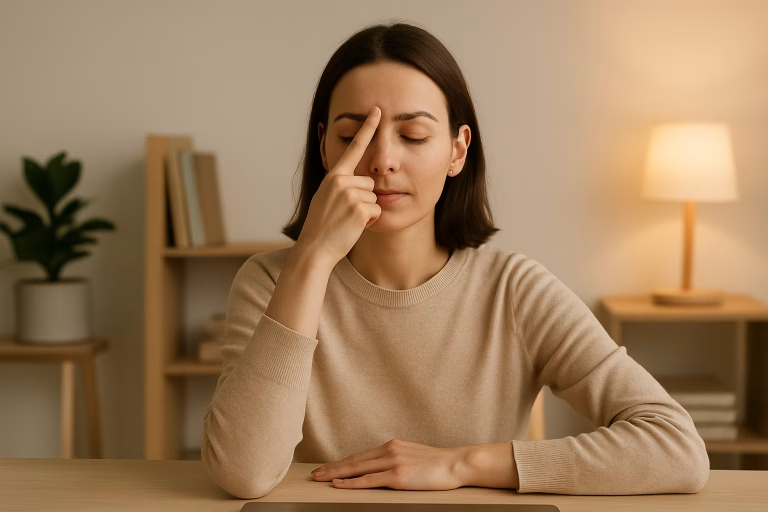
| GB-20 Fengchi | Gallbladder 20 | Hollows at the base of skull, outer to spine | Neck tension, occipital headache, dizziness |
| PC-6 Neiguan | Pericardium 6 | Three finger-widths above inner wrist crease | Nausea, motion-sickness type dizziness |
| ST-36 Zusanli | Stomach 36 | Four finger-widths below kneecap, one finger-width lateral | Digestive support, fatigue, “weak stomach” |
| SP-9 Yinlingquan | Spleen 9 | Below inner knee, in a tender hollow near tibia | Bloating, “damp” heaviness, puffiness |
| LV-3 Taichong | Liver 3 | Top of foot, between big and 2nd toe | Irritability, headache pattern tied to stress |
If you ever struggle to find these points or judge pressure, the free Pressure Points Guide App walks you through each step.
How to Apply These Points (Step-by-Step)
Acupressure Mat and Pillow Set by ProBody Pilates
The ProBody Pilates Acupressure Mat and Pillow Set earns a strong 4.6-star rating from over 12,400 Amazon reviews, praised for delivering noticeable back and neck pain relief, better sleep, and relaxation after regular 15-20 minute sessions. While some users experience sharp initial discomfort, most report it subsides quickly, making this a reliable, affordable option at around $35 for home wellness routines.
If you’re shaky, dehydrated, or sensitive to touch, technique matters more than force. Here’s the method I teach clients for hangover days.
-
Prep (30 seconds)
- Drink a glass of water first, even if it’s a few sips.
- Sit upright with back support, feet on the floor.
- Take 3 slow breaths: inhale 4 seconds, exhale 6 seconds.
-
Find the point
- Use the “tenderness map.” Most effective points feel achy, heavy, or slightly sore when pressed.
- If you feel sharp pain, numbness, or tingling down a limb, lighten pressure and adjust position.
-
Apply pressure (the “3 levels” rule)
- Start light for 5 seconds.
- Increase to medium-firm where it feels like “good pain.”
- Stay there. Don’t white-knuckle it. Hangovers make your nervous system reactive.
-
Use the right motion
- For head points like UB-2 Zanzhu or Yin Tang: steady pressure or tiny circles.
- For hand/foot points like LI-4 Hegu and LV-3 Taichong: slow circles or a “press and hold.”
-
Timing
- Hold each point 45-90 seconds, per side when applicable.
- Repeat the routine 2-3 times over the day.
-
What to expect
- Many people feel a shift in 2-10 minutes: a sigh, stomach settling, head pressure easing.
- You may feel warmth, heaviness, or gentle pulsing. That’s typical.
Acupressure for Hangover Headache: Best Points for Pressure, Tension, and “Brain Fog”
Ginger Root Capsules by Nature’s Way, 550 mg, 100 Capsules
Nature’s Way Ginger Root 550 mg capsules earn a strong 4.6-star rating from over 12,400 Amazon reviews, praised for reliable nausea relief and digestive support with a potent, standardized formula. At around $11.49 for 100 capsules, it offers great value, though minor packaging issues like sticking capsules are noted. Reddit users in supplement communities endorse it as a solid, trustworthy option for everyday ginger benefits.
Electrolyte Powder by Ultima Replenisher, 10 Count
Ultima Replenisher Electrolyte Powder (10 Count) earns a strong 4.6-star rating from over 12,400 Amazon reviews, lauded for its sugar-free, stevia-sweetened formula that provides effective electrolyte replenishment without calories or carbs, ideal for keto, fasting, or workouts. Reviewers highlight tasty flavors and easy mixing, though a minority dislike the sweetness or report minor packaging flaws. Reddit communities echo this positivity for clean hydration support, making it a reliable affiliate pick at around $19.99.
Peppermint Essential Oil by Plant Therapy, 10 mL
Plant Therapy’s 10 mL Peppermint Essential Oil earns a strong 4.7-star rating from over 12,500 Amazon reviews, praised for its purity, potent scent, and versatility in relieving headaches and aiding digestion. At around $8.99, it offers excellent value with consistent Reddit approval for quality, making it a reliable affiliate recommendation for essential oil enthusiasts seeking affordable, high-performing peppermint oil.
Hangover headaches are rarely just “in your head.” They often combine dehydration, sleep disruption, inflammation, and tight neck and jaw muscles. The goal with acupressure is to reduce pain signaling and downshift your system so your body can catch up.
My go-to headache sequence (3 points, 4 minutes)
Use this when you wake up with a pounding forehead or tight band around your head.
-
UB-2 Zanzhu (inner eyebrow)
- Why it matters: This is one of my fastest points for pressure behind the eyes and frontal headache.
- How: Use both thumbs. Press upward into the bony notch at the inner brow for 60 seconds.
- Tip: Keep your jaw unclenched. Most people don’t realize they’re bracing.
-
Yin Tang (between eyebrows)
- Why it matters: When you feel overstimulated, this point often “turns down the volume.”
- How: Use your index finger. Hold steady pressure for 60-90 seconds with slow breathing.
-
GB-20 Fengchi (base of skull)
- Why it matters: Many hangover headaches are neck-driven. This point targets the suboccipital area where tension builds.
- How: Interlace fingers behind head, place thumbs in the hollows under the skull, and gently press upward for 60-90 seconds.
Add-on points if the headache is stubborn
- LI-4 Hegu: especially helpful for frontal headache patterns and general pain regulation.
- GB-8 Shuaigu: I often use this for temple-side headache or migraine-like hangovers. Press gently because the scalp can feel tender.
Here’s a quick “choose your point” guide:
- Forehead and eye pressure: UB-2 Zanzhu + Yin Tang
- Neck-based, tight-shoulder headache: GB-20 Fengchi
- Temple or side-of-head throbbing: GB-8 Shuaigu
If headache is a frequent theme for you, you may also like our guides on tension patterns and head points, including the Head Corner (ST-8) Pressure Point (a common add-on for vertex and temporal discomfort).
From a research perspective, we don’t have strong trials on acupressure specifically for hangovers, but there is supportive evidence for related symptoms. The NIH National Center for Complementary and Integrative Health summarizes how acupuncture and acupressure are used for pain conditions, and clinical research suggests acupoint stimulation can influence pain pathways and autonomic regulation.
Nausea, Gaggy Throat, and “I Can’t Look at Food”: Acupressure Points That Settle the Stomach
Hangover nausea can feel like your stomach is doing somersaults. In clinic, I think of this as a mix of modern physiology (irritated stomach lining, slowed gastric emptying, blood sugar swings) and TCM patterns like Stomach Qi rebellion and Damp Heat. Either way, the strategy is the same: calm the vagal response, reduce the “upward” feeling, and support digestive rhythm.
The best starting point for hangover nausea
PC-6 Neiguan is the first point I reach for when someone says, “I feel like I might throw up.”
How to find it:
- Turn your palm up.
- Measure three finger-widths below the wrist crease.
- Press between the two tendons in the center line of the forearm.
How to use it:
- Use your thumb to press straight down at a medium-firm level.
- Hold 90 seconds, then switch sides.
- Pair it with longer exhales. If you can only do one thing today, do this.
A strong body of research supports P6 stimulation for nausea and vomiting in other settings (like postoperative nausea). A widely cited evidence summary in the Cochrane Database of Systematic Reviews reports that P6 acupoint stimulation can reduce nausea and vomiting in certain contexts, which is why it’s a reasonable complementary tool for hangover queasiness too.
Build a “settle the middle” mini-routine (2-3 points)
When nausea comes with bloating, heaviness, or loose stool, add:
-
ST-36 Zusanli (digestive strength + fatigue)
- Technique: Use knuckles or thumb, slow circles for 60 seconds per leg.
- What you’ll feel: A deep ache is common here, especially when digestion is off.
-
SP-9 Yinlingquan (dampness and fluid metabolism in TCM terms)
- Technique: Press into the tender hollow below the inner knee for 45-60 seconds per side.
- When to choose it: Puffiness, heavy limbs, thick tongue coat, or “wet blanket” fatigue.
Visual checklist: Which nausea pattern is yours?
- Pure queasy, gaggy, motion-sick feeling: PC-6 Neiguan
- Nausea + weak appetite + fatigue: ST-36 Zusanli
- Nausea + bloating + heaviness: SP-9 Yinlingquan
If your hangover includes reflux or a “food just sits there” sensation, it’s also worth supporting the back-shu digestive points over time. I often pair self-care with education around the Stomach Shu (BL-21) Pressure Point for people with recurring digestive sluggishness.
The TCM View: Why Hangovers Feel Like “Heat,” “Damp,” and Stuck Qi
This matters because when you understand the pattern, you stop randomly poking points and start choosing a plan.
In Traditional Chinese Medicine, alcohol is considered warming and damp-producing. That combination can show up the next day as:
- Liver Heat: irritability, red face, thirst, bitter taste, throbbing headache
- Damp Heat: nausea, heavy head, greasy sweat, bloating, loose stool
- Qi stagnation: tight chest, tension headache, mood swings, sighing
Think of your meridian system like traffic flow. Alcohol can create “congestion” (stagnation) and “steam” (heat), while also leaving “sludge” (damp). Your job the next morning is to clear the jam and cool things down gently.
The core point for irritability and “wired-tired” hangovers
LV-3 Taichong is a classic for Liver Qi stagnation and heat patterns.
How to use it:
- Sit and rest one ankle over the opposite knee.
- Find the space between the big toe and second toe, about 1.5-2 finger-widths up.
- Press with your thumb for 45-60 seconds each foot.
What to expect:
- Many clients feel a spreading sensation across the top of the foot.
- It often pairs with a spontaneous deep breath or yawn. That’s a good sign you’re downshifting.
Pair it with a “release valve” point
LI-4 Hegu is one of the most useful points for pain, tension, and stress-related holding patterns.
- Press 60 seconds per side.
- Keep shoulders down. If you’re shrugging, you’re adding more tension.
Support the Liver system over time (especially if hangovers hit hard)
If you notice a pattern of “hangovers that feel toxic,” recurring headaches, or a tight ribcage sensation after drinking, consider learning supportive back points like the Liver Shu (BL-18) Pressure Point. In TCM, BL-18 relates to Liver function and the smooth flow of Qi. I don’t recommend deep pressure on the back when you’re acutely hungover, but gentle massage or professional work can be useful between episodes.
Quick pattern-to-point map (TCM-inspired):
- Heat signs (thirst, irritability, red face): LV-3 Taichong + LI-4 Hegu
- Damp signs (heaviness, nausea, bloating): SP-9 Yinlingquan + ST-36 Zusanli
- Head tension and dizziness: GB-20 Fengchi + Yin Tang
For point location standards, I align my teaching with global point references such as the WHO acupuncture point location guidelines, which helps keep point finding consistent across traditions.
A 10-Minute Morning-After Routine (Plus What to Do Before You Drink)
When you feel awful, decision fatigue is real. This is the routine I’d want you to have saved on your phone.
The 10-minute hangover acupressure routine
-
Hydrate first (1 minute)
- Water or an oral rehydration drink.
- If you can, add a small salty snack (broth, crackers).
-
Calm the head (3 minutes)
- UB-2 Zanzhu 60 seconds per side
- Yin Tang 60 seconds
-
Release the neck (2 minutes)
- GB-20 Fengchi 60-90 seconds
-
Settle the stomach (2-3 minutes)
- PC-6 Neiguan 90 seconds per side
-
Unstick the system (1-2 minutes)
- LV-3 Taichong 45-60 seconds per side
Then lie down in a dim room for 10 minutes. Even if you don’t sleep, that sensory break helps.
What I suggest the night before (prevention, not perfection)
Acupressure won’t “cancel” alcohol, but it may help you go into the night less tense and sleep a bit better.
- Press Yin Tang for 60 seconds before bed.
- If you tend to get stressy or flushed when drinking, add LV-3 Taichong for 45 seconds each foot.
If alcohol triggers anxiety, racing thoughts, or regret spirals, I also teach clients a simple wrist-based calming combo using PC-6 Neiguan and the Connecting Li (HT-5) Pressure Point. It’s not about “fixing” you; it’s about settling the nervous system so you make clearer choices.
Safety & When to See a Professional
Acupressure is generally low-risk, but hangovers can mask more serious issues. Please use common sense and get medical help when needed.
Acupressure safety tips
- Avoid strong pressure on bruised, inflamed, or injured areas.
- Use lighter pressure if you’re very dehydrated, dizzy, or prone to fainting.
- Pregnancy: Avoid strong stimulation of LI-4 Hegu unless your licensed provider says it’s appropriate.
- If you have a bleeding disorder or take blood thinners, use gentle pressure and avoid aggressive scraping or tools.
Seek urgent care if you have
- Confusion, fainting, seizure, or severe dehydration
- Vomiting that won’t stop or you can’t keep fluids down
- Severe headache unlike your usual pattern, stiff neck, or neurological symptoms
- Chest pain, severe abdominal pain, or blood in vomit
For a full overview, see our acupressure safety guide and browse more techniques in our acupressure category. As always, listen to your body and stop if discomfort arises.
Conclusion
Acupressure won’t erase a hangover, but it can make the recovery window feel much more manageable. When I work with clients who wake up with headache, nausea, and that edgy “fried” feeling, the biggest win is usually nervous system relief. Once your body stops bracing, hydration and rest start working better.
If you only remember three points, make it these: PC-6 Neiguan for nausea, GB-20 Fengchi for neck-driven headache and dizziness, and LV-3 Taichong for irritability and that “too much heat” sensation. Add Yin Tang when you feel overstimulated or foggy.
Which point will you try first? If you want more self-care routines, explore our guides on stress relief and headache patterns, and keep the Pressure Points Guide App handy for step-by-step point finding.
FAQs
Does acupressure for hangover actually work?
It may help reduce specific hangover symptoms like headache and nausea, but it won’t “cure” a hangover. In practice, I see the best results when people use points such as PC-6 Neiguan for nausea and GB-20 Fengchi for tension headaches, while also hydrating and resting. Research is stronger for acupressure’s effects on nausea and pain in general than for hangovers specifically.
What is the best pressure point for hangover nausea?
The most reliable point to try first is PC-6 Neiguan. Hold it for 90 seconds on each wrist with slow exhalations. If nausea comes with heaviness or bloating, add ST-36 Zusanli for digestive support. If symptoms are severe or you can’t keep fluids down, seek medical advice.
What is the best acupressure point for a hangover headache?
For many people, the best starting points are UB-2 Zanzhu and GB-20 Fengchi. UB-2 is great for forehead and eye pressure, while GB-20 targets the neck tension that often drives hangover headaches. Add LI-4 Hegu if the pain feels tight and stress-linked.
How long does acupressure take to relieve hangover symptoms?
Many people notice a shift within 2-10 minutes, but results vary. I recommend holding each point like Yin Tang or PC-6 Neiguan for at least 60-90 seconds and repeating the routine 2-3 times that day. If you’re dehydrated or sleep-deprived, you may need more time and gentler pressure.
Can I do acupressure the night before drinking to prevent a hangover?
You can, and it may help you feel calmer and sleep a bit better, but it won’t prevent alcohol’s biochemical effects. Try Yin Tang before bed and LV-3 Taichong if you tend toward irritability or flushing. Prevention still comes down to pacing drinks, eating, and hydrating.
Is it safe to use LI-4 for hangover relief?
LI-4 Hegu is generally safe for most adults when used gently, but it’s not recommended in pregnancy without provider guidance. Use medium pressure for 60 seconds per hand, and stop if you feel sharp pain or numbness. If you’re unsure, stick with gentler options like Yin Tang and PC-6 Neiguan first.
As an Amazon Associate, I earn from qualifying purchases. Product recommendations are based on real reviews and independent research.
Free Mobile App
Find Pressure Points on the Go
Interactive 3D body map with 100+ acupressure points, step-by-step guides, and personalized routines.
Download Free App →