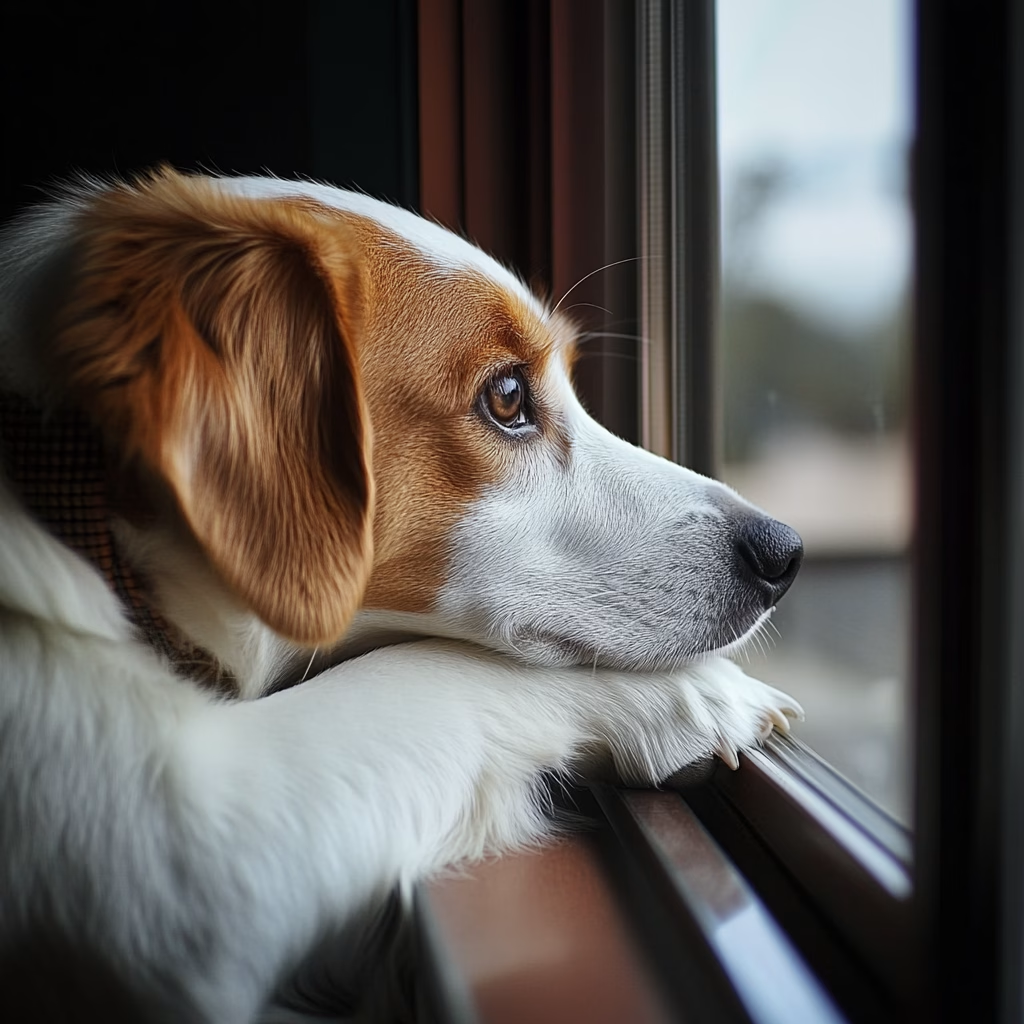
Dog Acupressure for Anxiety: How to Calm Your Dog Naturally (2026)
If your dog struggles with anxiety â the panting, pacing, trembling, or hiding during thunderstorms â you already know how heartbreaking it is to watch. You want to help, but the options often feel limited to medication or waiting it out. Neither feels great.
I have been working with acupressure since 2017, and one of the questions that surprised me most over the years is how often people ask about using these techniques on their pets. Specifically, on their dogs. And the thing is, it works. Acupressure has been used in veterinary traditional Chinese medicine for centuries, and the principles are remarkably similar to human acupressure. Dogs have meridians, they have pressure points, and they respond to gentle, sustained pressure in ways that are visible and often immediate.
This guide covers the most effective acupressure points for calming an anxious dog, how to apply pressure safely, and how to build a routine that genuinely reduces your dog’s stress over time.
Why Dogs Get Anxious and How Acupressure Helps
Dog anxiety is not a behavioral problem in the traditional sense. It is a nervous system response. Just like in humans, dogs have a sympathetic nervous system (fight or flight) and a parasympathetic nervous system (rest and digest). Anxious dogs are stuck in sympathetic overdrive â their nervous system is telling them something is wrong, even when it is not.
Common triggers include separation from their owner, loud noises like thunderstorms and fireworks, car rides, new environments, visits to the vet, and changes in household routine. Some breeds are also genetically predisposed to anxiety â herding breeds, rescue dogs, and dogs with traumatic early experiences are particularly vulnerable.
Acupressure helps by doing the same thing it does in humans: it activates the parasympathetic nervous system. When you apply gentle, sustained pressure to specific points on your dog’s body, it triggers the release of endorphins and other calming neurochemicals. It slows heart rate, relaxes muscles, and signals to the nervous system that it is safe to stand down.
A 2017 study published in the Journal of Veterinary Behavior found that dogs receiving regular acupressure sessions showed significantly reduced cortisol levels and behavioral signs of anxiety compared to control groups. This is not just anecdotal â there is measurable science behind it.
The Best Acupressure Points for Calming an Anxious Dog
These are the points that veterinary acupressure practitioners and research consistently identify as most effective for anxiety relief in dogs. You do not need any special equipment â just your fingertips and a calm, patient approach.
Yin Tang (Third Eye Point)
Located between and slightly above the eyes, in the center of the forehead. This is one of the most universally calming acupressure points in both humans and dogs. In dogs, gentle pressure here often produces a visible relaxation response within seconds â you may see the eyes soften, the breathing slow, and the muscles in the face relax.
Place your thumb gently on this spot and hold with light, steady pressure for 30 to 60 seconds. You are not pressing hard â think of it as a gentle, sustained touch. Many dogs will lean into this pressure once they feel the calming effect.
GV 20 (Bai Hui)
Located at the top of the head, on the midline, between the ears. GV 20 is traditionally considered the master calming point. It is where the governing vessel meridian reaches its highest point, and stimulating it has a direct calming effect on the entire nervous system.
Use your fingertip to apply gentle circular pressure for 30 to 60 seconds. This point is particularly effective for dogs who are restless, hypervigilant, or cannot settle down. It is often the first point veterinary acupressure practitioners target for anxiety.
Heart 7 (Shen Men)
Located on the inside of the front leg, just above the wrist crease, on the outer (little finger) side. Heart 7 is called the “Spirit Gate” in traditional Chinese medicine â the same name it carries in human acupressure. It calms the mind and settles the spirit.
This point is especially effective for dogs with separation anxiety or those who seem emotionally distressed rather than just physically agitated. Hold gentle pressure for 30 to 60 seconds on each front leg. Some dogs prefer you to hold the leg gently while pressing, while others prefer you to simply touch the point.
Pericardium 6 (Nei Guan)
Located on the inside of the front leg, about two finger widths above the wrist crease, between the two tendons. This is the same point used to treat nausea and anxiety in humans, and it works similarly in dogs.
Pericardium 6 is particularly helpful for dogs with car sickness or anxiety related to travel. It calms the stomach and the nervous system simultaneously. Press gently for 30 to 60 seconds on each front leg.
Gallbladder 20 (Feng Chi)
Located at the base of the skull, in the depression on either side of the spine where the neck meets the head. This point releases tension in the neck and head â areas where anxious dogs carry enormous amounts of stress.
Use your fingertips to apply gentle pressure to both sides simultaneously for 30 to 60 seconds. Many dogs carry so much tension here that they will visibly relax once the pressure is applied. This point is also excellent for dogs who are reactive to sounds.
Bladder 10 (Tian Zhu)
Located just below Gallbladder 20, on either side of the spine at the base of the skull. Bladder 10 works in combination with GB 20 to release tension in the neck and upper back and calm the nervous system.
Press gently on both sides for 30 to 60 seconds. The combination of GB 20 and Bladder 10 is one of the most effective two-point protocols for immediately calming a tense, anxious dog.
Liver 3 (Tai Chong)
Located on the top of the hind paw, between the second and third toes, about two finger widths from the web. Liver 3 is the master point for releasing frustration and emotional stagnation â in dogs, this translates to the pent-up energy and tension that often manifests as anxious behavior.
This point is particularly useful for dogs who express their anxiety through destructive behavior, excessive barking, or inability to settle. Press gently for 30 seconds on each hind paw. Some dogs are sensitive about their paws, so approach gradually and stop if the dog pulls away.
How to Apply Acupressure to Your Dog Safely
The technique for dog acupressure is gentler than human acupressure. Dogs are more sensitive to pressure, and the goal is to create a calming experience, not discomfort.
Start by creating a calm environment. Turn off loud music, choose a quiet room, and sit with your dog at their level. Your own energy matters â if you are tense or rushed, your dog will pick up on it. Take a few deep breaths before you begin.
Use your thumb or fingertip for most points. The pressure should be gentle but firm enough that you can feel the point â think of it as the weight of a nickel resting on the skin. You are not digging in. If your dog pulls away, tenses up, or shows signs of discomfort, you are pressing too hard.
Hold each point for 30 to 60 seconds. Watch your dog’s response. Signs that the acupressure is working include softening of the eyes, sighing or deep breathing, licking the lips (a calming signal), yawning, or physically leaning into your hand. Some dogs will lie down and fall asleep during a session.
Start with Yin Tang and GV 20, as these are the least invasive and most universally accepted by dogs. Once your dog is comfortable with those, gradually add other points over subsequent sessions.
Building a Regular Acupressure Routine for Your Dog
Consistency matters as much for dogs as it does for humans. A single session can provide immediate relief during a stressful event, but regular practice changes your dog’s baseline anxiety level over time.
For a daily maintenance routine, spend 5 to 10 minutes working through the key points: Yin Tang (30 seconds), GV 20 (30 seconds), Heart 7 on both front legs (60 seconds total), and Gallbladder 20 and Bladder 10 (60 seconds total). This takes less than 5 minutes and provides a daily dose of parasympathetic activation.
For acute anxiety situations â thunderstorms, fireworks, vet visits â focus on Yin Tang, GV 20, and Heart 7. Start the session before the stressor if possible. If you know a storm is coming, begin acupressure 30 minutes beforehand to give the calming effect time to build.
For car anxiety, add Pericardium 6 to the routine and do a brief session before getting in the car. Many dogs show significant improvement in car anxiety after just a few weeks of consistent pre-travel acupressure.
Give the routine at least three to four weeks before evaluating results. You are retraining your dog’s nervous system, and that takes time. Most owners notice the biggest changes between weeks two and four â dogs who used to tremble during storms begin to show only mild concern, and dogs who could not settle at night start lying down calmly.
When Acupressure Is Not Enough
Acupressure is powerful, but it is one tool in a larger toolkit. Some dogs need additional support, and there is no shame in combining approaches.
Regular exercise is the single most effective anxiety reducer for dogs. A tired dog is a calmer dog. Aim for at least 30 to 60 minutes of physical activity daily, appropriate to your dog’s breed, age, and health.
Environmental enrichment â puzzle feeders, sniff walks, training sessions â gives your dog’s brain something positive to focus on instead of anxiety triggers.
For severe anxiety that does not respond to behavioral and natural approaches after 8 to 12 weeks, consult your veterinarian. Medications like trazodone, gabapentin, or SSRIs can be appropriate for dogs with clinical anxiety, and they work well alongside acupressure rather than replacing it.
A veterinary acupressure or acupuncture practitioner can provide more targeted treatment for severe cases. Veterinary acupuncture, which uses needles rather than finger pressure, is recognized by the American Veterinary Medical Association as a legitimate complementary therapy.
Tips for Making Acupressure Sessions Enjoyable
The best acupressure session is one your dog looks forward to. Here is how to make that happen.
Let your dog choose the position. Some dogs prefer lying on their side, others prefer sitting, and some prefer to lie on your lap. The best position is whatever makes your dog most relaxed.
Start and end with something your dog loves â a gentle ear rub, a belly scratch, or a quiet cuddle. This creates positive associations with the acupressure routine.
Keep sessions short in the beginning â 3 to 5 minutes is plenty. You can gradually extend as your dog becomes comfortable with the routine. A session that is too long can become stressful rather than calming.
Never force a session. If your dog is too agitated to sit still, try again later when they are calmer. Acupressure works best when both you and your dog are in a relatively settled state.
Talk to your dog in a calm, low voice during the session. Dogs respond to vocal tone as much as to touch, and a soothing voice amplifies the calming effect of the acupressure.
The Connection Between Your Stress and Your Dog’s Anxiety
Here is the thing nobody warns you about: dogs are emotional mirrors. They pick up on your stress, your tension, and your anxiety with remarkable accuracy. If you are chronically stressed, your dog is more likely to be anxious too.
This is why managing your own stress is part of managing your dog’s anxiety. Daily practices that activate your parasympathetic nervous system â deep breathing, meditation, acupressure, or lying on your Pranamat for 20 minutes â benefit both you and your dog. When you are calm, your dog feels it. When you shift into a relaxed state before an acupressure session, your dog shifts with you.
I have been using my Pranamat daily since 2017, and one of the unexpected benefits has been how much calmer my overall energy is around my animals. The parasympathetic activation from a 20-minute mat session does not just help me â it creates a calmer environment for everyone in the house, including the four-legged members.
The Bottom Line
Dog acupressure is safe, effective, and something you can start today with nothing but your hands and a few minutes of patience. The key points â Yin Tang, GV 20, Heart 7, Pericardium 6, Gallbladder 20, Bladder 10, and Liver 3 â address the nervous system mechanisms that drive canine anxiety.
Consistency is what transforms occasional relief into lasting change. A daily 5-minute routine, combined with adequate exercise and a calm home environment, can genuinely change your dog’s relationship with anxiety.
Your dog trusts you more than anything in the world. Sitting quietly with them, applying gentle pressure to the right points, and sharing calm energy is one of the most loving things you can do. It works for you, and it works for them.
Frequently Asked Questions
Does acupressure work for dogs with anxiety?
Yes. Research confirms that acupressure reduces cortisol levels and behavioral signs of anxiety in dogs. It works by activating the parasympathetic nervous system, releasing endorphins, and signaling to the nervous system that it is safe to relax. Most dogs show visible calming within minutes of an acupressure session, and regular daily practice reduces baseline anxiety levels over several weeks.
What are the best acupressure points for a nervous dog?
The most effective calming points are Yin Tang (between the eyes), GV 20 (top of the head), and Heart 7 (inside of the front leg above the wrist). For dogs reactive to sounds, add Gallbladder 20 and Bladder 10 at the base of the skull. For travel anxiety, add Pericardium 6 on the inside of the front leg. Start with Yin Tang and GV 20, as these are accepted by virtually all dogs.
How long should a dog acupressure session last?
A daily maintenance session takes 5 to 10 minutes. For acute anxiety situations, focus on 2 to 3 key points for 3 to 5 minutes. Keep sessions short when starting out â 3 to 5 minutes is plenty until your dog is comfortable with the routine. Never force a session if your dog is too agitated. Consistency matters more than duration.
Is acupressure safe for all dogs?
Acupressure is generally very safe for dogs of all ages and breeds. The pressure used is gentle â much lighter than human acupressure. Avoid pressing directly on wounds, tumors, or areas of infection. Pregnant dogs should be treated with caution, as certain points can stimulate uterine contractions. If your dog has a serious health condition, consult your veterinarian before starting acupressure.
How often should I do acupressure on my anxious dog?
Daily practice produces the best results. A 5-minute daily session is more effective than a longer session once a week. For dogs with known anxiety triggers (storms, fireworks, vet visits), do a session 30 minutes before the expected stressor. Most owners see meaningful changes in their dog’s anxiety after three to four weeks of consistent daily practice.
Can I combine acupressure with my dog’s anxiety medication?
Yes. Acupressure works well alongside anxiety medications and can sometimes allow for lower doses over time (always consult your vet before adjusting medication). The two approaches target different mechanisms â medication works on brain chemistry directly, while acupressure works through the nervous system and endorphin release. Many veterinarians support using both together.
Can acupressure help my dog with separation anxiety?
Acupressure can help reduce the severity of separation anxiety, particularly when done as part of a pre-departure routine. Heart 7 is the most relevant point for emotional distress related to separation. Doing a brief acupressure session before you leave can help shift your dog into a calmer state. However, severe separation anxiety often requires a comprehensive behavior modification program in addition to acupressure.
Related Reading
- Pressure Points for Anxiety
- Pressure Points for Stress
- Acupressure Mat Benefits
- Pressure Points for Sleep
- Do Acupressure Mats Work
Author

Free Mobile App
Find Pressure Points on the Go
Interactive 3D body map with 100+ acupressure points, step-by-step guides, and personalized routines.
Download Free App →