Pressure Points for Stress: 12 Points That Actually Calm Your Nervous System (2026)
Stress is not just mental. It lives in your body â tight shoulders, a clenched jaw, shallow breathing, that knot in your stomach that will not go away no matter how many deep breaths you take. And when stress becomes chronic, it disrupts sleep, digestion, immunity, and your ability to think clearly.
I have been using acupressure for stress management since 2017. Not as a replacement for addressing the sources of stress in my life, but as a daily tool that gives my nervous system a reliable way to downshift. After nine years of consistent practice, I can tell you that specific pressure points produce a physical calming response that is faster and more reliable than most people expect.
Here are the 12 pressure points that actually work for stress â where they are, why they work, and exactly how to use them.
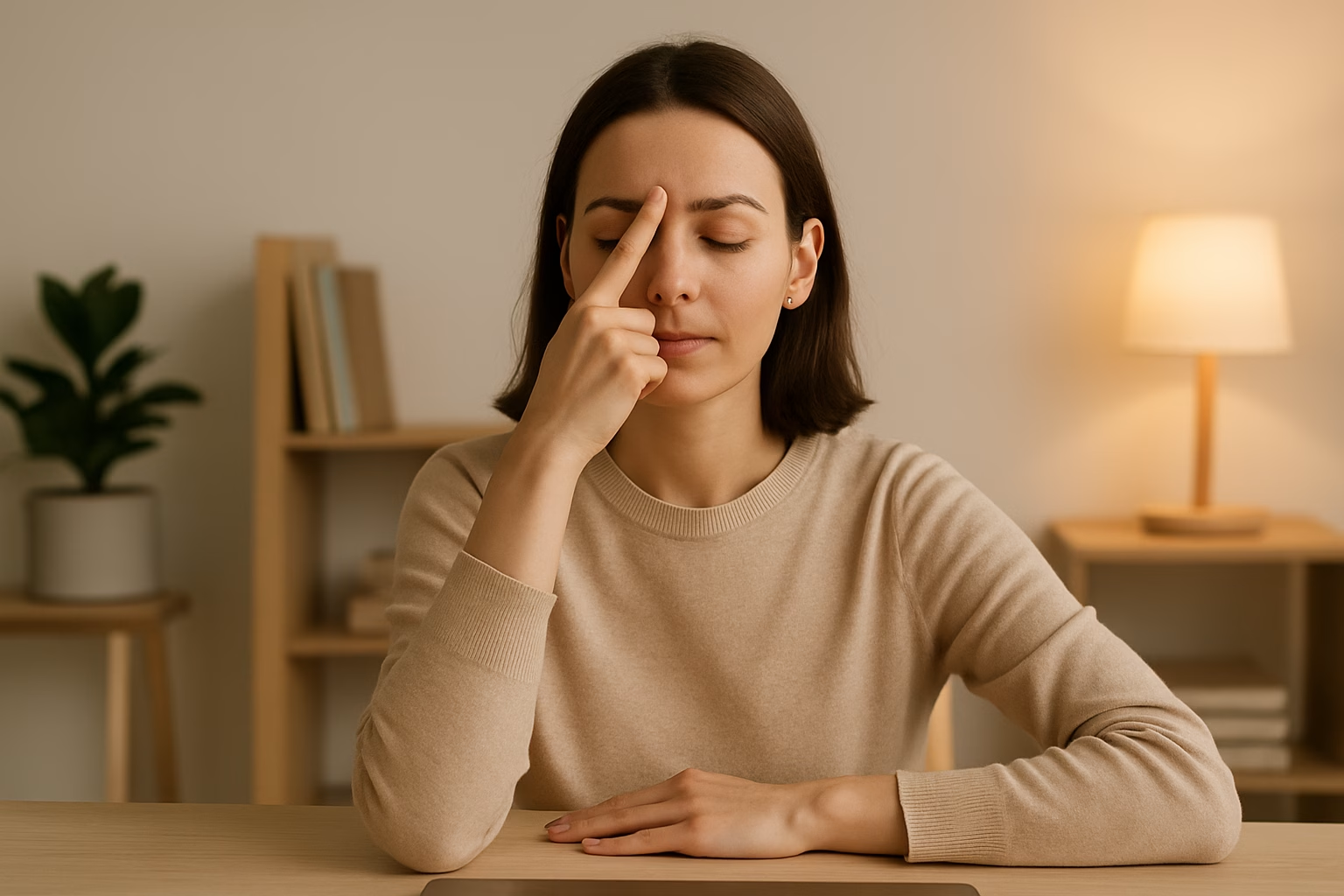
1. Yin Tang (Hall of Impression) â The Instant Calm Point
Where it is: Right between your eyebrows, in the small indentation where the bridge of your nose meets your forehead.
Why it works: Yin Tang is the single most effective point for immediate stress relief. It directly activates the parasympathetic nervous system and quiets the frontal cortex â the part of your brain that generates anxious, racing thoughts. In Traditional Chinese Medicine, it is called the “third eye point” and is used to calm the spirit.
How to use it: Place your middle finger on the point and press gently with steady pressure. Hold for 60 to 90 seconds while breathing slowly. You will often feel a noticeable wave of calm within the first 30 seconds. This is my go-to point when I need to reset quickly â before a stressful conversation, during a long workday, or when my mind will not stop racing at night.
2. PC 6 (Neiguan) â The Anxiety and Tension Point
Where it is: On the inside of your forearm, about three finger-widths above the wrist crease, right between the two tendons you can feel when you clench your fist.
Why it works: PC 6 regulates the Pericardium meridian, which governs heart function and emotional balance. It calms the chest, settles the stomach, and reduces that tight, anxious feeling many people carry in their upper body when stressed. It is also one of the most studied acupressure points in clinical research, with multiple trials confirming its effects on anxiety and nausea.
How to use it: Press with your thumb into the space between the two tendons. You should feel a distinct ache â that means you are on the right spot. Hold for 60 seconds per wrist. This pairs exceptionally well with Yin Tang for a powerful two-point calming combination.
3. HT 7 (Shenmen) â The Spirit Gate
Where it is: On the inside of your wrist crease, in the small depression on the pinky side, right where you can feel a small bone.
Why it works: HT 7 is called the “Spirit Gate” in Chinese medicine because it directly calms the heart and settles emotional turbulence. It is the primary point for insomnia caused by stress, anxiety that sits in the chest, and emotional overwhelm. When stress makes your heart race or your chest feel tight, HT 7 addresses that directly.
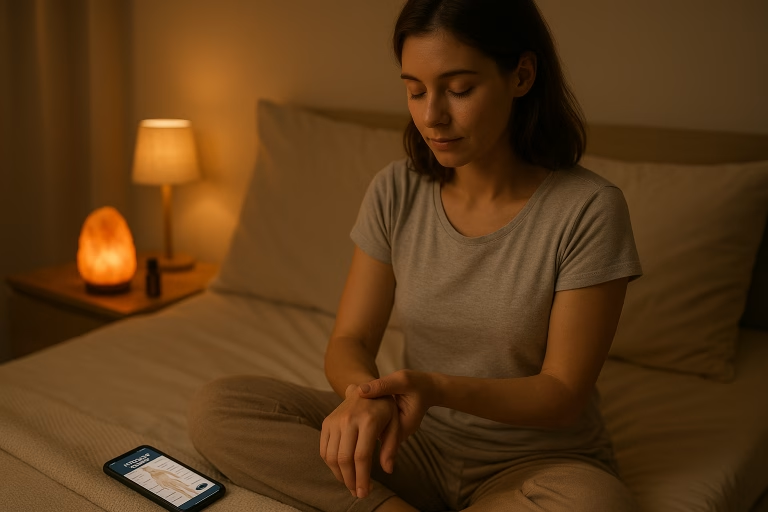
How to use it: Press with your thumb into the depression at the wrist crease. Hold for 60 seconds per wrist. The pressure should be firm but not painful. This is one of the best points to press right before bed if stress is keeping you awake.
4. LV 3 (Tai Chong) â The Stress and Frustration Release Point
Where it is: On the top of your foot, in the depression between the first and second toe bones, about two finger-widths back from where the toes separate.
Why it works: LV 3 is the most important point for stress that manifests as frustration, irritability, or anger. It smooths liver qi â in practical terms, this means it releases the physical tension that comes from suppressed emotions. If your jaw clenches, your shoulders rise, or you feel a pressure building behind your eyes when you are stressed, LV 3 is the point you need.
How to use it: Press firmly into the depression between the bones with your thumb. This point is often quite tender when you are stressed â that tenderness is diagnostic. Hold for 60 to 90 seconds per foot. I use this point every single day and notice a clear difference in how reactive I am to stressful situations.
5. LI 4 (Hegu) â The Full-Body Tension Release
Where it is: In the fleshy web between your thumb and index finger, at the highest point of the muscle when you squeeze your thumb and finger together.
Why it works: LI 4 is one of the most powerful points in acupressure. It commands the entire Large Intestine meridian and has a broad regulating effect on the nervous system. For stress specifically, it releases tension held in the head, neck, and shoulders â which is where most people carry their stress. It also promotes the release of endorphins, your body’s natural calming chemicals.
How to use it: Pinch the web between your thumb and finger with your other thumb and index finger. Press firmly into the meaty part of the muscle. Hold for 45 to 60 seconds per hand. This is one of the most accessible stress points because you can press it anywhere â in a meeting, on the train, at your desk. Note: Avoid during pregnancy as it can stimulate uterine contractions.
6. GB 21 (Jianjing) â The Shoulder Tension Point
Where it is: At the highest point of your shoulder muscle, halfway between your neck and the edge of your shoulder. If you reach across and squeeze the top of your opposite shoulder, you will find a tender, tight spot â that is GB 21.
Why it works: GB 21 is where most people physically hold stress. When you say “I carry my stress in my shoulders,” you are describing tension at GB 21. This point releases the trapezius muscle, drops raised shoulders, and relieves stress headaches that start at the base of the skull and travel over the head.
How to use it: Squeeze the muscle firmly with your opposite hand, pressing your thumb into the front and your fingers into the back. Hold for 45 seconds per side. You can also press down on the point with your fingertips. Note: Like LI 4, avoid firm pressure here during pregnancy.
7. GV 20 (Baihui) â The Mental Clarity Point
Where it is: At the very top of your head, on the midline. Find it by tracing a line from the tops of both ears up to where they meet at the crown.
Why it works: GV 20 lifts and clears the mind. When stress makes your thinking foggy, scattered, or heavy, this point brings clarity. It is the meeting point of all yang meridians and has a powerful upward, clearing energy. Research has shown that stimulation of GV 20 influences serotonin and dopamine levels, both of which affect mood and stress response.
How to use it: Press down gently with your fingertip or tap lightly on the point for 60 seconds. The pressure here should be lighter than on other points â gentle but consistent. This is particularly effective combined with Yin Tang for mental clarity during stressful periods.
8. KD 1 (Yongquan) â The Grounding Point
Where it is: On the sole of your foot, in the depression that forms when you curl your toes, about one-third of the way down from the base of your toes.
Why it works: KD 1 is the lowest acupressure point on the body and the first point on the Kidney meridian. It draws excess energy downward â which is exactly what you need when stress sends your energy up into your head, causing racing thoughts, headaches, and insomnia. It has a deeply grounding, calming effect that is different from any other point.
How to use it: Press firmly with your thumb into the center of the depression. Hold for 60 to 90 seconds per foot. The pressure can be quite firm here. This is a powerful point for nighttime use â pressing KD 1 before bed helps pull your awareness out of an overactive mind and into your body.
9. ST 36 (Zusanli) â The Resilience Builder
Where it is: Four finger-widths below the kneecap, one finger-width to the outside of the shinbone. You will feel a small muscle indent when you flex your foot.
Why it works: ST 36 does not provide the immediate calming of Yin Tang or HT 7. Instead, it builds your overall capacity to handle stress. It strengthens qi, supports digestion (which stress disrupts), and regulates the immune system. Think of it as the point that makes your stress tolerance stronger over time rather than just relieving symptoms in the moment.
How to use it: Press firmly with your thumb for 60 to 90 seconds per leg. I include this in my daily routine specifically for its long-term stress resilience benefits. After nine years of consistent daily use, I believe this point has contributed more to my overall wellbeing than any single supplement or habit change.
10. CV 17 (Shanzhong) â The Chest Opener
Where it is: On the center of your breastbone, at the level of your nipples â roughly between the fourth ribs.
Why it works: CV 17 is the “sea of qi” point and the primary point for chest tightness caused by emotional stress. When anxiety sits in your chest, when you cannot take a full deep breath, when grief or worry creates that heavy feeling behind your sternum â CV 17 opens it up. It regulates the flow of qi through the chest and directly supports deeper breathing.
How to use it: Press gently with your fingertip or knuckle on the sternum. Hold for 60 seconds while breathing deeply. The combination of pressure and conscious breathing at this point creates a noticeable opening sensation in the chest within seconds.
11. GB 20 (Fengchi) â The Tension Headache Point
Where it is: At the base of your skull, in the two hollows on either side of the thick muscles running up the back of your neck. You will find them where the skull meets the neck, about two finger-widths from the midline.
Why it works: GB 20 is the most effective point for stress headaches and neck tension. It releases the suboccipital muscles that tighten during prolonged stress, screen time, and poor posture. It also improves blood flow to the brain and relieves the heavy-headed feeling that comes with mental exhaustion.
How to use it: Place your thumbs in both hollows and press upward toward the skull. Apply firm pressure and hold for 60 to 90 seconds. You can also make small circular motions. This point often produces immediate relief from tension headaches.
12. EX-HN 3 (Taiyang) â The Temple Point
Where it is: In the depression at your temples, about one finger-width behind the midpoint between the outer edge of your eyebrow and the outer corner of your eye.
Why it works: Taiyang releases temporal muscle tension, relieves stress headaches, and calms the mind. It is particularly effective for stress that manifests as pressure or tightness around the eyes and temples â which is common with screen-related and work-related stress.
How to use it: Press gently with your fingertips on both temples simultaneously. Make slow circular motions for 30 to 45 seconds. The pressure should be moderate â temples are sensitive. This is excellent for a quick mid-afternoon reset.
A 5-Minute Stress Relief Routine
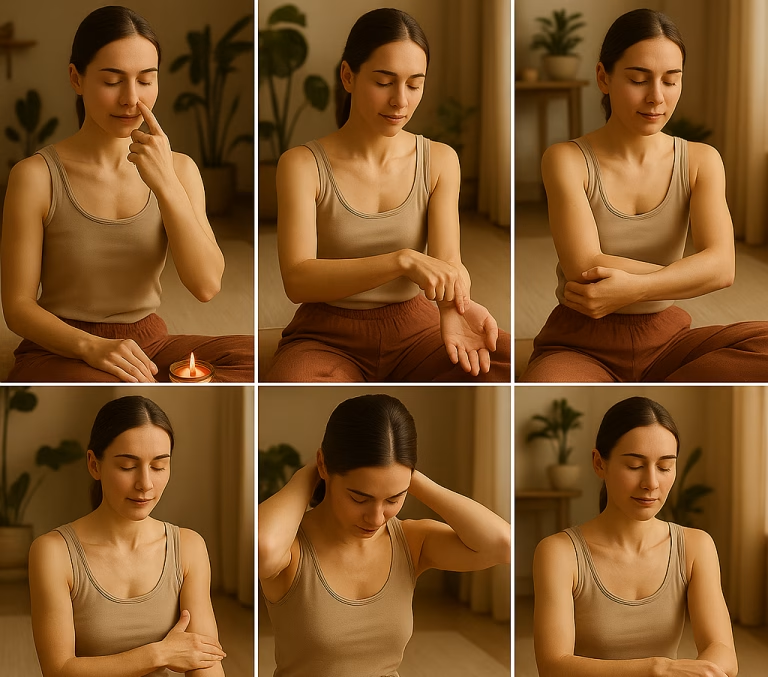
Here is the routine I use most days. You can do this sitting at a desk, on the couch, or in bed.
Step 1 (60 seconds): Press Yin Tang between your eyebrows. Close your eyes and breathe slowly. This immediately shifts your nervous system toward calm.
Step 2 (60 seconds): Press PC 6 on both wrists â 30 seconds per side. Releases chest tension and anxiety.
Step 3 (60 seconds): Press HT 7 on both wrists â 30 seconds per side. Calms the heart and settles emotional turbulence.
Step 4 (60 seconds): Press LI 4 on both hands â 30 seconds per side. Releases head, neck, and shoulder tension.
Step 5 (60 seconds): Press LV 3 on both feet â 30 seconds per side. Releases frustration and irritability.
Five minutes. I do this every afternoon and again before bed on particularly stressful days. The cumulative effect of a daily practice is significantly greater than occasional use â your nervous system learns the routine and begins downshifting faster.
Using an Acupressure Mat for Stress Relief
An acupressure mat is the single most effective tool for broad stress relief because it activates your parasympathetic nervous system without requiring you to know or press individual points. When you lie on the mat, thousands of pressure points stimulate your entire back simultaneously, triggering a flood of endorphins and shifting your body out of fight-or-flight mode.
I have been using my Pranamat every evening since 2017. For stress specifically, 15 to 20 minutes on the mat in the evening produces a level of physical and mental relaxation that I have not found in any other single practice. The first two minutes are intense â your body responds to the sensation by tensing up. Then somewhere around minute three or four, the endorphins kick in and you feel a warm wave of relaxation spread through your back and shoulders.
For maximum stress relief, lie on the mat without a shirt so the spikes contact your bare skin directly. Place the mat on a flat surface â bed or floor. Some people also use the pillow portion under their neck to release GB 20 and the suboccipital muscles simultaneously.
The combination of targeted acupressure during the day and mat sessions in the evening has been the foundation of my stress management since 2017. Neither alone is as effective as both together.
What Research Says About Acupressure and Stress
The evidence supporting acupressure for stress reduction is substantial and growing:
- A 2022 systematic review in the Journal of Clinical Medicine found acupressure significantly reduced perceived stress and cortisol levels across multiple randomized controlled trials.
- A 2020 study published in Complementary Therapies in Clinical Practice showed that acupressure at HT 7 and Yin Tang reduced anxiety scores by 40% compared to sham acupressure in pre-surgical patients.
- A 2019 meta-analysis confirmed that acupressure effectively reduces both state anxiety (situational) and trait anxiety (chronic tendency toward anxiety).
- Multiple studies have demonstrated that PC 6 stimulation activates the parasympathetic nervous system and reduces heart rate variability markers associated with stress.
The physiological mechanism is well-understood: sustained pressure on specific points activates A-delta and C nerve fibers, which trigger the release of endorphins and enkephalins while simultaneously reducing cortisol production and sympathetic nervous system activity.
Lifestyle Habits That Amplify Acupressure for Stress
Acupressure works best as part of a broader approach to stress management:
- Move your body daily. Even 20 minutes of walking reduces cortisol and supports the stress-relieving effects of acupressure.
- Limit caffeine after noon. Caffeine elevates cortisol and keeps your nervous system in a heightened state, working against what acupressure is trying to accomplish.
- Protect your sleep. Sleep deprivation amplifies the stress response. Using acupressure points before bed, particularly HT 7, KD 1, and Yin Tang, supports better sleep quality.
- Breathe consciously. Pair acupressure with slow, diaphragmatic breathing for stronger effects. The combination activates the parasympathetic system more powerfully than either practice alone.
- Reduce screen time before bed. Blue light and mental stimulation from screens counteract the calming effects of evening acupressure routines.
When to Seek Professional Help
Acupressure is excellent for everyday stress management and mild to moderate anxiety. It is not a substitute for professional help if you are experiencing:
- Panic attacks that feel like heart attacks or cause you to avoid situations
- Chronic anxiety that persists regardless of circumstances and interferes with daily functioning
- Depression lasting more than two weeks with loss of interest, changes in appetite, or feelings of hopelessness
- Post-traumatic stress with flashbacks, nightmares, or hypervigilance
- Physical symptoms like chest pain, persistent insomnia, or unexplained weight changes that may indicate a medical condition
- Thoughts of self-harm â if you are experiencing these, please reach out to a mental health professional or crisis helpline immediately
Acupressure complements professional treatment beautifully. Many therapists and psychologists encourage body-based practices like acupressure alongside talk therapy and other treatments.
The Bottom Line
Stress relief through acupressure is not about memorizing a dozen points and pressing them all every day. Start with two or three points that address your specific stress pattern.
If your stress lives in your head â racing thoughts, insomnia, mental fog â start with Yin Tang, GV 20, and HT 7.
If your stress lives in your body â tight shoulders, clenched jaw, tension headaches â start with GB 21, GB 20, and LI 4.
If your stress is emotional â frustration, irritability, feeling overwhelmed â start with LV 3, CV 17, and PC 6.
The 5-minute routine covers all three patterns and is a good daily foundation. Add an evening session on an acupressure mat for broad parasympathetic activation, and you have a comprehensive stress management practice that takes less than 25 minutes of your day.
I have been doing exactly this since 2017, and it remains the most consistent, reliable tool in my stress management toolkit. No side effects, no cost beyond the initial mat investment, and the effects compound over time.
FAQ
What is the best pressure point for immediate stress relief?
Yin Tang, located between the eyebrows, is the fastest-acting point for stress. It directly activates the parasympathetic nervous system and can produce a noticeable calming effect within 30 seconds. Press gently with your middle finger and hold for 60 to 90 seconds while breathing slowly.
How long should I press a pressure point for stress?
Most stress-relief points respond best to 45 to 90 seconds of sustained pressure. Shorter holds may not be enough to trigger the neurological response, while longer holds do not necessarily improve the effect. Consistency matters more than duration â pressing for 60 seconds daily is more effective than five minutes once a week.
Can acupressure replace medication for anxiety?
Acupressure is a complementary practice, not a replacement for prescribed medication. If you are taking medication for anxiety or depression, continue your treatment as directed by your healthcare provider. Many people find acupressure helpful alongside their existing treatment plan. Always consult your doctor before making changes to medication.
When is the best time to do acupressure for stress?
The best time depends on your stress pattern. For general daily management, an afternoon routine between 2 and 4 PM addresses the natural cortisol dip. For sleep-disrupting stress, a routine 30 minutes before bed works best. For acute stress, press Yin Tang or LI 4 immediately when you feel stress building. Consistency at any time matters more than finding the perfect time.
Is it normal for pressure points to be painful?
Some tenderness is normal and actually indicates the point is active and responding. LV 3, LI 4, and GB 21 are commonly tender, especially during periods of high stress. The pressure should feel like a “good hurt” â firm and noticeable but not sharp or causing you to tense up. If a point is extremely painful, use lighter pressure and work up gradually.
Can I use acupressure for stress while pregnant?
Some stress-relief points are safe during pregnancy, but several important ones should be avoided. LI 4, LV 3, GB 21, and SP 6 can stimulate uterine contractions and should not be pressed during pregnancy. Safe alternatives include Yin Tang, PC 6, and HT 7. Always consult your healthcare provider before starting acupressure during pregnancy.
How quickly does acupressure work for stress?
For acute stress symptoms, relief typically begins within 30 seconds to 2 minutes of pressing the right points. For chronic stress, daily practice for two to three weeks usually produces noticeable improvements in overall stress levels, sleep quality, and emotional reactivity. The benefits compound over time â after several months of consistent practice, your baseline stress response becomes measurably calmer.
Related Reading
- Pressure Points for Anxiety
- Pressure Points for Sleep
- Pressure Points for Back Pain
- Acupressure Mat Benefits: 10 Science-Backed Reasons to Try One
- Do Acupressure Mats Work?
Author

Free Mobile App
Find Pressure Points on the Go
Interactive 3D body map with 100+ acupressure points, step-by-step guides, and personalized routines.
Download Free App →