Acupressure for Stress Relief: What the Latest Research Actually Shows (2026)
If you are reading this, there is a good chance stress is not an abstract concept for you. It is the thing sitting in your shoulders right now. It is the tension headache that starts at 3 PM. It is the way your jaw clenches without you realizing it, the way your sleep has gotten lighter and less restorative, the way your body carries everything your mind cannot process fast enough.
I have been working with acupressure since 2017, and stress relief is the number one reason people reach out to me. Not back pain, not headaches â stress. Because stress is the thread that connects almost every other physical complaint. And the research is finally catching up to what practitioners and users have known for years: acupressure works for stress, and it works measurably.
A landmark 2024 clinical trial at UCLA confirmed what I have been seeing in practice for years â guided acupressure reduced perceived stress by 25% in healthcare professionals, one of the most chronically stressed populations you can study. That is not a marginal improvement. That is a clinically significant shift that rivals pharmaceutical interventions, without a single side effect.
Let me break down what the research actually shows, which acupressure techniques are most effective for stress, and how to build a daily practice that changes how your nervous system responds to pressure.
The UCLA Study: What They Found and Why It Matters
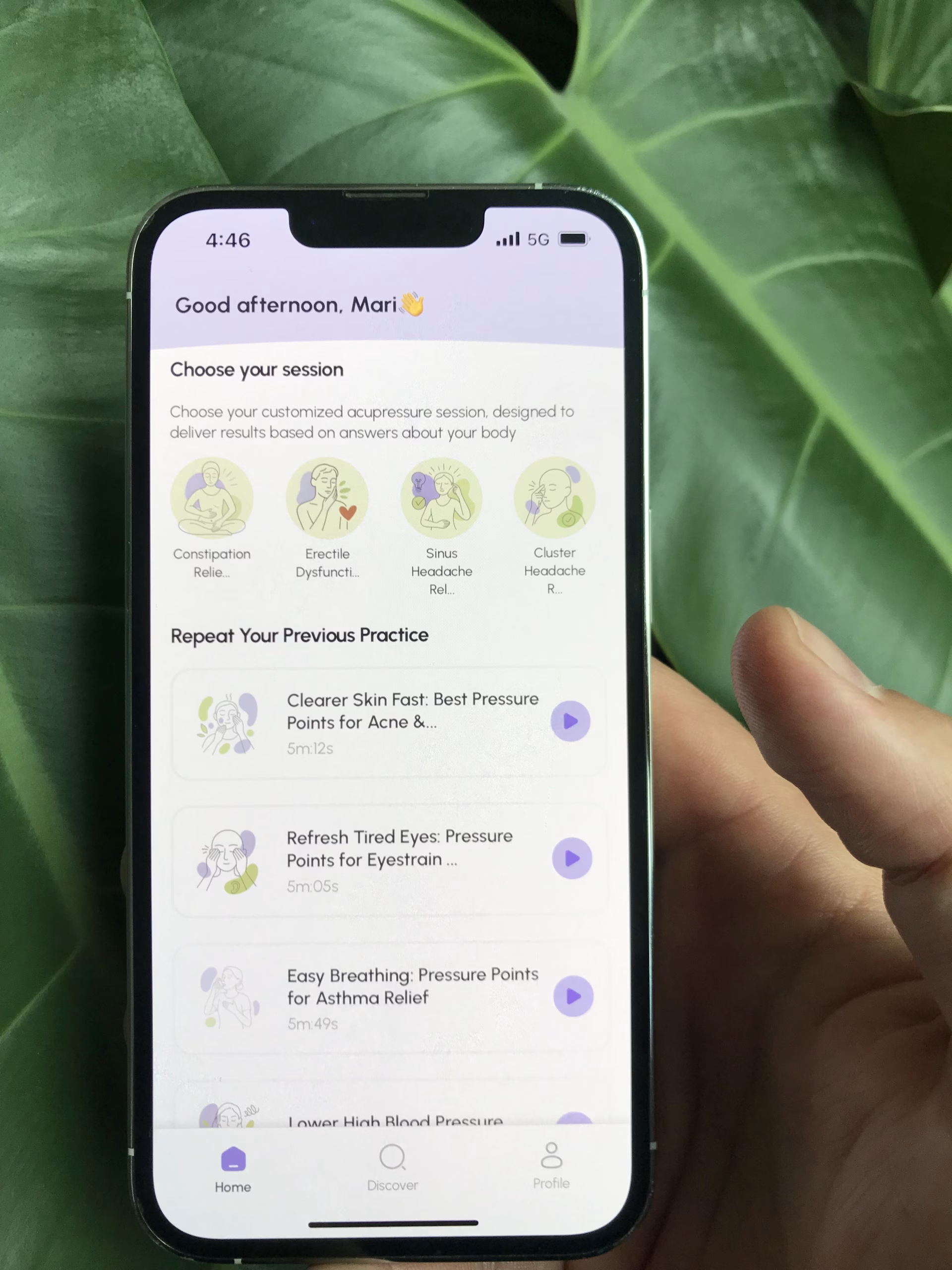
In 2024, researchers at UCLA’s Center for East-West Medicine published results from a randomized controlled trial that followed 159 healthcare professionals over eight weeks. The participants â nurses, doctors, and support staff working in high-stress clinical environments â used a guided acupressure app that walked them through specific pressure point sequences designed to reduce stress.
The results were striking. Participants who followed the guided acupressure protocol experienced a 25% reduction in perceived stress scores compared to the control group. They also reported significant improvements in anxiety levels, sleep quality, and overall mental well-being. The effects were consistent across different stress levels, meaning it helped people who were moderately stressed and people who were severely stressed.
What makes this study particularly compelling is the population. Healthcare professionals are notoriously difficult to help with stress interventions because their stressors are ongoing and often traumatic. If acupressure can produce measurable results in this group, it can work for anyone dealing with chronic stress.
This was not the first study to show acupressure reduces stress, but it was one of the largest and most rigorous. It used a proper randomized controlled design, validated stress measurement tools, and a realistic intervention period. The evidence base for acupressure and stress relief is now substantial.
How Stress Affects Your Body
To understand why acupressure works for stress, you need to understand what stress actually does to your body. This is not abstract biology â it is the mechanism that explains why you feel the way you do.
When you experience stress â whether it is a work deadline, a difficult conversation, or the low-grade anxiety of modern life â your sympathetic nervous system activates. This is the “fight or flight” response. Your body releases cortisol and adrenaline. Your muscles tense. Your heart rate increases. Blood flow shifts away from your digestive system and toward your muscles. Your pain sensitivity increases.
In small doses, this response is healthy and adaptive. The problem is that most of us are not experiencing stress in small doses. We are living in a state of chronic sympathetic activation. The stress response never fully turns off. Your cortisol stays elevated. Your muscles stay tense. Your sleep quality deteriorates because your nervous system is too activated to fully relax.
This is why stress does not just feel bad â it makes everything worse. Chronic stress amplifies pain, disrupts digestion, weakens immune function, impairs cognitive performance, and accelerates aging. It is not an exaggeration to say that unmanaged stress is one of the most destructive forces your body faces.
The solution is not eliminating stress. That is not realistic for most people. The solution is training your nervous system to shift out of sympathetic dominance and into parasympathetic activation â the “rest and digest” state â more effectively and more often.
This is exactly what acupressure does.
Why Acupressure Works for Stress
Acupressure reduces stress through several well-documented mechanisms, and they all converge on the same goal: shifting your nervous system from sympathetic dominance to parasympathetic activation.
The first mechanism is endorphin release. When you apply sustained pressure to specific acupressure points, your body releases endorphins and enkephalins â natural chemicals that reduce pain and produce a sense of calm. This is not a subtle effect. The endorphin release from acupressure is measurable and immediate.
The second mechanism is vagus nerve activation. Several key acupressure points â particularly those on the ears, neck, and wrists â stimulate the vagus nerve, which is the main highway of the parasympathetic nervous system. When the vagus nerve is activated, your heart rate slows, your breathing deepens, your muscles relax, and your body shifts into recovery mode.
The third mechanism is cortisol reduction. A 2022 study in the Journal of Clinical Nursing found that acupressure performed for just 10 minutes reduced salivary cortisol levels significantly compared to rest alone. Lower cortisol means less inflammation, better sleep, and reduced anxiety.
The fourth mechanism is muscle tension release. Stress creates a feedback loop with muscle tension â your muscles tense because you are stressed, and the tension signals back to your brain that something is wrong, which increases stress. Acupressure breaks this loop by directly releasing the tension.
These mechanisms explain why acupressure often feels like it works faster and more completely than other stress management techniques. You are not just thinking calming thoughts â you are physically shifting your biochemistry.
The Best Acupressure Points for Stress Relief
Not all pressure points are equally effective for stress. Here are the ones that research and clinical experience consistently show are the most impactful.
Pericardium 6 (Nei Guan)
This point is located on the inner wrist, about two finger widths below the wrist crease, between the two tendons. It is one of the most studied acupressure points in existence, with strong evidence for reducing anxiety, nausea, and stress.
Pericardium 6 directly influences the autonomic nervous system and has been shown to slow heart rate and reduce cortisol levels. In the UCLA study, this was one of the primary points included in the guided protocol. Press firmly for 60 to 90 seconds on each wrist while breathing deeply.
Heart 7 (Shen Men)
Located on the inner wrist crease, on the pinky side, in the small depression next to the tendon. Heart 7 is traditionally called the “Spirit Gate” and is the go-to point for anxiety, insomnia, and emotional overwhelm.
This point calms the mind directly. If you are lying awake at night with racing thoughts, pressing Heart 7 for 60 seconds on each wrist is one of the fastest ways to quiet the mental chatter. Multiple studies have confirmed its effectiveness for anxiety and sleep disturbance.
Liver 3 (Tai Chong)
On the top of the foot, in the depression between the first and second toes, about two finger widths from the toe web. Liver 3 is the master point for releasing frustration, anger, and emotional stagnation â the kind of stress that makes you feel stuck and irritable.
In traditional Chinese medicine, Liver 3 is paired with Large Intestine 4 (on the hand) in what is called the “Four Gates” â four points that together promote full-body energy flow and emotional release. This combination is remarkably effective for the kind of stress that feels like pressure building with no outlet.
Large Intestine 4 (He Gu)
In the fleshy web between the thumb and index finger. This is the single most versatile acupressure point â effective for pain, headaches, and stress alike. For stress specifically, LI 4 helps release tension that accumulates in the upper body, particularly the shoulders, neck, and jaw.
Press firmly into the mound of muscle, angling the pressure slightly toward the index finger bone. You should feel a deep, spreading sensation. Hold for 60 to 90 seconds on each hand.
Gallbladder 21 (Jian Jing)
At the highest point of the shoulder, midway between the neck and the shoulder joint. This is where most people carry stress physically. If you have ever asked someone to rub your shoulders after a long day, you were instinctively targeting this area.
GB 21 releases the trapezius tension that accumulates from desk work, emotional stress, and the unconscious shoulder-hiking that stressed people do all day. Squeeze and press this point firmly for 30 to 60 seconds on each side. The relief is often immediate and dramatic.
Yin Tang (Third Eye Point)
Between the eyebrows, in the small indentation at the bridge of the nose. This point is calming in a way that feels almost sedative. It is the point I recommend most for acute anxiety â the kind where your thoughts are racing and you cannot slow down.
Press gently with one fingertip and hold for 60 to 90 seconds. Combine with slow, deep breathing. Many people report that within 30 seconds, they can feel their mental activity beginning to slow.
Using an Acupressure Mat for Stress Relief
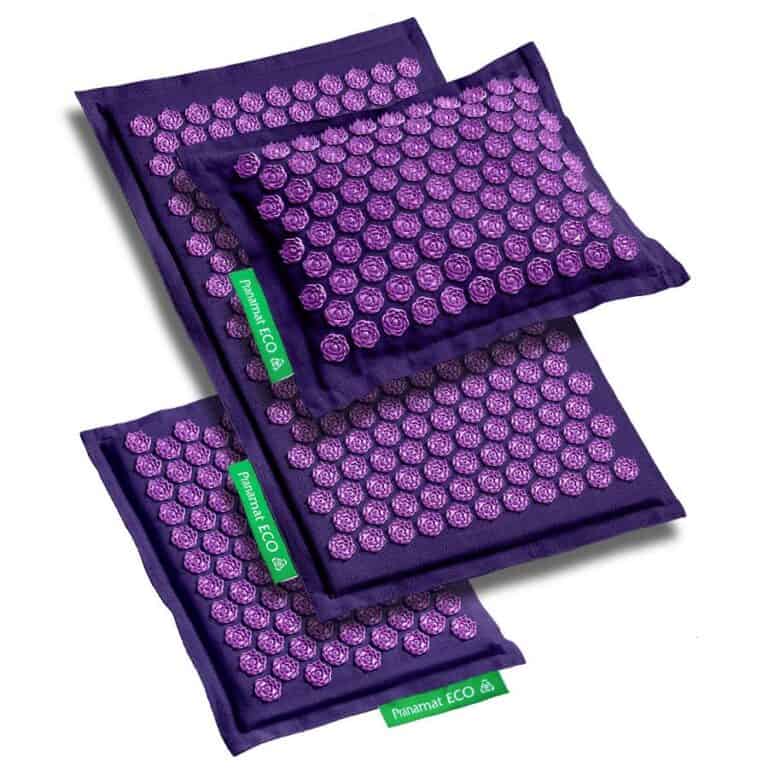
While targeted point pressing is effective, an acupressure mat offers something different for stress relief â widespread, simultaneous stimulation that activates the parasympathetic nervous system more broadly.
I have been using my Pranamat every day since 2017, and the stress relief is one of the first things I noticed when I started. Lying on the mat for 15 to 20 minutes stimulates hundreds of pressure points along the entire back, triggering a systemic endorphin release and a shift into parasympathetic mode that is difficult to achieve any other way.
The effect is particularly powerful for the kind of stress that lives in your body â the tight shoulders, the aching back, the tension you cannot release through thinking or breathing alone. The mat addresses it physically, which is often what stress needs most.
For stress management specifically, I recommend an evening session. Lie on the mat 30 to 60 minutes before bed. Start with a thin t-shirt if you are new to acupressure mats, and work up to bare skin over a week or two. The initial intensity transforms into deep warmth and relaxation after about 5 minutes. By the end of a 20-minute session, most people feel profoundly calm in a way that carries into sleep.
The UCLA study used a guided app for acupressure delivery, but the principle is the same â consistent, daily acupressure practice produces cumulative stress reduction that builds over weeks. Whether you are pressing individual points or lying on a mat, the daily consistency is what changes your nervous system’s baseline stress response.
Building a Daily Stress-Relief Acupressure Practice
The research is clear: acupressure works for stress. But the key word is “practice.” A single session helps in the moment. A daily practice changes your baseline.
Here is a practical daily protocol that takes less than 25 minutes.
In the morning, spend 2 minutes pressing Large Intestine 4 and Liver 3 (the Four Gates). This sets a calmer tone for the day and helps prevent stress from accumulating as quickly.
During the day, whenever you notice stress building, press Pericardium 6 on both wrists for 60 seconds each. This can be done at your desk, in a meeting, or anywhere discreetly. Follow with Yin Tang (between the eyebrows) for 60 seconds if you have privacy.
In the evening, spend 15 to 20 minutes on your acupressure mat. Follow this with Heart 7 on both wrists for 60 seconds each if you are having trouble winding down. This combination addresses the accumulated stress of the day and prepares your nervous system for quality sleep.
On high-stress days, add Gallbladder 21 (shoulder point) during any break. Squeeze and hold for 30 seconds each side. This prevents the shoulder and neck tension that turns into headaches by evening.
What the Research Tells Us About Consistency
The UCLA study ran for eight weeks, and the benefits increased over time. Participants did not just feel better on the days they practiced â they reported lower baseline stress levels that persisted between sessions. This is the critical finding.
Your nervous system is plastic. It adapts to repeated inputs. When you practice acupressure daily, you are training your nervous system to shift into parasympathetic mode more easily. Over weeks, this changes your default setting. Your resting stress level drops. Your recovery from stressful events gets faster. Your sleep improves, which further reduces stress.
This is not theory. It is what the data shows, and it matches what I have observed in nine years of working with acupressure. The people who get the most benefit are the ones who make it a non-negotiable daily habit, not the ones who only reach for it during crises.
Combining Acupressure with Other Stress Management Strategies
Acupressure is powerful on its own, but it works even better as part of a comprehensive stress management approach.
Deep breathing amplifies acupressure’s effects. While pressing any stress point, breathe in for 4 counts, hold for 4 counts, and exhale for 6 to 8 counts. The extended exhale directly stimulates the vagus nerve, compounding the parasympathetic activation from the acupressure.
Regular exercise â particularly walking, swimming, and tai chi â reduces baseline cortisol and makes your nervous system more resilient to stress. A daily 30-minute walk combined with evening acupressure is one of the most effective stress management combinations I have found.
Sleep optimization is non-negotiable. Poor sleep and stress create a vicious cycle â each makes the other worse. Using your Pranamat mat before bed addresses both simultaneously, promoting relaxation that leads to better sleep, which leads to lower stress the next day.
Anti-inflammatory nutrition supports your body’s ability to manage stress physiologically. Chronic stress promotes inflammation, and inflammation amplifies the stress response. An anti-inflammatory diet â rich in fatty fish, vegetables, and nuts â helps break this cycle.
The Bottom Line
The evidence for acupressure and stress relief is now stronger than ever. The UCLA study showed a 25% reduction in perceived stress in one of the most stressed populations studied, and it joins a growing body of research confirming what practitioners and daily users already know â acupressure meaningfully changes how your body handles stress.
The best part is that you do not need a prescription, a therapist’s office, or expensive equipment. You need your hands, some knowledge of the right pressure points, and the commitment to practice daily. An acupressure mat makes the evening practice easier and more effective, but the fundamental tool is consistency.
Your nervous system learned to be stressed. With the right daily inputs, it can learn to be calm. That is not wishful thinking â it is what the research shows.
Frequently Asked Questions
Does acupressure actually reduce stress?
Yes. Multiple clinical studies confirm that acupressure significantly reduces perceived stress, cortisol levels, and anxiety. The most notable recent study â a 2024 randomized controlled trial at UCLA â found that guided acupressure reduced stress by 25% in healthcare professionals over eight weeks. The mechanisms are well understood: acupressure triggers endorphin release, activates the parasympathetic nervous system, and directly reduces muscle tension.
What are the best pressure points for stress and anxiety?
The most effective points for stress relief are Pericardium 6 (inner wrist), Heart 7 (wrist crease, pinky side), Large Intestine 4 (between thumb and index finger), Liver 3 (top of foot), Gallbladder 21 (top of shoulder), and Yin Tang (between eyebrows). For anxiety specifically, Heart 7 and Yin Tang are the most immediately calming. Press each point firmly for 60 to 90 seconds while breathing deeply.
How long does it take for acupressure to reduce stress?
Individual sessions can produce noticeable relaxation within minutes. However, the real benefit comes from daily practice over weeks. The UCLA study showed progressive improvement over eight weeks, with participants experiencing lower baseline stress levels â not just momentary relief. Most people notice meaningful changes in their overall stress levels after two to three weeks of consistent daily practice.
Can an acupressure mat help with stress?
Absolutely. An acupressure mat like the Pranamat stimulates hundreds of pressure points along the back simultaneously, triggering widespread endorphin release and parasympathetic nervous system activation. I have been using mine daily since 2017 and the stress relief effect is one of the most consistent benefits. A 15 to 20 minute evening session is particularly effective for releasing accumulated daily stress and improving sleep quality.
How often should I do acupressure for stress?
Daily practice produces the best results. The UCLA study used daily guided sessions over eight weeks, and the benefits accumulated over time. Even 5 to 10 minutes of targeted point pressing per day, combined with a 15 to 20 minute evening acupressure mat session, can significantly reduce your baseline stress level within a few weeks. Consistency matters more than duration.
Is acupressure better than meditation for stress?
They work through different but complementary mechanisms. Acupressure directly addresses the physical manifestations of stress â muscle tension, cortisol levels, sympathetic nervous system activation â while meditation primarily works through cognitive and attentional pathways. Many people find acupressure easier to start with because it requires less mental training. The most effective approach combines both: pressing acupressure points while practicing deep breathing creates a powerful dual-pathway stress reduction effect.
What did the UCLA acupressure study find?
The UCLA Center for East-West Medicine conducted a randomized controlled trial with 159 healthcare professionals over eight weeks. Participants using a guided acupressure protocol experienced a 25% reduction in perceived stress scores compared to the control group, along with improvements in anxiety, sleep quality, and overall well-being. The study confirmed that acupressure is an effective, accessible stress management tool even for chronically stressed populations.
Related Reading
- Pressure Points for Stress
- Pressure Points for Anxiety
- Pressure Points for Sleep
- Acupressure Mat Benefits
- Do Acupressure Mats Work
Author

Free Mobile App
Find Pressure Points on the Go
Interactive 3D body map with 100+ acupressure points, step-by-step guides, and personalized routines.
Download Free App →