
Acupressure Mats and Fibromyalgia: Do They Actually Help? (2026)
If you have fibromyalgia, you have probably tried everything. Medications, physical therapy, heating pads, supplements, meditation apps. Some things help a little. Most do not help enough. And you are still dealing with that widespread, persistent pain that makes even simple daily tasks exhausting.
I started researching acupressure mats for fibromyalgia after several readers with the condition wrote in asking whether these mats could work for them. The short answer is: they can help, but you need to approach them very differently than someone without a pain condition. Fibromyalgia makes your nervous system more sensitive to pressure and pain. What feels “therapeutic” to most people can feel like torture to someone with fibro.
Here is what I have learned from research, reader feedback, and testing â including which mats work best for sensitive bodies and which ones to avoid.
What Fibromyalgia Actually Does to Your Body
Before we talk about mats, it helps to understand why fibromyalgia pain is different from regular muscle pain.
Fibromyalgia is a central sensitization condition. That means your central nervous system amplifies pain signals â your brain processes normal sensory input as pain. It is not “in your head” in the dismissive sense. It is a real neurological phenomenon where your pain processing system is turned up to maximum volume.
This affects how your body responds to acupressure. The pressure that feels relieving to most people may initially feel too intense for someone with fibro. Your pain threshold is lower, and your nerve endings are more reactive.
But here is the important part: research suggests that consistent, gentle acupressure can actually help retrain the nervous system over time. The mechanism involves repeated non-threatening sensory input gradually reducing the sensitization response. Think of it as teaching your nervous system that pressure does not equal danger.
How Acupressure Mats Can Help Fibromyalgia
Several mechanisms make acupressure mats potentially useful for fibromyalgia management.
Increased blood circulation. Fibromyalgia is associated with reduced peripheral blood flow. The pressure points on an acupressure mat stimulate blood flow to the surface tissues, which can help reduce that heavy, aching feeling in muscles. Some researchers believe poor circulation contributes to the widespread pain in fibromyalgia, and improving circulation may address one piece of the puzzle.
Endorphin release. When hundreds of acupressure points contact your skin simultaneously, your body releases endorphins â natural painkillers. For people with fibromyalgia whose pain modulation system is compromised, this endorphin boost can provide meaningful temporary relief. Multiple studies have shown that acupressure stimulation triggers measurable endorphin increases.
Muscle tension reduction. Even though fibromyalgia is primarily a nervous system condition, the chronic pain causes secondary muscle tension. Your body guards against pain by tightening muscles, which creates more pain. Acupressure mats help break this cycle by encouraging muscles to release.
Improved sleep quality. This is where many fibromyalgia users report the biggest benefit. Fibro disrupts sleep, and poor sleep worsens pain. Using an acupressure mat for 15 to 20 minutes before bed can promote relaxation and help you fall asleep faster. Better sleep means less pain the next day. It is a positive cycle for a change.
Nervous system regulation. Regular use of an acupressure mat activates the parasympathetic nervous system â your body’s “rest and digest” mode. For fibromyalgia patients stuck in a chronic fight-or-flight state, this shift alone can reduce overall pain levels.
The Catch: Why You Need the Right Mat
Here is the thing nobody warns you about with fibromyalgia and acupressure mats: the wrong mat will make things worse.
Cheap mats with hard, sharp plastic spikes are designed for people with normal pain sensitivity. For someone with fibromyalgia, those spikes can trigger a pain flare that lasts for hours. I have heard from readers who tried a budget mat and concluded that acupressure mats do not work for fibromyalgia â when the real problem was the mat, not the concept.
What matters for fibromyalgia specifically is spike density, spike material, and spike shape.
Spike density determines how the pressure is distributed. More spikes per surface area means the pressure spreads across more points, which reduces the intensity at each individual spike. Fewer spikes means more concentrated pressure at each point â which is exactly what you do not want with fibromyalgia.
Spike material matters because hard plastic creates a sharp, aggressive sensation while softer materials like HIPS (high-impact polystyrene) or natural materials create a firmer but less biting feeling. The difference is significant for sensitive bodies.
Spike shape affects comfort dramatically. Sharp, pointed pyramidal spikes dig in aggressively. Rounded lotus-flower style spikes distribute pressure more evenly across the tip. For fibromyalgia, the rounded spike design is substantially more tolerable.
What to Look for in a Fibromyalgia-Friendly Mat
Based on research and feedback from readers with fibromyalgia, here are the features that matter most.
High spike density. Look for mats with at least 5,000 pressure points. Mats with fewer spikes concentrate pressure too aggressively for sensitive bodies.
Rounded spike tips. Lotus-flower or rounded spike designs are far more comfortable than sharp pyramidal spikes. This single factor makes the biggest difference for people with pain conditions.
Natural materials. Cotton covers and natural rubber bases tend to feel less harsh against skin than synthetic materials. They also avoid the chemical smell that can trigger sensitivity issues in some fibromyalgia patients.
Adequate thickness. The foam base should be thick enough to provide cushioning. Thin mats on hard floors create too much focused pressure. You want at least 1 to 2 centimeters of foam underneath.
A pillow option. Neck and shoulder pain are common in fibromyalgia. A matching acupressure pillow lets you address upper body tension without lying on the mat at an awkward angle.
My Top Recommendation for Fibromyalgia
After testing multiple mats and collecting reader feedback, the Pranamat is the mat I recommend most often for people with fibromyalgia. Here is why.
It uses HIPS plastic lotus-flower shaped spikes â not the sharp, pointed pyramids found on budget mats. These distribute pressure more gently while still providing effective stimulation. The spike density is high, with over 6,000 points across the mat, which means the pressure spreads evenly rather than concentrating in painful spots.
The materials are all natural. Organic cotton cover, natural linen backing, natural rubber foam interior, and coconut fiber filling. No chemical smell, no synthetic materials against your skin. For fibromyalgia patients who also deal with chemical sensitivities, this matters.
The foam base is thick enough to provide real cushioning. When I lie on the Pranamat, I feel firm acupressure but not the harsh jabbing that cheaper mats produce. That difference between “firm therapeutic pressure” and “sharp painful poking” is everything for someone with fibro.
It is not cheap â around $230 for the mat and pillow set. But compared to the ongoing costs of pain management (medications, therapy appointments, heating pads, supplements), the cost per year of use comes down to about $58 over four years. Most fibromyalgia readers who invested in it report it becoming one of their most-used tools.
Budget Alternatives: What Else Works
If the Pranamat price is too high right now, here are options that can still work for fibromyalgia.
Shakti Mat (Original level). The Shakti Mat’s “Original” level has lower spike intensity than its “Advanced” model. At around $70, it is more affordable. The spikes are ABS plastic and sharper than the Pranamat, but the Original density is reasonable for beginners. Start with a thin t-shirt on and work your way down.
ProsourceFit Acupressure Mat. At around $25, this is the most affordable option. The spike quality is lower and the sensation is more aggressive, so I strongly recommend using it with a shirt between your skin and the spikes. Not ideal for fibromyalgia, but workable for those who need to test the concept before investing more.
Bed of Nails ECO. A mid-range option around $80 with better spike quality than the ultra-budget mats. It uses recyclable HIPS plastic. The spike density is moderate. A decent compromise between quality and price.
Here is my honest take: if you have fibromyalgia, the mat quality matters more for you than for most people. A harsh mat will not just be uncomfortable â it can trigger a pain flare. Investing in a gentler, higher-density spike mat is not a luxury. It is a practical necessity for your condition.
How to Use an Acupressure Mat with Fibromyalgia
Using an acupressure mat when you have fibromyalgia requires a different approach than the standard instructions that come with these mats. Here is the protocol I recommend.
Week 1-2: Acclimatization Phase
Start with a t-shirt between your skin and the mat. Lie on the mat for just 5 minutes. Yes, only 5 minutes. Your nervous system needs time to learn that this sensation is safe.
Do this once per day, ideally at the same time each day. Your body responds better to consistent, predictable stimulation than random sessions.
If 5 minutes feels fine, stay at 5 minutes for the full two weeks. Do not rush. Your nervous system needs repetition, not intensity.
Week 3-4: Building Duration
Increase to 10 minutes per session. Still with a shirt if you need it, or try removing it for the last 2 minutes. The first couple of minutes on the mat will always be the most intense. Your body releases endorphins after about 3 to 5 minutes, and the sensation shifts from uncomfortable to warm and tingly.
If removing the shirt causes a pain increase that lasts more than 30 minutes after you get off the mat, go back to using a shirt. There is no timeline you need to meet.
Week 5 and Beyond: Finding Your Rhythm
Most fibromyalgia users settle into 15 to 20 minute sessions once or twice daily. Many find the best time is 30 minutes before bed, as it helps with sleep.
You can also use the mat on specific body areas. Some fibromyalgia patients find the most relief from lying the mat across their upper back and shoulder area, while others prefer the lower back. Experiment to find what your body responds to best.
Important Rules for Fibromyalgia Users
Never use the mat during a flare. If you are in the middle of a pain flare, adding more sensory input is counterproductive. Wait until the flare subsides, then resume your regular schedule.
Track your response. Keep a simple log of mat use and pain levels. After 2 to 4 weeks, you should see a pattern of whether the mat is helping. If your average pain levels are not improving or are getting worse, the mat may not be right for you.
Do not compare yourself to others. Someone without fibromyalgia might do 30 minutes on bare skin from day one. That approach will backfire for you. Your nervous system plays by different rules, and that is okay.
Use it on the floor, not on a bed. A firm, flat surface distributes the pressure more evenly. A soft mattress allows the spikes to push in unevenly, creating concentrated hot spots. Put the mat on the floor on top of a yoga mat or carpet.
What the Research Says About Acupressure and Fibromyalgia
The evidence base is still growing, but what exists is encouraging.
A study published in the Journal of Bodywork and Movement Therapies found that acupressure significantly reduced pain intensity and improved quality of life in fibromyalgia patients over a six-week period. The researchers noted that the pain reduction was accompanied by improved sleep quality and reduced fatigue.
Research on acupressure mats specifically is more limited, but studies on broader acupressure interventions consistently show benefits for chronic pain conditions. A systematic review in Pain Management Nursing found that acupressure was effective for pain reduction across multiple chronic pain conditions, with no serious adverse effects reported.
The mechanism appears to involve modulation of the same neurotransmitter systems that are dysfunctional in fibromyalgia â particularly serotonin and substance P. By stimulating the release of endorphins and modulating pain signaling pathways, acupressure may address some of the underlying neurological dysfunction in fibromyalgia rather than just masking symptoms.
That said, I want to be clear: an acupressure mat is not a fibromyalgia cure. It is a symptom management tool that works best as part of a comprehensive treatment plan that includes medical care, gentle exercise, sleep hygiene, and stress management.
Who Should NOT Use an Acupressure Mat
Acupressure mats are generally safe, but there are situations where you should avoid them.
Do not use an acupressure mat if you have open wounds, skin infections, or rashes in the area that would contact the mat. The spikes can irritate damaged skin and introduce bacteria.
If you are on blood thinners, consult your doctor first. The pressure can occasionally cause minor bruising, and blood thinners increase this risk.
If you have diabetic neuropathy, be cautious. Reduced sensation means you may not feel if the pressure is too intense, which could cause skin damage.
If you are pregnant, avoid lying on an acupressure mat on your back after the first trimester. Some acupressure points can stimulate uterine activity.
If your fibromyalgia is accompanied by a skin sensitivity condition like allodynia (where light touch causes pain), an acupressure mat is likely too intense. Focus on other management approaches first and revisit the idea if your skin sensitivity improves.
Bottom Line
Acupressure mats can be a genuinely useful tool for fibromyalgia management â but only if you approach them correctly. Start slow. Use a gentle mat with rounded, high-density spikes. Be patient with the acclimatization process. And do not push through intense pain hoping it will get better.
The Pranamat is my top recommendation specifically because its spike design is the most fibromyalgia-friendly I have tested. But even a budget mat can work if you use it with a shirt and respect your body’s limits.
The goal is not to “power through” the discomfort. The goal is to give your overactive nervous system consistent, gentle input that gradually teaches it to relax. That takes time. But for many fibromyalgia patients, the improvement in sleep, pain levels, and overall quality of life makes it worth the patience.
Frequently Asked Questions
Will an acupressure mat help fibromyalgia pain?
For many people with fibromyalgia, yes. Acupressure mats can reduce pain through endorphin release, improved circulation, and nervous system regulation. The key is using a gentle, high-density spike mat and starting with very short sessions. Most users report noticeable improvement in pain and sleep quality within 2 to 4 weeks of consistent daily use.
How long should I lie on an acupressure mat with fibromyalgia?
Start with just 5 minutes per day for the first two weeks, wearing a thin shirt. Gradually increase to 10 minutes, then 15 to 20 minutes over several weeks. Never push past your comfort threshold. If a session increases your pain for more than 30 minutes afterward, reduce the duration next time.
Which acupressure mat is best for fibromyalgia?
The Pranamat is the best option for fibromyalgia because of its lotus-flower shaped spikes that distribute pressure gently, high spike density of over 6,000 points, and natural materials that avoid chemical sensitivities. For budget options, the Shakti Mat Original level is a reasonable alternative at about one-third the price.
Can an acupressure mat make fibromyalgia worse?
If you use a mat with aggressive, sharp spikes or try too much too soon, yes. Overstimulating an already sensitized nervous system can trigger a pain flare. This is why starting slowly, using a fibromyalgia-friendly mat, and wearing a shirt during initial sessions is essential. Stop immediately if you experience prolonged increased pain.
Should I use the acupressure mat on bare skin with fibromyalgia?
Not initially. Start with a thin cotton t-shirt between your skin and the spikes. After 2 to 4 weeks of comfortable sessions with a shirt, try removing it for the last few minutes of your session. Some fibromyalgia users never transition to bare skin, and that is perfectly fine. The mat still works through a thin layer of fabric.
Is it safe to use an acupressure mat every day with fibromyalgia?
Yes, daily use is actually recommended for the best results. Consistency is more important than duration. A short daily session is more effective than occasional long sessions. However, skip sessions during active pain flares and resume when the flare subsides.
When is the best time to use an acupressure mat for fibromyalgia?
Most fibromyalgia users report the best results using the mat 30 minutes before bed. The relaxation response and endorphin release help improve sleep quality, which is one of the most important factors in managing fibromyalgia pain. Morning sessions can also help reduce stiffness and set a lower pain baseline for the day.
Related Reading
- Do Acupressure Mats Work? What the Evidence Really Says
- Acupressure Mat Benefits: What Daily Use Actually Does
- The 8 Best Acupressure Mats of 2026
- Shakti Mat vs Pranamat: Which One Is Actually Worth Your Money?
- Pranamat Review: Is It Worth the Price?
Author

Free Mobile App
Find Pressure Points on the Go
Interactive 3D body map with 100+ acupressure points, step-by-step guides, and personalized routines.
Download Free App →
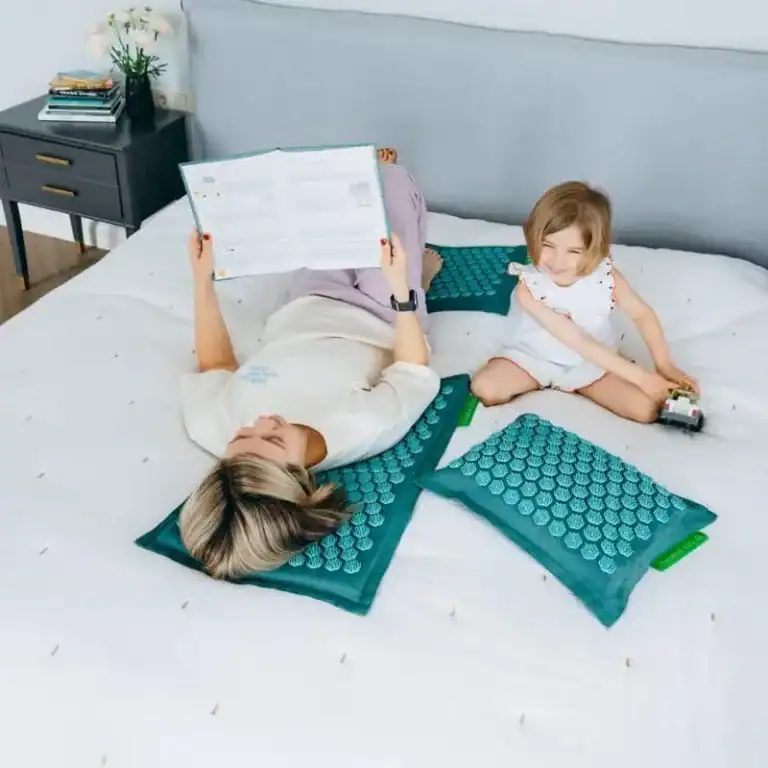



For the first few times, wear a semi-thick shirt and then work your way down to bare skin. I use mime when I feel a flare is coming, my muscles hurt, I have a migraine or headache, or after I’ve worked a long day. I think using it regularly has helped keep my flares more manageable. I usually fall asleep on it after about 20 minutes, wake up about an hour later, and then go to bed. I truly use it two to three times a week.
So I’ve been using my Pranamat for a while now and honestly it’s been great. I usually set it up in bed – one mat propped up with some pillows behind me and put the other one under my butt and legs. I know it sounds weird but I use it without clothes on because you get way better contact that way. The best part is there’s no weird side effects like with other stuff I’ve tried. I was doing physical therapy for a while and honestly this thing works better for me than those sessions ever did. Already saved me money just from not having to go to PT anymore.If you’re on the fence about it, I’d say go for it. Takes some getting used to at first but once you do it’s really helpful.
Fibromyalgia is a chronic condition with no known cure. But I must admit, I have Pranamat, the full set, as my pain ‘manager’ suggested, and the effects it had on my sensations were immense. It does sting at first, but the endorphins soothe everything and the longer I use it, the longer the effect lasts. Like it accumulates. I’m recommending it even to my friends without fibromyalgia. Worth every penny.