
Pressure Points for Tension in Neck: What to Try and When to Stop
Acupressure may help some people use a short pause around mild neck tension that feels muscular, local, and posture-related, but it should not be treated as a fix by itself. The practical answer is to use gentle pressure as support, keep the session brief, and stop if symptoms feel sharp, spreading, numbing, weakening, or unusual.
Quick answer
| Question | Practical answer |
|---|---|
| Best first step | Use gentle pressure on upper-back and shoulder-blade muscles |
| Pressure level | Comfortable, dull, and broad, never sharp or electric |
| Hold time | 30 to 60 seconds per area |
| Stop if | Pain spreads, tingles, numbs, weakens, or worsens a headache |
| Expectation | Supportive relief only, not a cure for neck pain |
Key pressure points to know
Start with one or two easy areas rather than building a long routine. The goal is not to press every point. The goal is to find a repeatable comfort step that does not irritate the symptom.
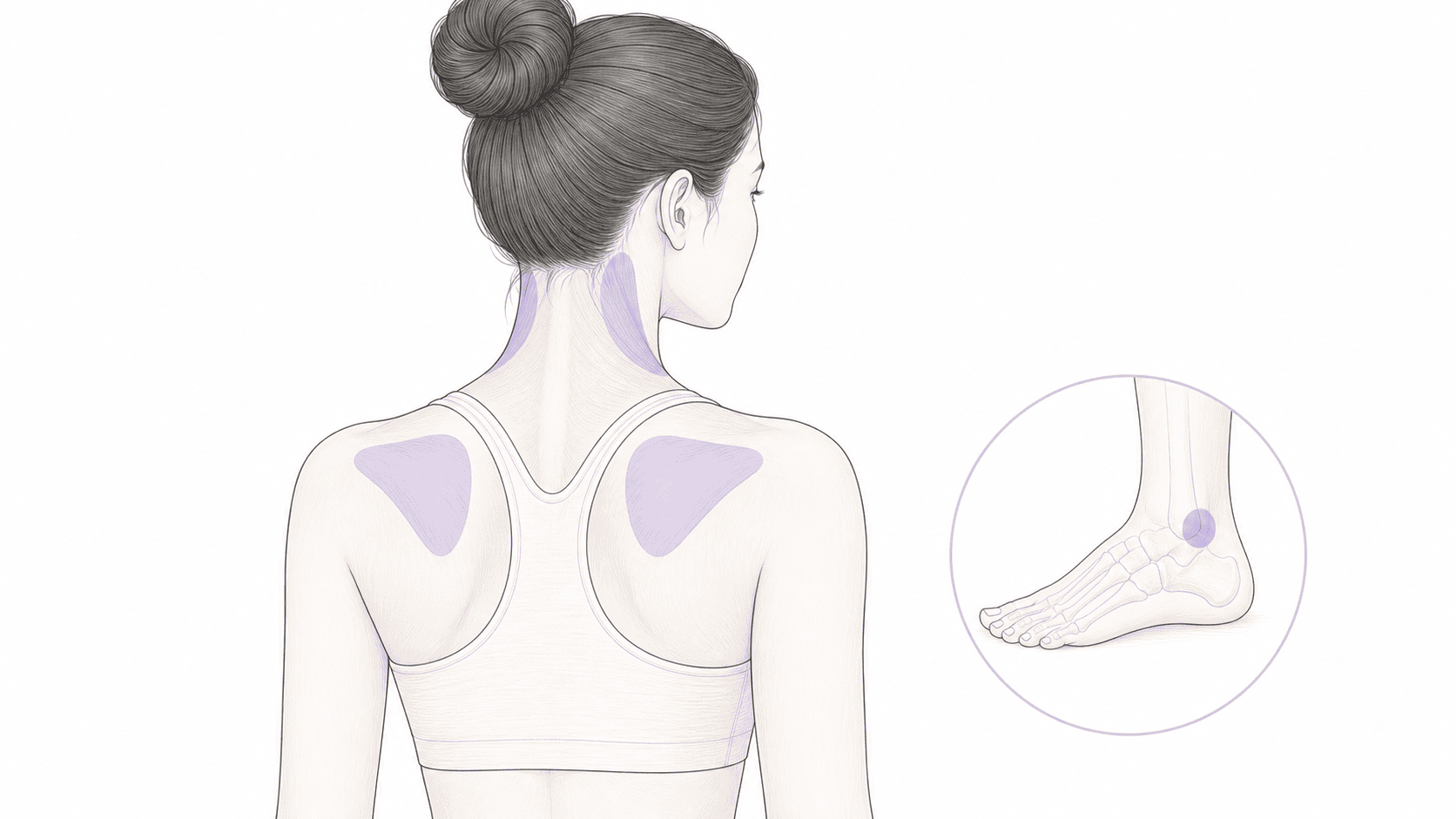
- TW-15 Tianliao: upper shoulder-blade tension.
- BL-60 Kunlun: traditional stiff-neck support from the ankle point.
- Soft upper trapezius contact: broad pressure for muscle guarding.
Do not force a point that you cannot locate confidently.
Best first rule: choose the point that feels easiest to reach and safest to press, not the one that sounds most powerful.
How to use these points safely
Use clean hands and a relaxed position. Press with a finger pad, thumb pad, palm heel, or soft massage ball. Hold each area for 30 to 60 seconds, then release slowly. Stay below a 5 out of 10 intensity.
Good pressure feels dull, broad, and controllable. Bad pressure feels sharp, electric, pinching, radiating, numbing, or emotionally alarming. If you notice that second pattern, stop immediately.
For pressure points for tension in neck, the best use is as a short comfort routine, not as a diagnosis. It works better as a short reset than as a long session. If you need to press harder and harder to feel anything, take that as a sign to stop.
The app can help keep the routine short and controlled.
Pressure Points App
Learn how to locate and apply pressure points with guided sessions, illustrations, and step-by-step instructions. Free to download.
What acupressure can and cannot do
Acupressure can give you a structured way to pause, breathe, and apply non-painful pressure to tense tissue. For some people, that may reduce perceived tension or make it easier to shift posture and relax.
It cannot diagnose the cause of symptoms. It also cannot promise to cure pain, congestion, nerve irritation, jaw clenching, pregnancy discomfort, or a medical condition. It is not for severe pain, injury, fever, arm weakness, numbness, or neurological symptoms.
Actionable takeaway: use acupressure as one small support habit, not as the whole care plan.
What the evidence says
The evidence is mixed and depends on the condition, the study design, and the exact intervention. Sources reviewed for this article include Acupressure for Well-Being, Acupressure for Pain and Headaches, Acupuncture: Effectiveness and Safety, Clinical effects of acupressure on neck pain syndrome: a systematic review, Neck pain: When to see a doctor.
The strongest way to read the evidence is cautious. Some acupressure or acupuncture-related approaches have been studied for related symptoms, but that does not mean every pressure point works for every person. In several areas, the best evidence is for broader treatment programs, not isolated self-pressure at one point.
That is why this guide uses limited language: may help some people, may support a short comfort routine, and should not replace professional care.
Related pressure points
Use these links when they are relevant to your symptom pattern:
- Heavenly Bone Hole (TW-15) Pressure Point: Benefits & Technique
- Kunlun Mountains (BL-60) Pressure Point: Benefits & Technique
- Acupressure for Tech Neck: Pressure Points, Technique, and Safety
- How to Do Acupressure on Yourself: A Safe Beginner Guide
Only link pressure-point work to the symptom you actually have. For example, a neck point is not a substitute for care when the symptom is chest pain, severe headache, sudden weakness, or trauma.
When to get medical help
Get medical advice if symptoms are severe, sudden, caused by an injury, worsening, lasting longer than expected, or interfering with sleep, work, walking, chewing, breathing, vision, bladder or bowel control, or normal hand strength.
Seek urgent care for weakness, numbness, trouble breathing, chest symptoms, severe headache, vision changes, fainting, fever with stiffness, bowel or bladder changes, black or bloody stool, severe dehydration, reduced fetal movement, bleeding in pregnancy, jaw locking, or pain after major trauma.
Do not use pressure points to delay care when symptoms feel different from your usual pattern.

A simple 5-minute routine
Use this as a short reset, not as a long treatment session. First, sit or stand in a position where the symptom area can soften. Drop your shoulders, unclench your jaw, and take three slow breaths before touching any point. This matters because many people press harder when they are already tense.
Next, choose one primary point from this guide. Apply light to moderate pressure for 30 to 60 seconds. Release slowly and notice whether the symptom feels calmer, unchanged, or irritated. If it feels irritated, stop there. If it feels neutral or helpful, you can try one more point.
After the pressure work, move the area gently. For neck, shoulder, wrist, hip, low-back, or jaw symptoms, the movement should be small and easy. For congestion or headache patterns, use the pause to relax the face and breathe normally. Acupressure works best when it helps you shift out of bracing, not when it becomes another thing to force.
Finish by changing one friction point in your environment. That might mean raising a screen, moving the mouse closer, drinking water, dimming light, loosening your jaw, changing sitting position, or taking a short walk. This step is important because pressure alone rarely fixes the trigger.
Common mistakes to avoid
The biggest mistake is pressing the most painful spot and assuming that means the point is correct. A tender area can simply be irritated tissue. If pressure feels sharp, electric, burning, numbing, or spreading, it is not a useful signal. It is a reason to stop.
Another mistake is using too many points. A long routine can make the article feel comprehensive, but it is not always better for the reader. For pressure points for tension in neck, start with one or two points, then judge the result. If the first point does nothing, pressing six more points harder is unlikely to be the smart next step.
Do not use acupressure to test whether a symptom is serious. For example, if symptoms involve weakness, numbness, vision changes, chest symptoms, trouble breathing, fever, severe headache, jaw locking, trauma, pregnancy concerns, or bowel or bladder changes, the decision is not about point selection. The decision is to get medical advice.
Also avoid turning acupressure into a posture of strain. If you twist your arm, hold your breath, clench your teeth, or brace your body to reach a point, the method is working against the goal. Use a soft tool, choose a more reachable area, or skip the point.
How to know if it is helping
A useful response is usually modest. You might feel slightly less braced, more aware of the tense area, or able to take a deeper breath. You might notice that the symptom feels less urgent for a few minutes. That is enough for a support habit.
A poor response is also clear. If the area throbs afterward, the symptom spreads, or you feel the need to press harder to get the same effect, the routine is not a good match right now. Reduce pressure, shorten the session, or stop.
Track the pattern over a few attempts rather than judging one session. If acupressure helps only when paired with breaks, stretching, ergonomic changes, dental care, allergy care, prenatal guidance, or medical treatment, that is still useful information. It means the pressure point is a small support tool inside a broader plan.
Practical success marker: after the routine, you should feel calmer and more in control, not sore, worried, or dependent on stronger pressure.
What to do after the routine
If the routine helps, keep the next session almost the same. Do not immediately add more points or stronger pressure. The useful signal is repeatability. A simple routine that helps a little and does not irritate symptoms is better than an intense routine that works once and leaves the area sore.
If nothing changes, do not chase the result. Acupressure is not the right tool for every symptom. Try adjusting the trigger instead: screen position, pillow height, mouse distance, jaw clenching, hydration, nasal care, rest, movement, footwear, or the activity that started the symptom. If the same problem keeps returning, that pattern is information to discuss with a qualified clinician.
If symptoms get worse, stop using pressure points for that issue. Worsening can mean the tissue is irritated, the point is a poor match, or the symptom needs a different kind of care. For pressure points for tension in neck, this is especially important when symptoms spread, wake you from sleep, limit normal function, or feel different from your usual pattern.
A helpful rule is to separate comfort from treatment. Comfort can be immediate and modest: less bracing, easier breathing, a calmer jaw, a softer shoulder, or a clearer sense of what feels tense. Treatment decisions belong with the right professional when symptoms are persistent, severe, recurring, or medically complex.
Keep the routine intentionally conservative so the result is easier to read and the symptom is not irritated by unnecessary extra pressure.
Decision rule: repeat gentle acupressure only when it leaves you feeling better or neutral. Stop when it leaves you sore, worried, weaker, numb, or more symptomatic.
One-page self-check
Before using pressure points for pressure points for tension in neck, ask three questions. Is this symptom mild and familiar? Can I apply pressure without twisting, bracing, or holding my breath? Would I still feel comfortable stopping after one minute even if the symptom does not change?
If the answer to any question is no, skip the routine and choose a safer next step. That might mean rest, movement, ergonomic adjustment, dental advice, allergy care, prenatal guidance, or medical evaluation. This quick self-check keeps the article practical: acupressure is optional support, not an obligation.
A final practical note: keep the first session intentionally simple, because a clear response to one gentle action is more useful than a confusing response to a long routine.
Frequently asked questions
Which point should I try first?
Start with the safest, easiest point in the guide. If you cannot reach it comfortably, choose a broader nearby muscle area or skip it.
How hard should I press?
Use comfortable pressure. You should be able to breathe normally and relax your face. If you brace or hold your breath, reduce pressure.
How long should I hold each point?
Use 30 to 60 seconds per point. A short routine done carefully is better than a long routine that irritates tissue.
Can I do this every day?
For mild, familiar tension, many people use short self-care daily. If the area gets sore, symptoms worsen, or you need more pressure each time, stop and reassess.
Is acupressure enough on its own?
No. It is a support habit. Depending on the symptom, you may also need ergonomic changes, rest, movement, dental care, physical therapy, allergy care, prenatal care, or medical evaluation.
Bottom line
Pressure Points for Tension in Neck should be framed as gentle supportive self-care. Use light to moderate pressure, short timing, and clear stop signals.
The most useful routine is the one you can repeat without pain and without ignoring red flags.
This article is for educational purposes only and is not medical advice. Acupressure may be useful as supportive self-care, but it should not replace diagnosis or treatment from a qualified clinician. Seek urgent care for severe, sudden, or worsening symptoms.
Author

Free Mobile App
Find Pressure Points on the Go
Interactive 3D body map with 100+ acupressure points, step-by-step guides, and personalized routines.
Download Free App →