

Shakti Mat vs Pranamat: Which One Is Actually Worth Your Money? (2026)
Last updated: March 2026
So you want an acupressure mat but you’re stuck between Shakti Mat and Pranamat. I get it. One costs around $109, the other starts at $315 for a set, and from the outside they look like they do the same thing. Why would anyone pay almost three times more?
I’ve been using both of these mats every day for over a year now. Not just testing them for a weekend and writing about it. Actually lying on them before bed, after workouts, during lazy Sunday mornings. And the differences between them are more real than I expected going in.
Let me break it all down.
Quick Verdict
| Shakti Mat | Pranamat | |
|---|---|---|
| Price | $109 (Classic) / $129 (Premium) | From $315 (Classic Set: Mat + Pillow) |
| Best for | Budget buyers, people trying acupressure mats for the first time | Daily users who want premium materials and eco-friendly production |
| Spikes | ABS plastic, sharp pyramidal points | HIPS plastic, patented lotus-shaped with smooth edges |
| Filler | Foam rubber | Coconut fiber |
| Cover | Natural cotton | Natural, ethically sourced (OEKO-TEX certified) |
| Sizes | Classic + Premium lines | Multiple sets (mat+pillow, full body, pro) |
| Comfort | Intense, sharper spikes | Firm but gentler, lotus shape distributes pressure |
| Durability | 1-2 years | 3+ years |
| Overall | Solid entry-level mat | Premium quality you can feel |
Short version: Shakti Mat is a perfectly fine starter mat if you are on a budget. Pranamat is the better long-term investment if you are going to use it regularly. The materials, comfort, and how long it lasts all justify the higher price for daily users.
Note: Prices converted to USD at current exchange rates (March 2026). Pranamat ships worldwide and their prices include U.S. import duties. Shakti Mat Europe prices shown. Actual prices may vary slightly by region and currency.
If the Pranamat price feels steep, Acupressure Guide readers can use the exclusive coupon code acupressureguide for a special discount.
A Note About Me and This Review
I want to be upfront about how I ended up writing this. I got into acupressure first, learned about pressure points, and started using my hands and fingers for self-massage. Then I discovered acupressure mats existed, and that changed everything. I bought a Shakti Mat first because it was cheaper. Then I tried a Pranamat, and pretty quickly it became my daily go-to.
After I had already been writing about Pranamat on this blog (because I genuinely use it and love it), the Pranamat team reached out and offered a coupon code for my readers. So yes, I have a partnership with them now. But the order matters here. I fell in love with the product first. The partnership came after. My opinions in this review are the same ones I had before anyone offered me anything.
The coupon code acupressureguide gets you a discount on Pranamat. I benefit from that. But I am not going to pretend the Shakti Mat is bad just to push you toward the pricier option. If the Shakti Mat is the right choice for you, I will tell you that too.
How We Tested
This is not a spec-sheet comparison copied from product pages. I have been using both mats in my daily routine for over 12 months. Lying on them before bed, using them for post-workout recovery, testing them for targeted back and neck sessions.
Here is what I paid attention to:
- First-use comfort – how does each mat feel for someone new to acupressure mats?
- Long-session comfort – can you stay on the mat for 20-30 minutes without discomfort?
- Material quality – do the spikes stay sharp? Does the filler hold its shape after months?
- Skin reaction – any irritation, marks, or issues from prolonged contact?
- Build quality – stitching, edges, overall construction after heavy use
Unboxing and First Impressions
This part does not get talked about enough in acupressure mat reviews, so let me share what actually happened when each package showed up at my door.
Shakti Mat: Looks Great, Smells Terrible
The Shakti Mat packaging was honestly impressive. Nice box, clean presentation, it felt like a proper product when you opened it. But here is the thing nobody warns you about: before I even opened the box, I could smell it. A strong chemical, glue-like odor. Like that smell you get from a brand-new inflatable pool toy, but worse.
It took about two weeks for that smell to fully go away. For the first few days it was strong enough that I did not want to put my bare skin on it. I left it unrolled near an open window and just waited it out. Once the off-gassing was done, the mat was fine. But for a product you are supposed to lie on with bare skin, that initial stink is not a great first impression.
Pranamat: Eco Packaging, Premium Product
With the Pranamat, the unboxing experience was different from what I expected. For a product that costs $315+, I was honestly anticipating some kind of luxury presentation. What I got instead was clearly recycled, sustainable packaging. Nothing fancy about the box itself.
At first I was a little underwhelmed. But then I started paying attention. The bag it came in, the materials wrapping the product, everything was clearly designed to minimize waste. Sustainability is not just in the product, it is in every detail including how they ship it to you. No unnecessary plastic wrap, no oversized boxes, no pointless inserts.
The mat itself, though? That is where the premium shows up. The moment you touch the lotus elements and feel the coconut fiber firmness, you forget about the box it came in. And here is the best part: zero smell. Nothing. Just a faint natural scent from the coconut fiber.
Spike Quality Comparison
The spikes are the most important element of any acupressure mat. They are what actually touches your skin and stimulates blood flow and endorphin release.
Shakti Mat Spikes
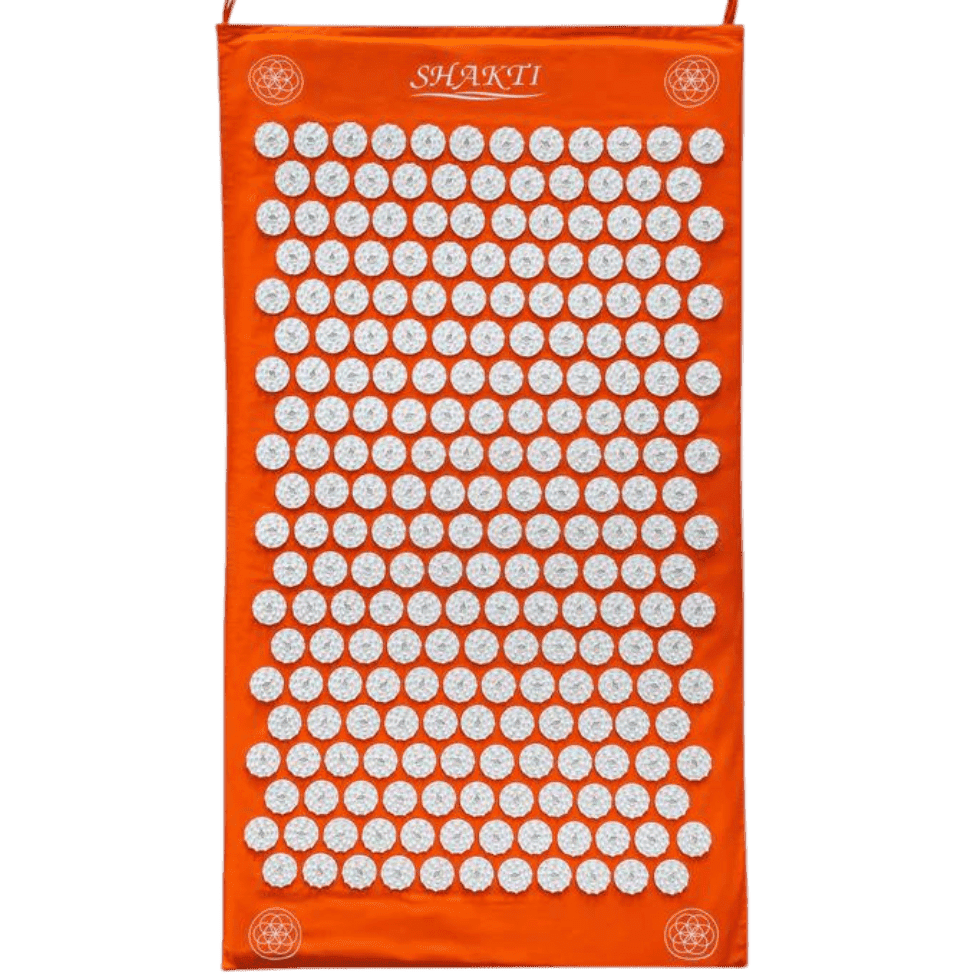
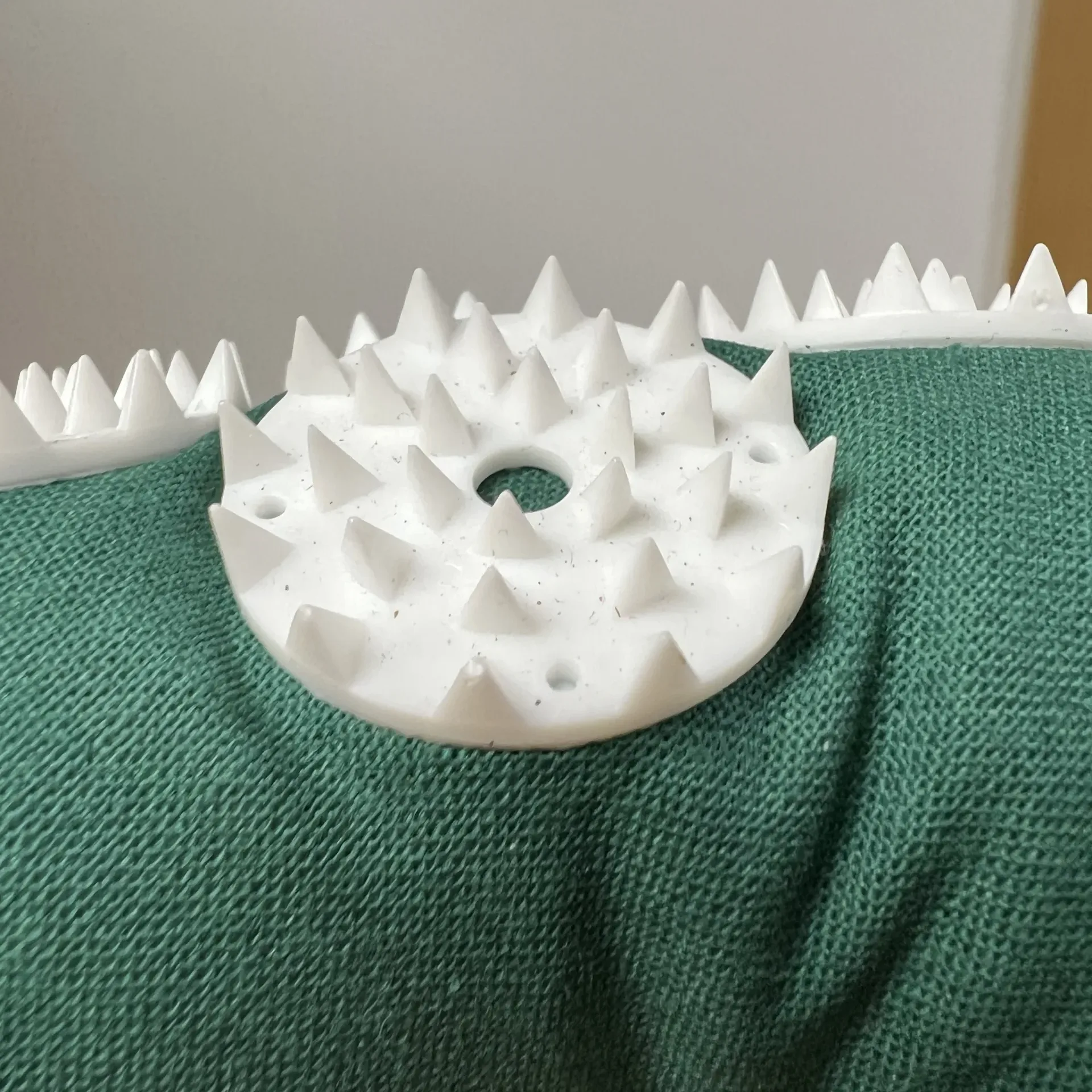
Shakti Mat uses tiny, pointed pyramidal ABS plastic spikes arranged in circular clusters across the mat. The points are sharp and pretty aggressive on the skin, especially if you are new to this.
For beginners, the Shakti Mat spikes can feel really intense for the first few sessions. Most people need a T-shirt as a buffer during the first week or so.
Pranamat Spikes
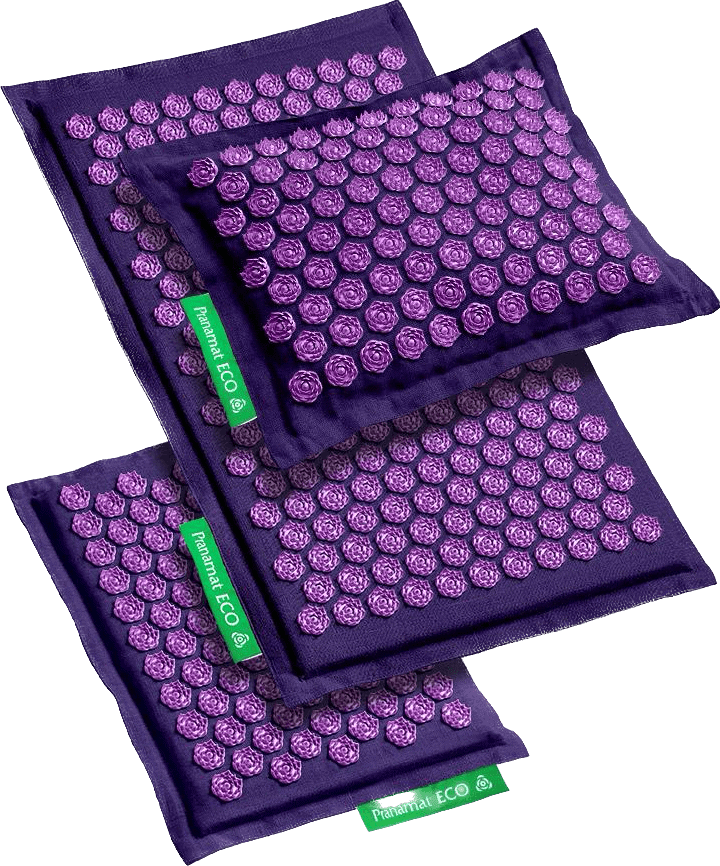
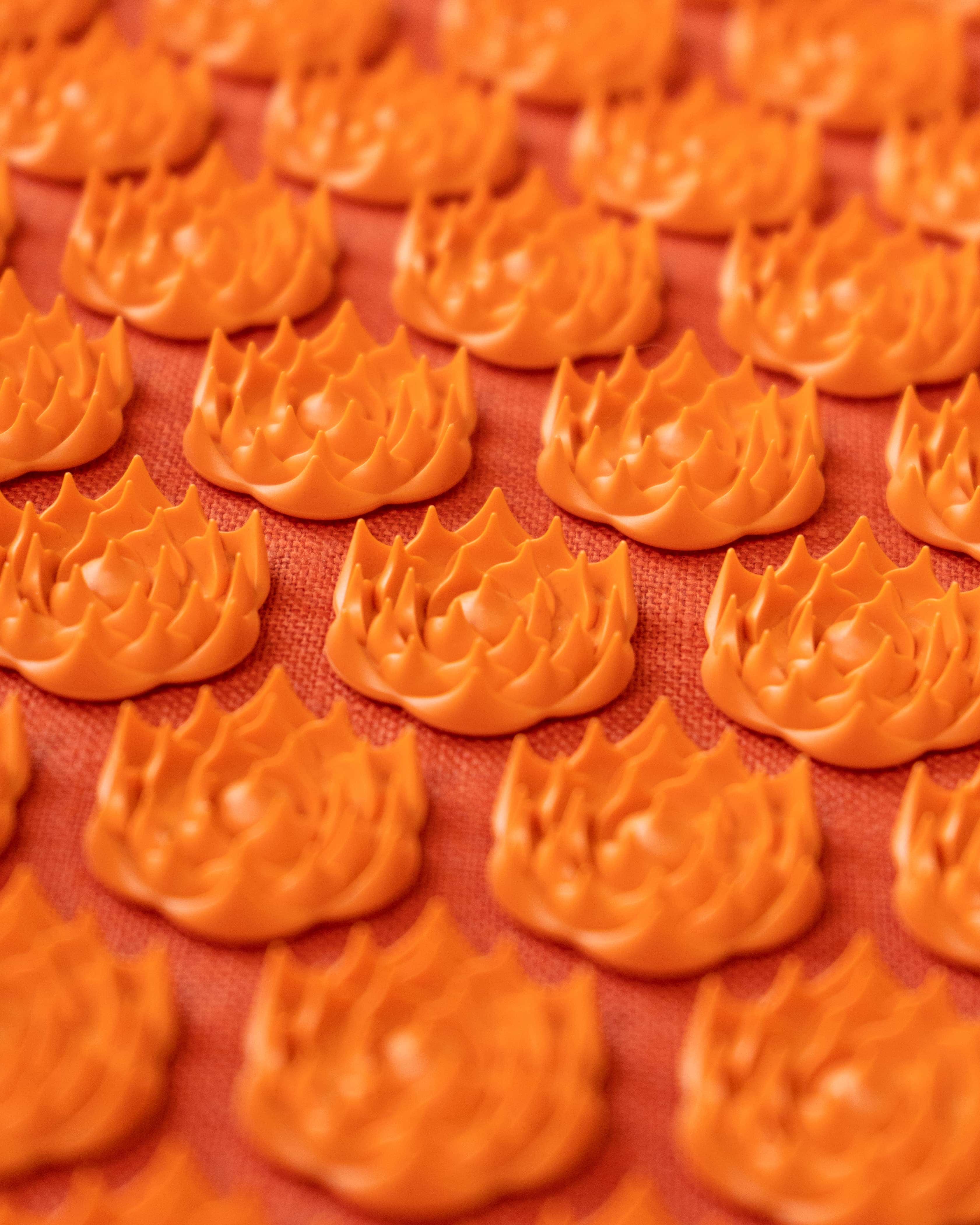
Pranamat went in a completely different direction. Their patented lotus-shaped massage elements are made from HIPS (High Impact Polystyrene) medical-grade plastic and feel noticeably different under your skin. The spikes are slightly rounder at the tips with smooth edges, so pressure gets distributed more evenly.
The lotus design means each spike cluster has more contact points working together, instead of a few sharp points concentrating all the pressure into tiny areas.
The Difference You Actually Feel
When you lie on both mats back to back, you notice the difference right away. The Shakti Mat feels sharper and more pokey. It takes your body longer to relax into it. The Pranamat feels firm but more spread out. Your body adjusts faster, and most people can lie on it bare-skinned from day one.
Both mats do their job when it comes to stimulating blood flow and triggering endorphins. But the Pranamat spike design makes the whole experience more comfortable, especially during longer sessions.
Mat Filler: Foam vs Coconut Fiber
What is inside the mat matters more than most people think. The filler determines how much support you get, how well the mat holds up over time, and how effective the pressure distribution actually is.
Shakti Mat: Foam Rubber
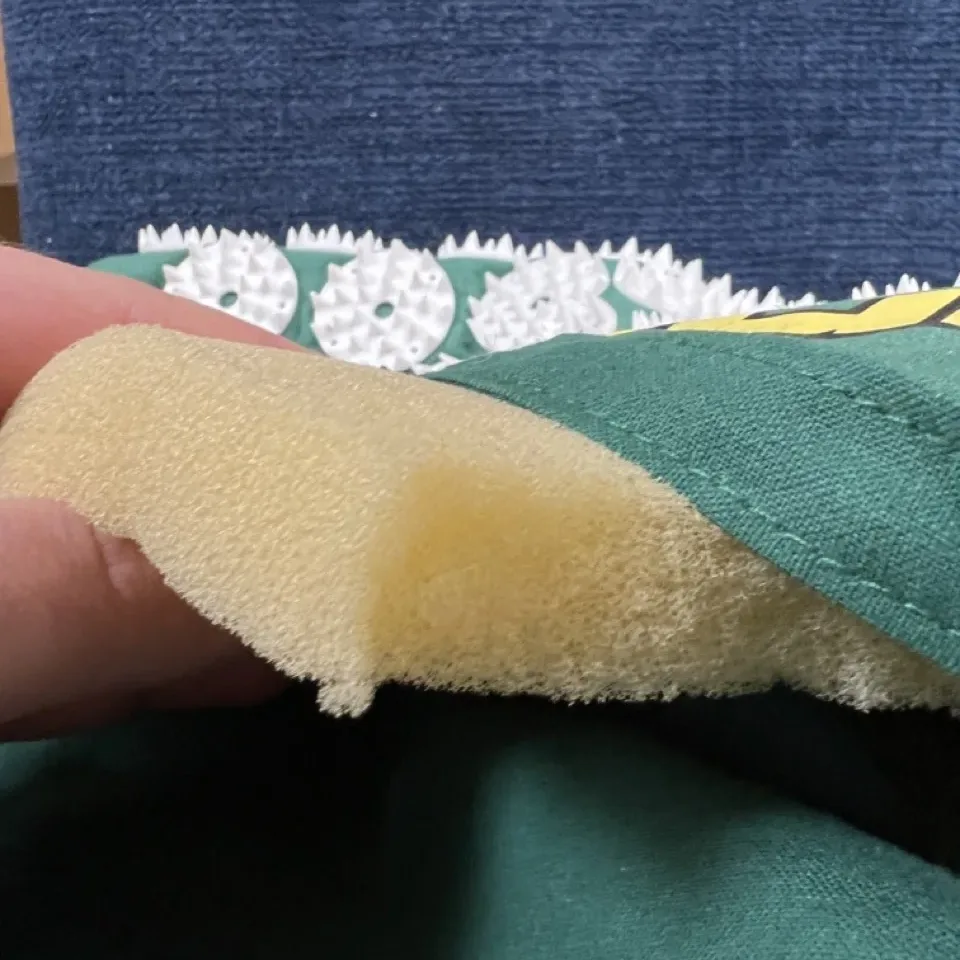
Shakti Mat uses foam rubber as its internal filler. Foam is lightweight, cheap to produce, and it gives decent cushioning at first. The problem is that foam compresses over time. When the filler starts to flatten out, the spikes cannot maintain consistent pressure against your body anymore.
After about 6 months of daily use, I started noticing the Shakti Mat foam getting soft in the spots where my back presses the heaviest.
Pranamat: Coconut Fiber
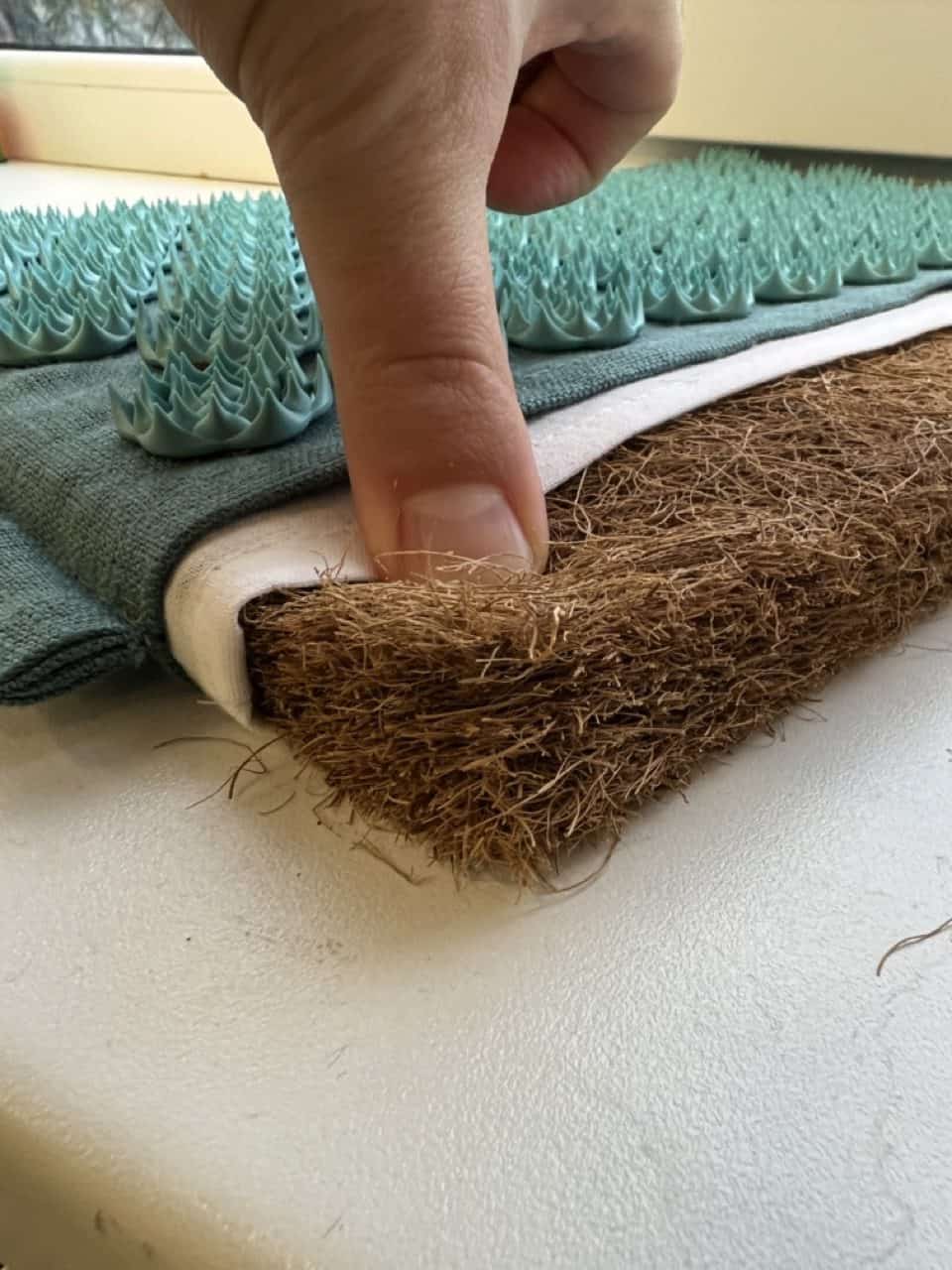
Pranamat uses natural coconut fiber (coir) as its filler. Coconut fiber is firm, springy, and holds up incredibly well. Unlike foam, it does not compress under repeated pressure. It pushes back consistently, which means the spikes maintain steady contact with your skin session after session.
Coconut fiber is also naturally resistant to dust mites, mold, and odor. That is a real plus for something you are lying on with bare skin on a regular basis.
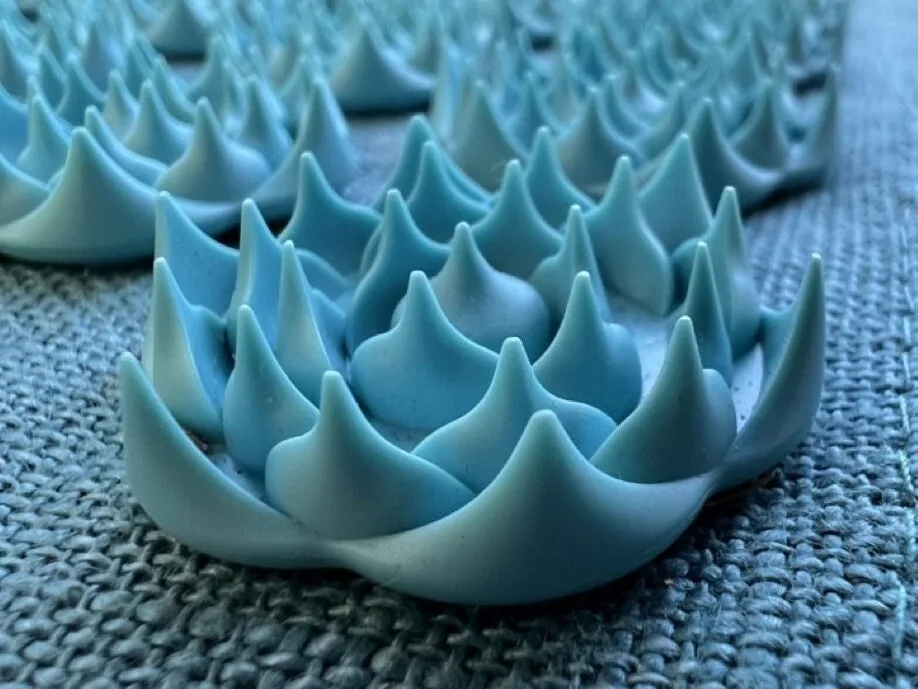
After 12+ months, the Pranamat coconut fiber filler feels basically the same as when it was new. The Shakti Mat foam? You can definitely tell it has softened up.
Cover Materials and Eco-Credentials
Shakti Mat
Shakti Mat covers are made from natural cotton. It is a solid choice. Breathable, comfortable against the skin, does the job. That said, Shakti Mat does not put a lot of emphasis on certifications or sustainability in their production process.
Pranamat
Pranamat covers are made from natural, ethically sourced materials and carry the OEKO-TEX STANDARD 100 certification. That is an independent certification guaranteeing the materials are free from harmful substances and safe for intensive skin contact.
Sustainability runs through the whole Pranamat brand. Their production process emphasizes eco-friendly materials and ethical sourcing at every step.
If you care about what you are putting against your skin for 20-30 minutes every day, the OEKO-TEX certification gives you real peace of mind.
Comfort and Feel: Beginner vs Experienced User
This is where personal experience matters most. What feels right varies a lot depending on how much you have used acupressure mats before.
For Complete Beginners
If you have never used an acupressure mat before, the Shakti Mat will feel intense. Those sharp pyramidal spikes create focused pressure points that can be pretty uncomfortable for the first 3-5 sessions. Most beginners throw on a thin T-shirt as a buffer until their body gets used to it.
The Pranamat is much easier to start with. The lotus-shaped spikes distribute pressure across a wider area, so the initial sensation is firm but not sharp. Most people can lie directly on it without a shirt from the very first session.
For Experienced Users
If you have been using acupressure mats for a while, both mats will feel comfortable. At that point, the main differences come down to long-session comfort and filler support. The Pranamat coconut fiber gives more consistent support during 30+ minute sessions, while the Shakti Mat foam can start creating uneven pressure as it compresses in spots.
Size and Product Options
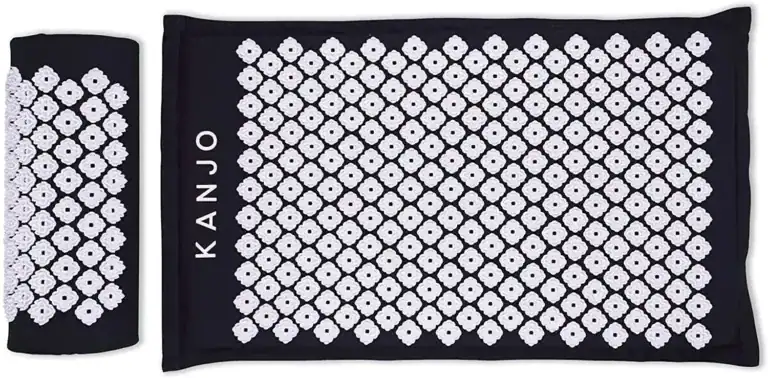
Shakti Mat comes in two tiers. The Classic line (mat $109, pillow $75, bundle $165) and the Premium line (mat $129, pillow $85, bundle $198). Both tiers come in a handful of colors. Shakti also sells their mats individually, so you can grab just the mat if that is all you want.
Pranamat sells everything as sets. You cannot buy just the mat on its own. Their lineup includes:
- Classic (Mat + Pillow): $315
- Classic and Bag (Mat + Pillow + Big Bag): $400
- Full Body Original (Mat + Pillow + Mini): $439
- Full Body Pro (Mat + Pillow + Mini + Big Bag): $525
- Classic and Moon (Mat + Pillow + PranaMoon): $455
- Classic and Moon and Bag (the whole package): $540
They also offer 9+ color options across multiple collections, including limited editions.
Being able to get a mat and pillow set is a big deal. The pillow targets the neck and shoulders, which is where most of us hold the worst tension. Using both together makes for a much more complete session than just a mat on its own.
Durability: How They Hold Up Over Time
This is honestly one of the biggest hidden differences between these two mats.
Shakti Mat: After 12 months of daily use, the foam filler has compressed in the most-used areas. Some spike clusters show minor wear at the tips. The cotton cover is still holding up fine. Useful life: 1-2 years of regular use.
Pranamat: After the same 12 months, the coconut fiber filler is still firm and springy. The spike elements show no visible wear at all. The cover looks almost new. Realistic useful life: 3-5 years of daily use.
When you work out the cost per year:
- Shakti Mat Classic: $109 / 1.5 years = ~$73/year
- Pranamat Classic Set: $315 / 4 years = ~$79/year
The yearly cost is closer than you would think. If you compare Shakti bundle (mat + pillow at $165) to the Pranamat set ($315), the gap shrinks even more: $110/year vs $79/year. The Pranamat actually wins on cost per year when you compare like for like.
Cleaning and Maintenance
Shakti Mat: Wipe the surface with a damp cloth. The foam interior takes forever to dry if it gets wet, so do not soak it. Not machine washable.
Pranamat: The cover comes off and you can hand-wash it. The coconut fiber interior dries fast and naturally resists odor and mold, which makes it more hygienic for bare-skin use. Pranamat recommends wiping the lotus elements with a damp cloth and mild soap.
Both mats should be stored flat or rolled up (never folded) to avoid damaging the spike elements.
Price Comparison: Is Pranamat Worth 3x More?
Here is what the actual prices look like right now (March 2026):
- Shakti Mat Classic: $109 (mat only) / $165 (mat + pillow bundle)
- Shakti Mat Premium: $129 (mat only) / $198 (mat + pillow bundle)
- Pranamat Classic Set (mat + pillow): $315
- Pranamat Full Body (mat + pillow + mini): $439
So the gap is real. The cheapest Pranamat set costs almost double the most expensive Shakti bundle. Who is the premium actually worth it for?
Pranamat IS worth the extra money if you:
- Plan to use your acupressure mat daily or several times a week
- Want the mat and pillow combo for full upper-body coverage
- Care about material certifications and eco-friendly production
- Think long-term and would rather buy once than replace every year
- Have sensitive skin and want a gentler spike design
Stick with Shakti Mat if you:
- Are trying acupressure mats for the first time
- Have a strict budget under $130
- Want a basic mat for occasional use
- Want the option to buy just the mat without a pillow
Check current Pranamat prices and offers
Check current Shakti Mat prices
Full Comparison Table
| Parameter | Shakti Mat | Pranamat |
|---|---|---|
| Spike material | ABS plastic | HIPS medical-grade plastic |
| Spike design | Pointed pyramidal | Patented lotus-shaped |
| Mat filler | Foam rubber | Coconut fiber |
| Cover material | Natural cotton | Natural, ethically sourced |
| Certifications | None listed | OEKO-TEX STANDARD 100 |
| Sizes available | Classic + Premium lines | Multiple sets |
| Price | $109-$198 | From $315 (sets only) |
| Beginner comfort | Intense, T-shirt recommended | Firm but gentler, bare skin from day 1 |
| Durability | 1-2 years | 3-5 years |
| Eco-friendly | Not emphasized | Core brand value |
| Cost per year | ~$73/yr (mat) / ~$110/yr (bundle) | ~$79/yr (Classic Set) |
| Best for | Budget-conscious first-timers | Daily users wanting premium quality |
| Founded | 2008 | 2008 |
Who Should Buy the Shakti Mat
Shakti Mat is the right pick if you are new to acupressure mats and want to test the whole concept without spending a lot. At $109 for the Classic, it is a low-risk way to find out whether acupressure mat therapy actually works for your body. And the mat does what it needs to do. It applies pressure to your back, gets the blood flowing, and helps you relax.
It is also a fair option if you are an occasional user. If you are only pulling it out once or twice a week instead of every day, the foam compression thing matters less.
Who Should Buy the Pranamat
Pranamat is the right pick if you already know you will be using an acupressure mat as part of your daily routine. The combination of lotus-shaped spikes, coconut fiber filler, and OEKO-TEX certified materials creates a noticeably better experience when you are using it every single day. And the mat + pillow set covers your entire upper body (back, neck, shoulders), which makes a real difference in how good each session feels.
If you have been using a cheaper mat for a while and you are ready for something better, Pranamat is the natural upgrade.
FAQ
Is Pranamat really worth 2-3x the price of Shakti Mat?
For people who use their mat every day, yes. The better materials last 2-3x longer, the spikes are more comfortable for extended sessions, and when you compare like for like (Shakti bundle at $165 vs Pranamat Classic at $315), the yearly cost of ownership actually favors Pranamat because of how much longer it lasts. If you only use a mat occasionally, the Shakti Mat gives you enough quality at a lower entry price.
Are Shakti Mat spikes safe for sensitive skin?
They are safe, but they can feel pretty aggressive on sensitive skin, especially the first few times. The usual advice is to start with a thin T-shirt between you and the mat and gradually switch to bare skin over a week or two. Pranamat smoother lotus-shaped spikes tend to be more comfortable for sensitive skin right out of the box.
Which acupressure mat is better for back pain?
Both mats help with back pain by stimulating blood flow and triggering endorphin release. If you have chronic back pain and plan to use the mat daily, the Pranamat firmer coconut fiber filler gives more consistent pressure and support over time. For occasional use, either mat will do the job.
Can I use an acupressure mat every day?
Absolutely. Daily use is actually how most people get the best results. Sessions of 15-30 minutes are typical. Just start with shorter sessions (5-10 minutes) and work your way up. Both Shakti Mat and Pranamat are built for daily use, though Pranamat materials hold up better to that kind of wear.
How long do acupressure mats last?
A Shakti Mat typically lasts 1-2 years with daily use before the foam filler compresses noticeably. A Pranamat lasts 3-5 years because the coconut fiber does not break down the same way. With occasional use, both mats will last a lot longer than that.
What is the difference between ABS and HIPS plastic spikes?
ABS (Acrylonitrile Butadiene Styrene) is a common, durable plastic. It is what the Shakti Mat uses for its pyramidal spikes. HIPS (High Impact Polystyrene) is a medical-grade plastic that Pranamat uses for their lotus-shaped elements. HIPS is slightly more flexible and produces smoother edges, which changes how pressure feels against your skin.
Related Reading
- Best Acupressure Mats of 2026 (Ranked and Detailed Review)
- The Dark Side of Acupressure Mats: How Cheap Mats Can Harm You
- The Science Behind Needle Mats with Spikes
- How to Clean Your Acupressure Mat and Pillow Set
- Do Acupressure Mats Work?
Author

Free Mobile App
Find Pressure Points on the Go
Interactive 3D body map with 100+ acupressure points, step-by-step guides, and personalized routines.
Download Free App →



This seems a bit like an advertisement for Pranamat.
Hey Davie! Thanks for the comment. This entire blog is just my personal opinion based on my personal experience. Perhaps I’m not entirely objective because I’m a big-big fan of Pranamat. But if you pick up Pranamat and Shakti mats, you will understand the difference and why I recommend this particular acupressure mat to everyone.