
Can Acupressure Help With Weight Loss? What Science Says
Acupressure is unlikely to cause meaningful weight loss by itself. It may help some people as a short support habit, especially when cravings, stress eating, or evening snacking are the real friction point. The safe answer is simple: use acupressure as a pause, not as a fat-loss shortcut.
Quick answer
| Question | Practical answer |
|---|---|
| Can acupressure help with weight loss? | Possibly as support, not as the main cause of weight loss |
| Best-supported area | Ear acupressure and broader auricular stimulation have the most weight-related research |
| What it may help with | Awareness, cravings, stress pause, and consistency around habits |
| What it cannot promise | Spot fat loss, belly-fat reduction, metabolism reset, detox, or guaranteed appetite control |
| How to use it | Gentle pressure for 30 to 90 seconds before a craving, meal, or evening snack |
| Stop if | Pain is sharp, electric, numbing, worsening, or emotionally triggering |
What acupressure can actually do
Acupressure can give you a physical pause. That matters because many people do not struggle with weight management because they lack information. They struggle because the hard moment arrives fast: a craving, stress after work, late-night snacking, boredom, poor sleep, or an automatic habit.
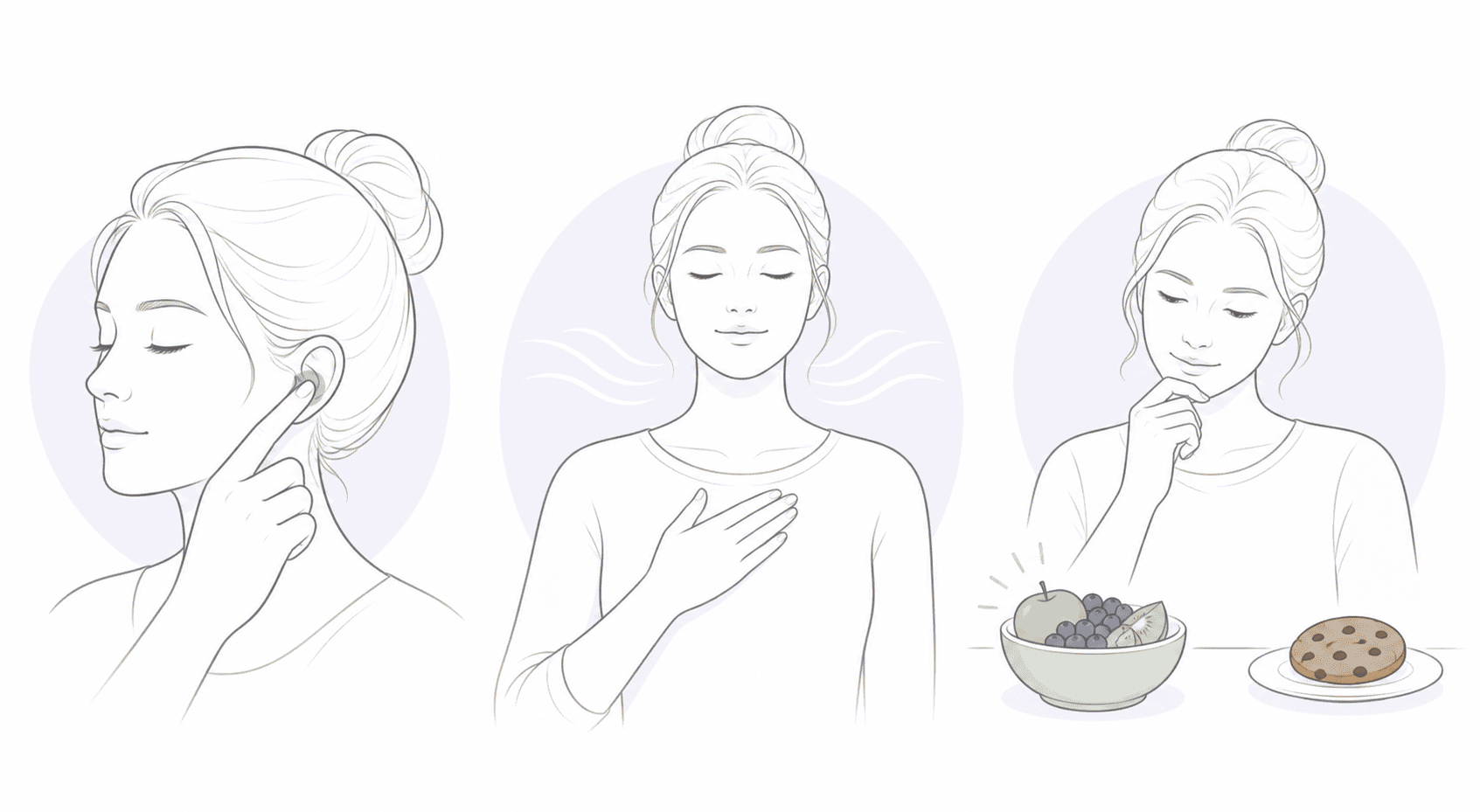
In that moment, pressing a point is not magic. It is a small behavior cue. You stop, breathe, feel the body, and make a more deliberate next choice. For some people, that is useful.
That does not mean acupressure burns fat. It does not cancel calories. It does not replace a calorie-aware eating pattern, movement, sleep, stress management, medication, or clinician-guided care. If an article, product, or social post says one point can melt belly fat, treat that as a red flag.
The strongest weight-related acupressure discussion is usually about the ear. You may see this called ear acupressure, auricular acupressure, ear seeds, or auricular acupoint stimulation. These are related, but not identical. Some studies use seeds or beads taped to the ear. Some use acupuncture needles. Some combine stimulation with diet advice or exercise. That makes the evidence hard to turn into a simple home promise.

What the evidence says
The research is interesting, but it is not strong enough to say that acupressure is a stand-alone weight-loss method.
A systematic review of auricular acupoint stimulation in overweight and obese adults reported improvements in some weight-related measures, but the review included different forms of stimulation, not only finger pressure or ear seeds. The authors also noted important limits such as study differences and limited generalizability (PMC review).
A separate review focused on auricular acupressure also reported weight-related effects, but the same caution applies: studies vary in point selection, duration, control groups, and whether participants also changed diet or activity (auricular acupressure review).
Public-health guidance is more direct. The CDC describes weight management as a broader process involving food choices, activity, sleep, stress, medications, health conditions, hormones, age, genetics, and environment (CDC losing weight guidance). NIDDK advises choosing programs built around healthy eating, physical activity when appropriate, behavior support, and maintenance planning, and it warns against claims that promise weight loss without diet or exercise or from one body area (NIDDK guidance).
So the most honest summary is this: auricular acupressure may be worth studying and may support some people, but it should sit beside the basics, not above them.
A realistic acupressure routine for cravings
Use this as a 2-minute pause, not as a weight-loss treatment.
- Choose the moment before you usually lose control. This might be after dinner, during work stress, before a second portion, or when you are reaching for a snack without hunger.
- Sit or stand still. Put both feet on the floor and let your shoulders drop.
- Use gentle pressure on the outer ear, the web between the thumb and index finger, or another easy-to-reach point you already know from a safe self-acupressure routine.
- Hold comfortable pressure for 30 to 60 seconds while breathing slowly.
- Ask one practical question: "What do I need next: food, water, rest, a walk, or a pause?"
- Make the next choice smaller. Drink water, portion the snack on a plate, go for a 5-minute walk, or eat the planned meal without turning it into a test of willpower.
If you are new to this, start with one point. Do not press ten points or chase pain. If pressure makes you tense up, hold your breath, or feel worse, it is not helping.
For basic technique, use the same safety rules from our self-acupressure beginner guide: broad pressure, short holds, normal breathing, and no sharp or spreading symptoms.
Pressure Points App
Learn how to locate and apply pressure points with guided sessions, illustrations, and step-by-step instructions. Free to download.
Should you try ear seeds for weight loss?
Ear seeds can be reasonable to try if you treat them as a reminder, not a promise. They are small seeds, beads, or pellets placed on the ear so you can press them during the day. Many people like them because they are simple and visible enough to cue a habit.
Use caution with the claims around them. Ear seeds should not be sold as a way to burn fat, suppress appetite on command, or replace nutrition changes. If you try them, consider having a licensed practitioner place them first, especially if you do not know the ear anatomy or you have sensitive skin.
Do not place ear seeds on irritated skin, infection, wounds, swelling, or areas that hurt sharply. Remove them if the skin becomes painful, itchy, red, or inflamed. If you use adhesive products, watch for allergy or irritation.
What actually matters more than pressure points
The foundation is not exciting, but it is what carries the result.
Food choices matter because energy intake matters. That does not require an extreme diet. It usually means building meals that are easier to repeat: enough protein, fiber-rich foods, mostly minimally processed foods, planned snacks, and fewer automatic liquid calories.
Movement matters because it supports health, appetite regulation, mood, sleep, strength, and energy use. It does not have to be punishing. Walking, strength training, mobility work, and daily steps can all count.
Sleep and stress matter because tired people often get stronger cravings and weaker planning. Acupressure may fit here as a calming ritual, but sleep debt still needs sleep, and chronic stress still needs a broader plan.
Medical context matters. Weight can be affected by medications, thyroid disease, diabetes, PCOS, menopause, depression, eating disorder history, chronic pain, sleep apnea, and many other factors. If weight is changing quickly or feels impossible to manage, a clinician can help look for causes and safe options.
Claims to ignore
Ignore any claim that says a pressure point can target belly fat. Spot reduction is not a realistic promise for acupressure, exercise, massage, or gadgets.
Ignore claims that say pain means the point is working. Pain is not a fat-loss signal. Pressure should feel dull, steady, and tolerable. Sharp pain, tingling, numbness, dizziness, or emotional distress means stop.
Ignore claims that use only testimonials. Personal stories can be motivating, but they do not prove that the pressure point caused the result. The same caution applies to supplements marketed for weight loss. NCCIH warns that quick-fix weight-loss claims and testimonials are not reliable proof of safety or effectiveness (NCCIH weight-loss supplement tips).
Ignore claims that tell you to avoid medical care. NCCIH's general safety framing for complementary health is useful here: do not postpone medical care when you need a health care provider (NCCIH acupuncture safety overview).
When to talk with a clinician
Talk with a clinician before using acupressure as part of a weight-management plan if you are pregnant, trying to become pregnant, recently postpartum, under 18, older and medically fragile, or dealing with diabetes, heart disease, kidney disease, cancer treatment, fainting, dizziness, neuropathy, bleeding disorders, or a history of eating disorders.
Also talk with a clinician if you use insulin, sulfonylureas, GLP-1 medications, stimulant medications, diuretics, blood thinners, or prescription weight-loss medication. Acupressure may be gentle, but weight changes, appetite changes, and medication changes can still carry risk.
Get medical care promptly for unexplained weight loss, rapid weight gain, chest pain, shortness of breath, fainting, severe abdominal pain, new weakness, confusion, vomiting, blood in stool, or symptoms that feel sudden, severe, or unusual.
Related guides
If you want to build this into a safe routine, start here:
- How to do acupressure on yourself for pressure, timing, and stop signals.
- BL-25 Dachangshu for an example of how we describe point location without overpromising benefits.
- Pressure points for motion sickness for a condition where acupoint stimulation has a more specific evidence discussion.
The best approach is to use one routine for one goal. Do not mix weight, digestion, sleep, anxiety, and pain into one long pressure-point session.
Frequently asked questions
What pressure point is best for weight loss?
There is no single best pressure point for weight loss. The most studied area is the ear, but the evidence is still limited and usually involves structured auricular acupressure or auricular stimulation, not casual pressing whenever you remember.
Can acupressure reduce belly fat?
No reliable evidence shows that acupressure can reduce belly fat specifically. Belly fat changes through overall weight management, strength, activity, nutrition, sleep, medical context, and time. Be skeptical of spot-reduction claims.
How long should I press a point?
For a craving pause, use 30 to 60 seconds. For a general self-acupressure session, many beginner routines use 30 to 90 seconds per point. Longer is not automatically better.
Are ear seeds worth trying?
They may be worth trying as a reminder or habit cue if your skin tolerates them and you do not expect them to cause weight loss by themselves. Remove them if they irritate your skin or make the ear painful.
Can I use acupressure with weight-loss medication?
Do not use acupressure to change medication timing, dosing, or food intake rules. If you use insulin, GLP-1 medication, prescription weight-loss medication, or medication that affects appetite, blood sugar, hydration, or blood pressure, ask your clinician how to manage cravings and symptoms safely.
Is acupressure safe if I have an eating disorder history?
Be careful. Weight-loss content, tracking, appetite control, and body-focused routines can be triggering for some people. If you have a current or past eating disorder, use clinician or therapist guidance rather than building a weight-loss routine around pressure points.
Bottom line
Acupressure may help with weight loss only indirectly. Its most realistic role is as a short pause that supports awareness, stress regulation, and consistency. It should not be presented as a way to burn fat, target belly fat, suppress appetite on command, or replace medical care.
If you use it, keep the routine short and gentle. Then put most of your effort into the parts that actually carry weight management: food, movement, sleep, stress, tracking, medical context, and support.
This article is for educational purposes only and is not medical advice. Acupressure may be useful as supportive self-care, but it should not replace diagnosis or treatment from a qualified clinician. Seek urgent care for severe, sudden, or worsening symptoms.
Author

Free Mobile App
Find Pressure Points on the Go
Interactive 3D body map with 100+ acupressure points, step-by-step guides, and personalized routines.
Download Free App →

![Pressure Points for Jaw Pain [TMJ Relief Guide]](https://acupressureguide.com/wp-content/uploads/2022/11/image-1.png)