
Lower Back Pressure Points for Pain Relief: A Complete Guide (2026)
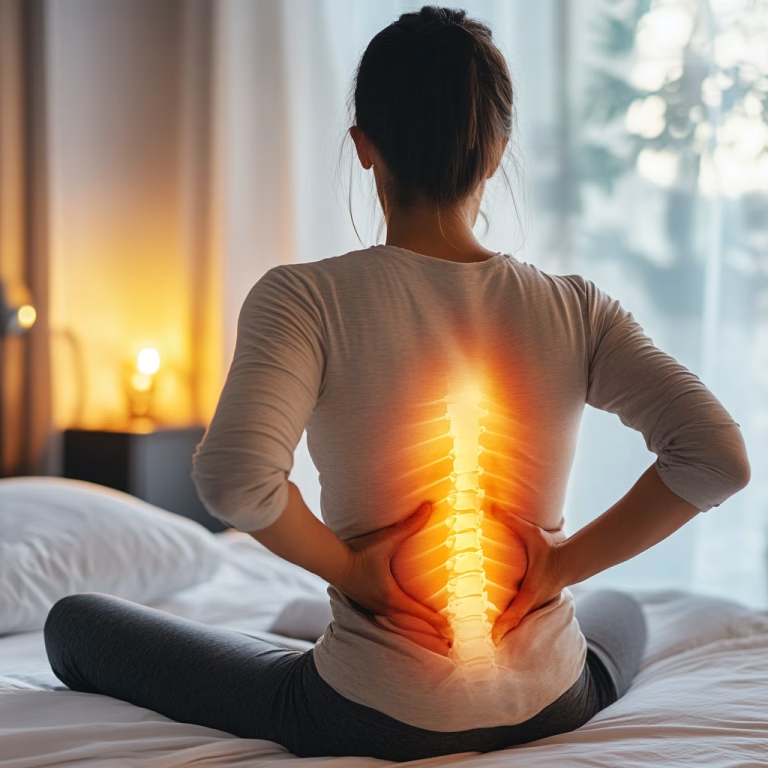
If you are dealing with lower back pain, you already know how it takes over everything. Sitting hurts. Standing hurts. Even lying down can feel wrong if you are in the wrong position. And if you have tried the usual route â ibuprofen, stretching, heating pads, maybe even a chiropractor visit or two â you know that relief is often temporary.
I have been using acupressure for lower back pain since 2017, and it has become one of the most consistently helpful tools in my routine. Not a cure. Not a replacement for proper medical care. But a real, practical way to reduce pain, release muscle tension, and get through the day with less stiffness and discomfort.
Here is what I have learned about which pressure points actually help with lower back pain, how to use them effectively, and what the research supports.
Why Pressure Points Work for Lower Back Pain
Lower back pain is rarely just about the lower back. It involves a network of muscles, nerves, and fascia that extend from your hips to your mid-back and even down into your legs. When one area tightens up, it pulls on everything else, creating a chain reaction of tension and pain.
Acupressure works by stimulating specific points along the body’s meridian pathways. When you press on these points, you trigger a neurological response that increases blood flow, releases muscle tension, and prompts the release of endorphins â your body’s natural painkillers.
For lower back pain specifically, the most effective pressure points are located on the back itself, on the hands and feet, and along the legs. Some of these points target the pain directly, while others address the underlying tension patterns that cause the pain in the first place.
Clinical research supports this approach. A systematic review published in the Journal of Pain Research found that acupressure significantly reduced lower back pain intensity compared to sham treatments, with effects lasting for weeks after treatment ended.
The Best Pressure Points for Lower Back Pain
These are the points I use most frequently and that have the strongest evidence for lower back pain relief.
BL 23 â Shenshu (Lower Back)
This is the most direct pressure point for lower back pain. It sits right over the area where most people feel pain.
Location: About two finger-widths to either side of the spine, at the level of your waist (roughly at the level of your belly button when viewed from the side). You will find it in the thick muscle tissue on either side of the lumbar spine.
What it does: BL 23 targets the deep muscles of the lower back directly. It relieves pain, reduces stiffness, and helps release the kind of chronic tension that builds up from sitting too long or poor posture. In traditional Chinese medicine, it is also considered a key point for kidney health, which connects to overall vitality and back strength.
How to use it: You cannot easily press this point yourself with your fingers. Instead, use a tennis ball or lacrosse ball. Lie on your back with the ball placed under the point. Let your body weight create the pressure. Hold for 1 to 2 minutes per side. You can also roll slowly up and down to find the most tender spot.
BL 25 â Dachangshu (Lower Back)
BL 25 sits just below BL 23 and targets the lower lumbar region.
Location: Two finger-widths to either side of the spine, at the level of the fourth lumbar vertebra. This is roughly at the top of the hip bones. Find the bony crest of your hips and draw a line straight back to the spine. BL 25 is on either side of where that line meets the spine.
What it does: BL 25 is particularly helpful for pain in the very low back â the L4-L5 region where disc issues and muscle strains are most common. It relieves lower back pain, reduces stiffness, and can help with sciatica-type symptoms that radiate into the buttock.
How to use it: Same technique as BL 23. Use a tennis ball while lying on the floor. Position the ball at the correct level and let gravity do the work. Hold for 1 to 2 minutes per side. You can address both BL 23 and BL 25 in one session by slowly rolling the ball down from the waist to the hips.
BL 40 â Weizhong (Behind the Knee)
This point is located far from the back, but it is one of the most effective points for treating lower back pain.
Location: Right in the center of the crease behind your knee. When you bend your knee slightly, you will feel a soft depression between the two tendons. That is BL 40.
What it does: BL 40 is the command point for the entire back in traditional Chinese medicine. It is especially effective for acute lower back pain and stiffness â the kind where you can barely bend forward. It works by releasing tension along the entire Bladder meridian, which runs down the back of the body from head to feet, passing directly through the lumbar region.
The research: A study in the American Journal of Chinese Medicine confirmed that stimulation of BL 40 produced significant pain relief in patients with chronic lower back pain, with reductions in both pain intensity and functional disability.
How to use it: Press firmly with your thumb into the center of the crease behind the knee. Hold for 1 to 2 minutes per side. The pressure should produce a dull ache that you can feel radiating up the back of the thigh. Be careful not to press on the blood vessels â aim for the center of the crease, not the sides.
GV 4 â Mingmen (Spine)
GV 4 sits directly on the spine and is a powerful point for overall lower back health.
Location: On the midline of the lower back, in the depression between the second and third lumbar vertebrae. To find it, draw a line from the top of your hip bones straight to the spine. GV 4 is approximately at that level.
What it does: GV 4 strengthens the lower back and relieves pain along the entire lumbar spine. It is particularly good for chronic, dull lower back pain rather than acute sharp pain. In TCM, it is considered one of the most important points for building and maintaining back strength.
How to use it: This point is directly on the spine, so use gentle pressure only. Press with your thumbs or use a soft ball (not a hard lacrosse ball) while lying on your back. Hold for 1 to 2 minutes with moderate pressure. You should feel a deep, warming sensation.
GB 30 â Huantiao (Hip)
GB 30 is essential for lower back pain that involves the hips or radiates into the buttock or leg.
Location: On the side of the buttock, roughly one-third of the way from the greater trochanter (the bony bump on the side of your hip) toward the base of the coccyx (tailbone). You will find a deep, tender spot when you press into the gluteal muscle.
What it does: GB 30 addresses the hip and gluteal muscles, which are major contributors to lower back pain. When the piriformis or gluteus medius is tight, it pulls on the pelvis and creates strain in the lower back. GB 30 releases this tension. It is also one of the primary points for sciatica â pain that radiates down the leg from the lower back.
How to use it: This point is deep in the gluteal muscle, so you need firm pressure. Use a tennis ball or lacrosse ball. Lie on your side with the ball positioned under the tender point. Let your body weight sink into the ball. Hold for 2 to 3 minutes per side. The sensation will be intense in most people â start gently and increase as tolerated.
LI 4 â Hegu (Hand)
LI 4 is known primarily as a pain relief point, and it works for lower back pain as part of a broader acupressure routine.
Location: In the fleshy area between your thumb and index finger, at the highest point of the muscle when you squeeze your thumb against your hand.
What it does: LI 4 is a general analgesic point â it raises your pain threshold and reduces pain sensitivity throughout the body. For lower back pain, it is best used as a supporting point alongside the direct back and hip points. It also helps with the tension and stress that often accompany chronic pain.
How to use it: Squeeze firmly between your opposite thumb and index finger. Hold for 1 to 2 minutes per hand using a kneading or circular motion. You should feel a strong, dull ache.
Important: Avoid LI 4 during pregnancy.
BL 60 â Kunlun (Ankle)
BL 60 is another distal point that is remarkably effective for lower back pain.
Location: In the depression between the outer ankle bone and the Achilles tendon. Find the bony bump on the outside of your ankle and press into the soft area just behind it.
What it does: BL 60 is called the “aspirin point” in some acupressure traditions because of its strong pain-relieving effect on the lower back. It works by releasing tension along the Bladder meridian and is particularly helpful for lower back pain accompanied by stiffness in the legs or difficulty walking.
How to use it: Press firmly with your thumb into the depression behind the ankle bone. Hold for 1 to 2 minutes per foot. You may feel a sensation traveling up the back of the leg.
Important: Avoid during pregnancy, as this point can stimulate uterine contractions.
KD 3 â Taixi (Inner Ankle)
KD 3 complements BL 60 and targets the kidney meridian, which is closely connected to lower back health.
Location: In the depression between the inner ankle bone and the Achilles tendon â the same position as BL 60 but on the inner side of the ankle.
What it does: KD 3 strengthens the lower back by addressing the kidney meridian, which in TCM directly supports spinal health and vitality. It is particularly helpful for chronic lower back pain that is worse when fatigued or during cold weather.
How to use it: Press gently with your thumb for 1 to 2 minutes per side. This point tends to be tender, so start with light pressure and increase gradually.
Practical Protocols for Lower Back Pain
For Acute Lower Back Pain (Sudden Onset)
When your back seizes up suddenly, start with the distal points first â they are easier to access and can provide immediate relief.
Start with BL 40 (behind the knee) for 2 minutes per side. Follow with BL 60 (outer ankle) for 1 to 2 minutes per side. Then carefully position a tennis ball under BL 23 and BL 25 on the floor. Total time is about 15 minutes. Repeat 2 to 3 times on the first day.
For Chronic Lower Back Pain
Consistency matters more than intensity for ongoing pain. Build a daily routine.
Morning: BL 23 and BL 25 with a tennis ball, 2 minutes per side (about 8 minutes total). Evening: GB 30 with a tennis ball, 2 to 3 minutes per side, followed by BL 40 for 1 to 2 minutes per side (about 10 minutes total). Add LI 4 throughout the day when pain flares.
For Sciatica-Type Pain
Focus on the points that address the sciatic nerve pathway.
GB 30 (2 to 3 minutes per side), BL 40 (2 minutes per side), BL 60 (1 to 2 minutes per side). Do this sequence twice daily. GB 30 is the most important point here â spend extra time finding the exact tender spot in the gluteal area.
For Post-Sitting Pain
If your lower back hurts after prolonged sitting, use this quick routine before the pain sets in.
Every 2 hours: stand up and press BL 23 by leaning against a tennis ball on a wall, 1 minute per side. At the end of the workday: do the full BL 23, BL 25, and BL 40 routine described in the chronic pain protocol above.
Tips for Better Results
Use a ball, not just your fingers. For back points, your fingers cannot generate enough sustained pressure at the right angle. Tennis balls, lacrosse balls, or acupressure tools are far more effective. Tennis balls are gentler, lacrosse balls more intense â choose based on your sensitivity.
Start gently. If you are new to acupressure or your pain is acute, begin with light to moderate pressure. The goal is a dull ache or a “good hurt” sensation, not sharp or stabbing pain. Pressing too hard on inflamed muscles can make things worse.
Breathe into the pressure. When pressing a painful point, your natural response is to tense up and hold your breath. Do the opposite. Breathe slowly and deeply, and consciously relax into the pressure. This activates the parasympathetic nervous system and enhances the pain-relieving effect.
Be consistent. Like most natural pain management approaches, acupressure for lower back pain works best when used regularly. Daily sessions of 10 to 15 minutes will produce better results than occasional 30-minute sessions. Give it 2 to 3 weeks of consistent daily use before evaluating effectiveness.
Combine with movement. Acupressure works better when combined with gentle movement. After a session, do some light stretching â cat-cow stretches, gentle spinal twists, or a short walk. The acupressure releases the tension, and the movement helps your body integrate the changes.
Using an Acupressure Mat for Lower Back Pain
An acupressure mat is one of the most practical tools for lower back pain because it stimulates the entire back surface simultaneously, rather than one point at a time.
When you lie on an acupressure mat, the hundreds of spike clusters press into the muscle tissue along your spine, targeting the Bladder meridian points (BL 23, BL 25, and surrounding areas) all at once. This creates a broad stimulation effect that increases blood flow, releases muscle tension, and activates your body’s endorphin response.
For lower back pain specifically, position yourself so the mat covers your lumbar region â from the bottom of your rib cage to the top of your hips. You can place a thin towel over the mat for the first few sessions if the spikes feel too intense.
The Pranamat is what I use daily for this purpose. Its lotus-flower spike design distributes pressure more evenly than the sharper pyramidal spikes on budget mats, which matters when your back is already sore. The natural linen and coconut fiber construction also means the mat stays firm â budget foam mats tend to compress over time, which reduces the pressure reaching your lower back muscles.
Start with 15 minutes per session and work up to 20 to 30 minutes as your body adapts. The first few sessions may feel intense, but most people find the pressure becomes deeply relaxing by the third or fourth use.
What the Research Says
The evidence for acupressure as a treatment for lower back pain is strong and growing.
Pain reduction: A systematic review in the Journal of Pain Research analyzed 12 randomized controlled trials and found that acupressure significantly reduced lower back pain intensity compared to control groups. The effect sizes were comparable to some pharmacological interventions, with fewer side effects.
Functional improvement: Research published in the BMJ Open found that acupressure not only reduced pain but also improved functional outcomes â patients could move more freely, sit longer without discomfort, and had less disability in daily activities.
Sustained effects: A study in Pain Medicine journal found that the pain-relieving effects of acupressure lasted for up to 6 months after a course of treatment, suggesting that acupressure creates lasting changes in muscle tension patterns rather than just temporary pain masking.
Fatigue reduction: A clinical trial at the University of Michigan found that acupressure reduced both pain and fatigue in patients with chronic lower back pain â an important finding since fatigue is a common and often overlooked companion to chronic pain.
The research consistently shows that acupressure works best as part of a comprehensive approach that includes movement, stretching, and ergonomic adjustments. It is not a standalone cure, but it is one of the more effective complementary tools available.
When to See a Doctor
Acupressure is safe for most types of lower back pain, but some situations require medical evaluation.
See a doctor if you experience lower back pain with numbness or tingling in your legs, loss of bladder or bowel control, pain following a fall or injury, pain that wakes you up at night, unexplained weight loss with back pain, or pain that has progressively worsened over weeks without responding to any self-care measures.
If you have been diagnosed with a herniated disc, spinal stenosis, or other structural condition, acupressure can still be helpful â but work with your healthcare provider to make sure you are not applying pressure directly to compromised areas.
Bottom Line
Lower back pressure points are one of the most practical applications of acupressure. You do not need special training or expensive equipment â a tennis ball and a floor are enough to get started.
Start with BL 40 (behind the knee) and BL 23 (lower back) â these two points alone address the most common patterns of lower back pain. Add GB 30 for hip involvement and BL 60 for acute pain. Build a daily routine of 10 to 15 minutes and give it 2 to 3 weeks before deciding whether it works for you.
The key is consistency. Your lower back did not get tight overnight, and it will not release overnight either. But with regular acupressure, most people notice meaningful improvement within a few weeks.
Frequently Asked Questions
What is the fastest pressure point for lower back pain relief?
BL 40, located in the center of the crease behind the knee, provides the fastest relief for acute lower back pain. Press firmly with your thumb for 1 to 2 minutes per side. It works by releasing tension along the entire Bladder meridian that runs through the lower back. For direct back pain relief, place a tennis ball under BL 23 (two finger-widths from the spine at waist level) while lying down.
Can acupressure help with sciatica?
Yes. GB 30 (on the side of the buttock), BL 40 (behind the knee), and BL 60 (behind the outer ankle) form an effective combination for sciatica. GB 30 is the most important â it releases the piriformis and gluteal muscles that often compress the sciatic nerve. Use a tennis ball or lacrosse ball for GB 30, pressing for 2 to 3 minutes per side, twice daily.
How often should I do acupressure for lower back pain?
Daily sessions of 10 to 15 minutes produce the best results. For acute pain, you can do 2 to 3 shorter sessions throughout the day. For chronic pain, a consistent daily routine is more effective than occasional longer sessions. Most people notice meaningful improvement within 2 to 3 weeks of consistent daily acupressure.
Is it safe to use a tennis ball on my lower back?
Yes, for muscular lower back pain, a tennis ball is a safe and effective self-acupressure tool. Place the ball between your back and the floor, positioning it on the muscles beside the spine â never directly on the spine itself. Start with gentle pressure and increase as tolerated. If a tennis ball feels too intense, start with a softer ball. If you have a diagnosed disc condition, check with your healthcare provider first.
Can an acupressure mat help with lower back pain?
Acupressure mats are effective for lower back pain because they stimulate multiple pressure points simultaneously across the entire back surface. Research has shown that broad-surface acupressure increases blood flow, releases endorphins, and reduces muscle tension. Lie on the mat for 15 to 20 minutes daily with the mat positioned under your lumbar region for targeted lower back relief.
What is the difference between acupressure and acupuncture for back pain?
Both target the same points, but acupressure uses finger or tool pressure while acupuncture uses thin needles. Research shows both are effective for lower back pain. The advantage of acupressure is that you can do it yourself at home, any time you need it, without needing a practitioner appointment. Acupuncture may be more effective for severe or complex pain conditions.
Should I use heat or cold with acupressure for lower back pain?
Warmth pairs well with acupressure for lower back pain. Apply a warm towel or heating pad to the area for 5 to 10 minutes before your acupressure session. The warmth relaxes the muscles and increases blood flow, making the pressure points more responsive. Avoid heat if there is acute inflammation or swelling â in those cases, use cold first, then do acupressure after the inflammation has subsided.
Related Reading
- Acupressure Mat Benefits: What Daily Use Actually Does
- How to Use an Acupressure Mat for Lower Back Pain
- Pressure Points for Back Pain Relief
- Pressure Points for Stress Relief
- Do Acupressure Mats Work? What the Evidence Really Says
Author

Free Mobile App
Find Pressure Points on the Go
Interactive 3D body map with 100+ acupressure points, step-by-step guides, and personalized routines.
Download Free App →