Pranamat Review: Is This Premium Acupressure Mat Actually Worth It? (2026)
The Pranamat costs roughly three times more than most acupressure mats on the market. That is the first thing everyone notices, and I get why it raises eyebrows. When budget mats go for $25 to $50, paying $109 or more for what looks like the same thing feels hard to justify.
I have been using my Pranamat every single day for over two years. Not a few times a week. Not when I remember. Every day, 20 to 30 minutes before bed. And I have also tested seven other acupressure mats during that time for comparison.
Here is my honest take on whether the Pranamat is worth the premium, what it actually does better than the competition, and who should save their money on a cheaper alternative instead.
Quick Verdict
The Pranamat is the best acupressure mat I have used. The spike design, material quality, and durability are genuinely superior to every budget mat I have tested. But it is not for everyone.
Worth buying if: You plan to use it daily, you prefer bare skin contact, you want a mat that lasts years, or you have sensitive skin that reacts to synthetic materials.
Not worth it if: You are unsure whether acupressure is for you, you plan to use it occasionally, or you are on a tight budget and just want to try the concept.
If you fall into the first group, the Pranamat pays for itself in durability alone. If you are in the second group, start with a budget mat and upgrade later if you stick with it.
Acupressure Guide readers can use the exclusive coupon code ACUPRESSUREGUIDE for a special discount on Pranamat.
A Note About This Review
I want to be transparent. I have a partnership with Pranamat, and I earn a commission when readers use my coupon code. But here is the timeline: I bought my first Pranamat with my own money in 2023 after months of using budget mats. I started writing about it because I genuinely thought it was better. The partnership came after, not before.
I am not going to pretend budget mats are terrible just to push you toward the expensive option. Some of them are perfectly fine for casual use. But I will be direct about where the Pranamat is genuinely better, because those differences matter if you are using a mat every day.
What Is the Pranamat?
The Pranamat is a premium acupressure mat and pillow set made in the EU (Latvia, specifically). It uses a lotus-flower spike design made from HIPS plastic, with a natural linen and cotton cover over dense coconut fiber and natural rubber foam padding.
The mat has 221 lotus flowers with a total of 5,298 individual spike points. The pillow adds another 48 lotus flowers with 1,152 points. Together, they cover your entire back and neck when you lie down.
What makes it different from budget mats is not just the materials but the design philosophy. Every component is chosen for daily bare-skin contact over years of use. That sounds like marketing, but after two years of actually doing this, I can confirm it matters more than I expected.
Spike Design: This Is Where It Matters Most
The spikes are the single most important part of any acupressure mat, and this is where the Pranamat separates itself from budget options.
Budget mats typically use ABS plastic spikes with a pyramidal design. The tips are sharp and pointed. When you lie on them, the pressure concentrates on the very tips, which feels more like being stabbed than being pressed. Some people find this tolerable. I found it genuinely uncomfortable even after months of use, and the sensation never fully shifted from “painful” to “therapeutic.”
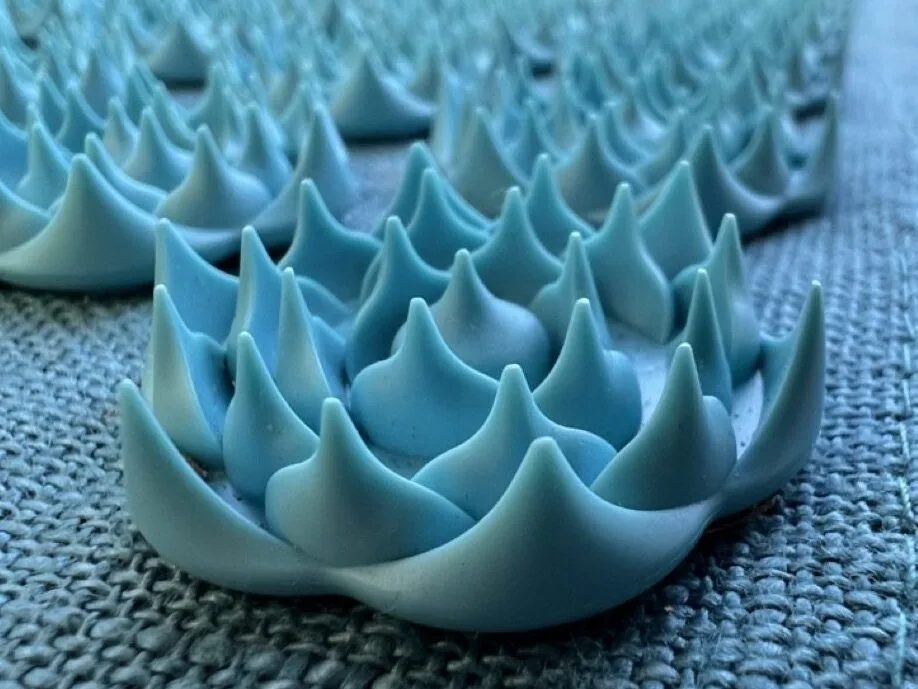
The Pranamat uses HIPS (High Impact Polystyrene) plastic in a lotus-flower design. Each flower has 25 petals arranged in concentric circles, and the tips are slightly rounded rather than sharp. The pressure distributes across a wider contact area on each point, which means you get firm therapeutic pressure without the skin-piercing sensation.
The difference is immediately noticeable the first time you lie on both. The budget mat feels sharp. The Pranamat feels firm. That distinction matters because the therapeutic benefit comes from sustained, even pressure, not from how sharp the points are. Sharper is not better. More even pressure distribution is better.
After two years of daily use, my Pranamat spikes still feel exactly the same as they did on day one. The HIPS plastic does not deform, soften, or lose its shape. Budget ABS spikes start losing their tips and getting uneven after 6 to 12 months of regular use.
Material Quality: What Touches Your Skin
If you are using an acupressure mat with bare skin for 20 to 30 minutes every day, the cover material is not a trivial detail. It is what sits against your skin for thousands of hours over the life of the mat.
The Pranamat uses a natural linen outer cover. Linen is breathable, hypoallergenic, and gets softer with use without degrading. Underneath the linen is a cotton backing. No synthetic fabrics anywhere in the construction.
Budget mats typically use polyester or nylon covers. These are cheaper to manufacture but they trap heat, can irritate sensitive skin over time, and develop that synthetic smell that never quite goes away.
I did not think this would matter much when I first switched. I was wrong. The linen cover on the Pranamat breathes noticeably better, especially during longer sessions. No sweating, no sticking, no synthetic smell. After two years of daily use, the linen has softened beautifully and still looks almost new.
Foam and Padding: The Hidden Difference
This is something nobody talks about in reviews, but it is one of the biggest hidden differences between budget and premium mats.
Budget mat foam is typically low-density EVA or polyurethane foam. It works fine initially, but after 6 to 12 months of daily use, it compresses permanently in the spots where your heaviest body parts press. Your upper back and shoulder blades create permanent indentations, which means the spikes in those areas no longer apply even pressure. The mat essentially wears out from the inside.
The Pranamat uses a combination of natural coconut fiber and natural rubber foam. This combination is significantly denser and more resilient than standard foam. After two years of daily use, my mat still feels the same firmness it had on day one. No indentations. No soft spots. No uneven pressure.
This is the durability factor that makes the cost-per-year math work in the Pranamat’s favor. A $30 budget mat that needs replacing every 12 to 18 months costs you roughly $20 to $30 per year. A Pranamat at $109 that lasts 4-plus years costs about $27 per year. Nearly identical cost per year, but a dramatically better daily experience.
What Does the Pranamat Actually Feel Like?
If you have never used an acupressure mat, here is what to expect with the Pranamat specifically.
First 1 to 3 minutes: You feel firm pressure across your entire back. It is intense but not sharp. Your instinct might be to tense up. Do not. Breathe normally and let your body weight settle into the spikes.
Around the 5-minute mark: Warmth starts spreading across your back. The initial intensity fades as your body releases endorphins. This transition happens faster with the Pranamat than with budget mats, likely because the more even pressure distribution triggers the endorphin response more efficiently.
10 to 20 minutes: Deep relaxation. Your muscles let go. Many people describe a feeling of pleasant heaviness, like sinking into the mat. Some people fall asleep. This is the therapeutic zone where the real benefits happen.
When you stand up: Your back feels warm, loose, and relaxed. The skin will be slightly red where the spikes pressed (this is normal increased blood flow and fades within 30 minutes). Your muscles feel like they just had a massage.
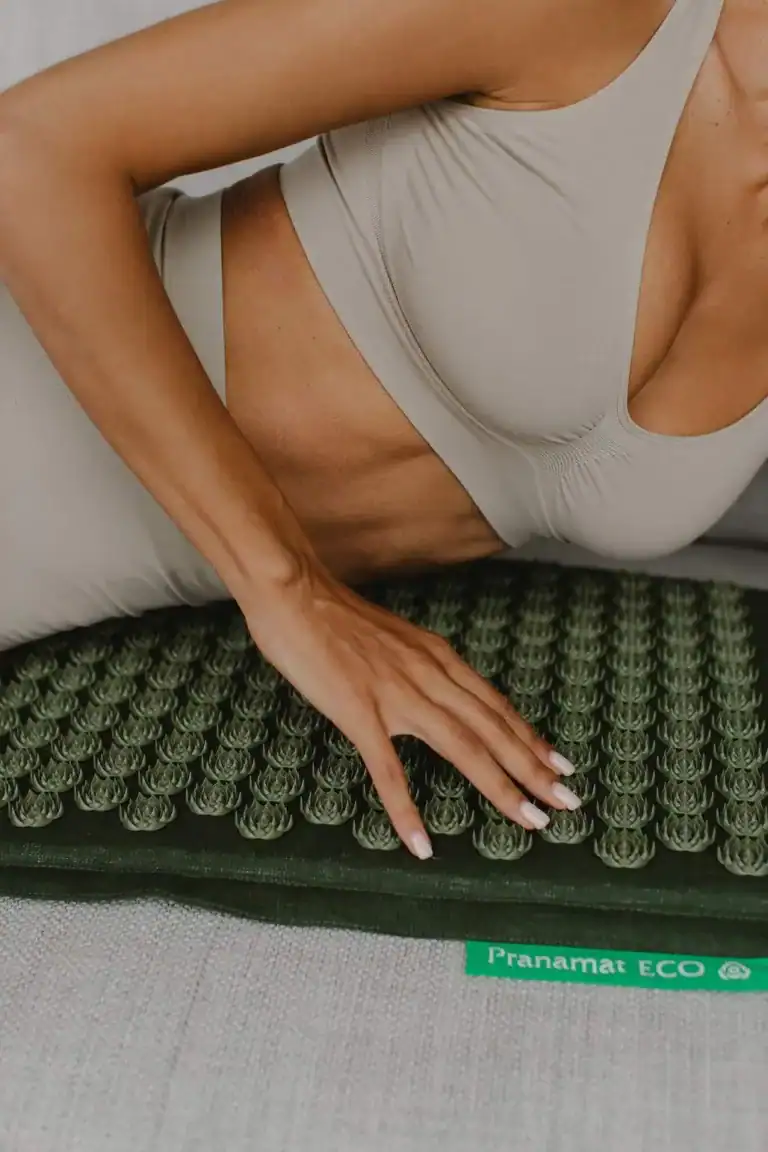
For beginners, I recommend starting with a thin t-shirt between you and the mat for the first week. After that, transition to bare skin. The therapeutic effect is noticeably stronger with direct skin contact.
The Pillow Makes a Real Difference
Most budget acupressure mats either do not include a pillow or include one as an afterthought. The Pranamat pillow is one of the best parts of the set.
The pillow targets your neck and the base of your skull, which is where most people carry tension from desk work and screen time. The lotus-flower spikes on the pillow work the same way as the mat but on the smaller, more sensitive muscles of the neck.
I use the pillow every single session. The neck tension relief alone justifies including it. Before I had the pillow, I was only getting back relief from my mat sessions. Adding the neck and suboccipital area to each session made a noticeable difference in my overall tension levels and in how quickly I fall asleep.
The pillow is also useful on its own. I sometimes use it while sitting at my desk, placed behind my neck on my chair. A 15-minute session while working reliably loosens up the tension that builds from screen time.
Who Should Buy the Pranamat?
Daily users. If you are committed to using an acupressure mat every day as part of your routine, the Pranamat is the right investment. The materials, durability, and comfort level are designed for exactly this use case.
People with sensitive skin. The natural linen cover and the slightly rounded HIPS spikes make a meaningful difference if your skin reacts to synthetic materials or sharp pressure points. I have seen people with skin sensitivities switch from budget mats to the Pranamat and go from irritation to no issues.
Anyone who values quality materials. If you care about what materials are in products you use daily against your bare skin, the Pranamat’s natural fiber construction and EU manufacturing standards matter.
People who already know they like acupressure mats. If you have been using a budget mat and want to upgrade, you will immediately feel the difference.
Who Should NOT Buy the Pranamat?
First-time buyers who are unsure. If you have never tried an acupressure mat and do not know whether you will stick with it, start with a $25 to $40 budget option. If you are still using it daily after a month, then upgrade.
Occasional users. If you plan to use a mat once or twice a week, the durability advantage of the Pranamat is less relevant, and a budget mat will serve you fine.
People on a tight budget. The benefits of an acupressure mat come from consistent use regardless of the mat quality. A budget mat used daily will give you more benefit than a Pranamat that sits unused because you feel guilty about the price.
Pranamat Product Options and Pricing
The Pranamat comes in several configurations:
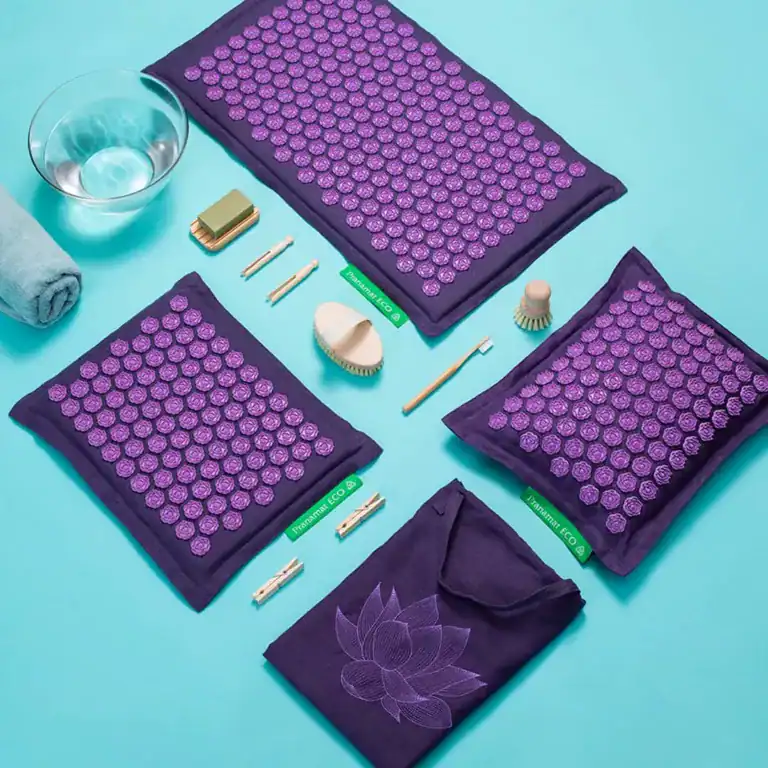
The mat alone starts at around $109. The mat and pillow set runs approximately $148 to $175 depending on the color and current promotions. They also offer a mat, pillow, and mini mat set for additional coverage.
All products come with a 30-day money-back guarantee, which gives you enough time to test it with daily use and see if it works for you. They also ship from the EU with tracked delivery.
Acupressure Guide readers can use the exclusive coupon code ACUPRESSUREGUIDE for a special discount on Pranamat. Check current Pranamat prices here.
My Bottom Line After Two Years
The Pranamat is the best acupressure mat I have used, and it is the only one I have kept in daily rotation for this long. The spike design delivers better therapeutic pressure than any budget mat I have tested. The natural materials hold up to daily bare-skin use without irritation. And the durability means it still performs like new after two years.
Is it worth three times the price of a budget mat? For daily users, yes. The experience is significantly better, the mat lasts significantly longer, and the cost per year works out nearly the same.
For everyone else, start cheap and upgrade when you are ready. There is no shame in that approach, and it is exactly what I did before becoming a Pranamat convert.
Frequently Asked Questions
Is the Pranamat worth the price? For daily users, yes. The spike design delivers better therapeutic pressure, the natural materials are gentler on bare skin, and the durability means it lasts 4-plus years compared to 12-18 months for budget mats. The cost per year ($27/year) is nearly identical to replacing budget mats regularly.
How long does a Pranamat last? With daily use, the Pranamat maintains its performance for 4 or more years. The HIPS plastic spikes do not deform, and the coconut fiber and natural rubber padding resists the permanent compression that degrades budget mat foam within a year.
Is Pranamat better than Shakti Mat? They serve different audiences. The Shakti Mat is a solid mid-range option at a lower price point. The Pranamat uses higher-quality materials (HIPS vs ABS plastic, natural linen vs cotton), has a more refined spike design, and lasts longer. For daily use, the Pranamat is the better investment. For budget-conscious buyers, the Shakti Mat is a strong alternative.
Does Pranamat have a money-back guarantee? Yes. Pranamat offers a 30-day money-back guarantee. You can test the mat with daily use and return it for a full refund if it does not meet your expectations.
What is the difference between Pranamat and cheaper acupressure mats? The main differences are spike material (HIPS vs ABS plastic), spike design (lotus-flower vs pyramidal), cover material (natural linen vs synthetic polyester), padding (coconut fiber and natural rubber vs EVA foam), and overall durability. These differences affect both the daily experience and how long the mat lasts.
Can you use the Pranamat on bare skin? Yes, and this is the recommended way to use it for maximum therapeutic benefit. The natural linen cover is specifically designed for direct skin contact. Most experienced users switch to bare skin within the first two weeks of use.
How do you clean a Pranamat? The linen cover can be spot-cleaned with a damp cloth and mild soap. For deeper cleaning, Pranamat recommends hand washing the cover with gentle detergent and air drying. Do not machine wash or use harsh chemicals.
Related Reading
- Shakti Mat vs Pranamat: Which One Is Actually Worth Your Money? (2026)
- The 8 Best Acupressure Mats of 2026 (Tested Daily for Over a Year)
- Do Acupressure Mats Work? What the Science Actually Says (2026)
- Acupressure Mat Benefits: 10 Science-Backed Reasons to Use One Daily (2026)
- How to Use an Acupressure Mat for Back Pain
Author

Free Mobile App
Find Pressure Points on the Go
Interactive 3D body map with 100+ acupressure points, step-by-step guides, and personalized routines.
Download Free App →